Key Takeaways
Table of Contents
I. Why Cybersecurity Professionals Need ITIL Frameworks in 2026
Modern cybersecurity operations cannot succeed in isolation from enterprise IT delivery. Adopting the ITIL framework establishes a structured service value system that grounds defensive controls into daily operational workflows. Without this operational foundation, advanced endpoint detection and zero-trust policies quickly break down against production realities. Enterprise digital transformation in 2026 requires continuous alignment, ensuring technical defenses protect digital services without disrupting system performance.
To better understand how these service concepts function in daily environments, watch this brief overview:
Friction between security analysts and infrastructure administrators carries a steep price tag. When security teams mandate immediate isolation of compromised systems, infrastructure teams often push back to protect availability agreements. Mastering ITIL for cybersecurity professionals bridges this operational divide, translating defensive controls into predictable service workflows that both departments understand and support.
A. Breaking Down the Silo Between SecOps and ITSM
B. The Evolution of Service Management: From ITIL 4 to ITIL 5
II. Core ITIL Practices Essential for Resilient Security Operations
Information Security Management in ITIL isn't a segregated checklist; it permeates the entire digital value chain. Operational resilience requires clear integration between defensive telemetry and service workflows. Applying ITIL for cybersecurity professionals ensures threat hunting, containment, and digital forensics tie directly into system dependency records, aligning operational visibility with data from threat intelligence sources.
A. Incident Management vs Security Incident Response
Standard incident management restores normal service operation after an unplanned outage. Security incident response neutralizes active adversaries. When malware strikes, treating it solely as an IT failure risks destroying volatile forensic evidence. We recommend shared triage protocols where service desks identify abnormal behavior and immediately swarm with the SOC. This approach synchronizes containment protocols with IT communication channels, preserving evidence while updating executive stakeholders without panic.
B. Problem Management for Root Cause Analysis and Vulnerability Elimination
Security teams often get trapped playing reactive whack-a-mole with alerts. Problem management breaks this cycle by investigating underlying vulnerabilities rather than just clearing alerts. Post-incident reviews transform indicators of compromise into permanent infrastructure remediation. By logging structural weaknesses in a Known Error Database, engineering teams track unpatched firmware or architectural flaws until permanent fixes deploy.
C. Service Configuration and Change Enablement Under Threat Conditions
During an active breach, speed is vital. Yet deploying unverified emergency firewall rules can accidentally sever production pipelines. Change enablement defines pre-authorized emergency paths that bypass bureaucratic delays without abandoning impact analysis. Paired with a precise Configuration Management Database, SecOps analysts can pinpoint blast radiuses and upstream dependencies in seconds. If your team struggles to balance defensive urgency with service stability, Woloyem helps you to learn and master projet and service management to align security mandates with operational realities.
III. ITIL vs Dedicated Cybersecurity Frameworks: NIST CSF and ISO 27001
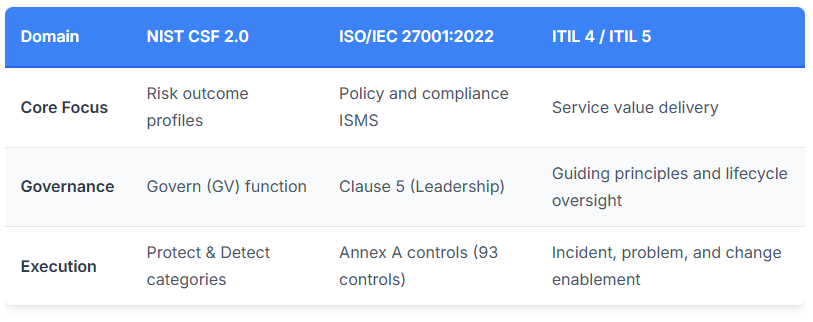
ITIL does not compete with specialized security frameworks; it operationalizes them. Security architectures establish governance controls, but they rarely define how daily change requests, ticket escalations, or configuration baselines move through enterprise teams. Dedicated frameworks provide the "what," while ITIL delivers the "how." For instance, guidance from the Cybersecurity and Infrastructure Security Agency maps ITIL for Cybersecurity Professionals directly to cyber resiliency and defensive architecture roles. Using ITIL for Cybersecurity Professionals ensures organizational risk requirements integrate smoothly into existing service pipelines.
The comparative matrix below shows how these standards align across key operational domains:
A. Mapping ITIL Practices to NIST Cybersecurity Framework 2.0
NIST CSF 2.0 expanded its scope to all organizations and introduced the core Govern function. Aligning ITIL service configuration management directly fulfills the NIST Identify function by inventorying assets and software dependencies. Similarly, release management executes NIST Protect requirements for structured patch validation, while incident management executes Detect and Respond directives. For foundational context on these learning structures, review our strategic analysis on ITIL certification pathways.
B. Operationalizing ISO/IEC 27001 Controls Through ITSM Workflows
ISO/IEC 27001:2022 groups its 93 Annex A controls into organizational, people, physical, and technological themes. Translating these technical controls into standardized ITIL service requests prevents audit compliance from slowing engineering velocity. Continual improvement registries record vulnerability assessments as structured improvement initiatives, satisfying mandatory surveillance audit requirements. Unifying risk registers across IT and security teams establishes a single verifiable record that satisfies external compliance auditors without duplication.
IV. How to Implement ITIL in a Security Operations Center: A 5-Step Process
Introducing service management into a Security Operations Center (SOC) shouldn't bury analysts under manual paperwork. When deployed properly, it creates repeatable operational rails that accelerate incident resolution. Applying ITIL for cybersecurity professionals connects existing SIEM and SOAR automation directly into enterprise ITSM pipelines, safeguarding containment velocity while preserving service uptime.
A. Step 1 to Step 3: Baselining, CMDB Enrichment, and Shared Triage
Frontline analysts need clarity, not extra administrative friction. We recommend rolling out foundational practices through three immediate phases:
B. Step 4 to Step 5: Automated Change Approvals and Continual Learning
The final implementation phase focuses on rapid mitigation and long-term risk elimination:
Monitor your rollout with balanced metrics that track both Mean Time to Contain and enterprise service availability. Balancing rapid response with system uptime demonstrates true operational maturity. If your leadership team is ready to eliminate operational friction and standardize these cross-functional workflows, explore how Woloyem corporate consulting guides enterprises through end-to-end ITSM and SecOps integration.
V. Advancing Your Cybersecurity Career Through ITIL 5 Certification
A. Strategic Value of ITIL Mastery for Security Leadership Roles
B. Master ITIL with Woloyem Expert Training Programs
VI. Unify Your Defensive Strategy with Modern Service Operations
VII. Frequently Asked Questions
Is ITIL certification worth it for a cybersecurity engineer or analyst?
What is the primary difference between an ITIL incident and a cybersecurity incident?
Can ITIL frameworks integrate effectively with the NIST Cybersecurity Framework?
How does ITIL change enablement handle emergency zero-day vulnerability patching?
Which ITIL certification level provides the greatest value for cybersecurity practitioners?
Does ITIL 5 address artificial intelligence governance and automated security risks?
What happens if a cybersecurity team operates completely independently from ITIL processes?
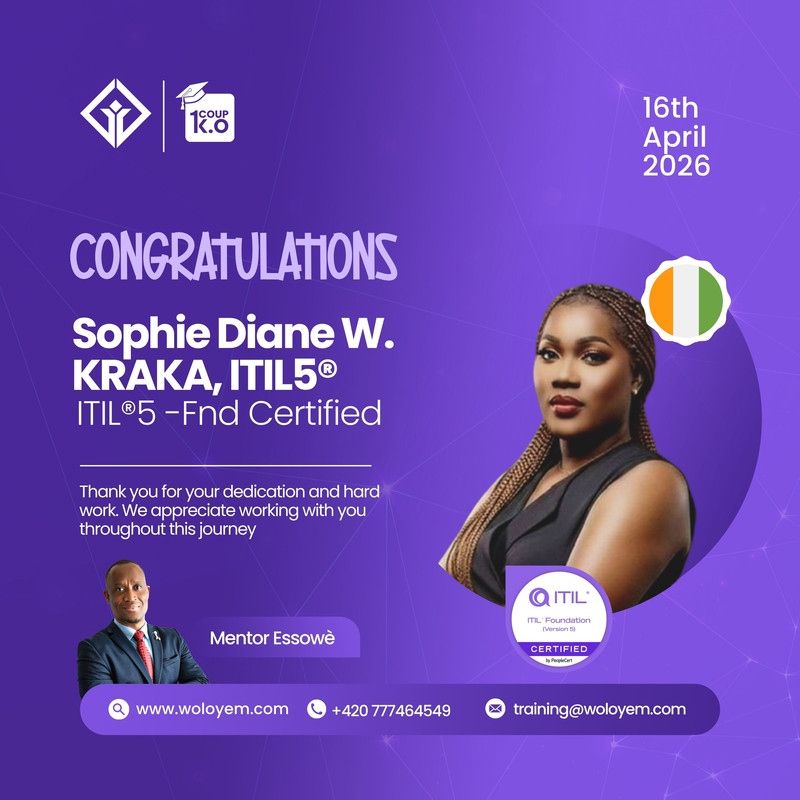
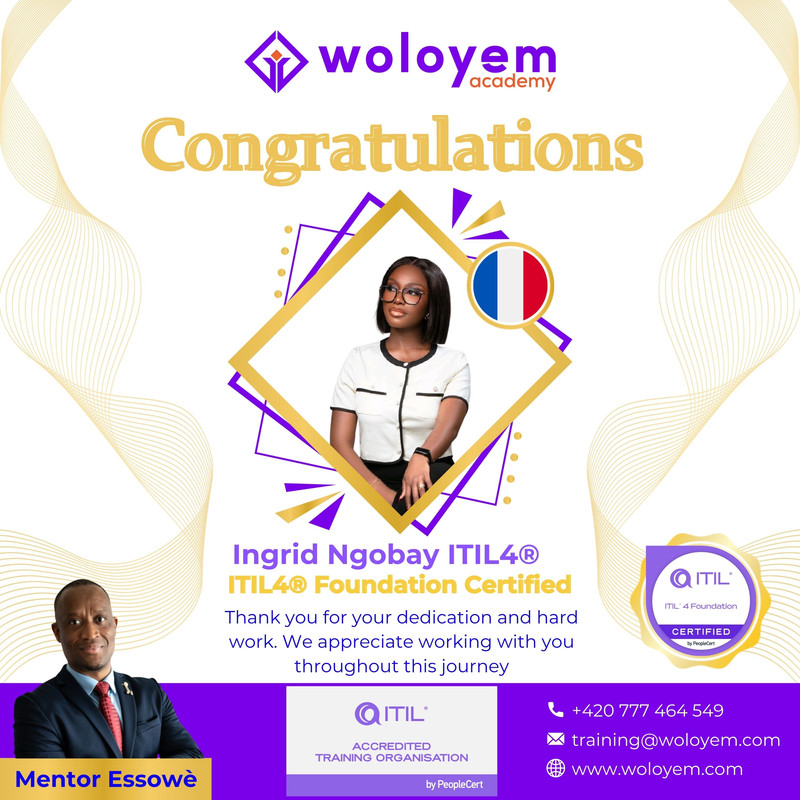
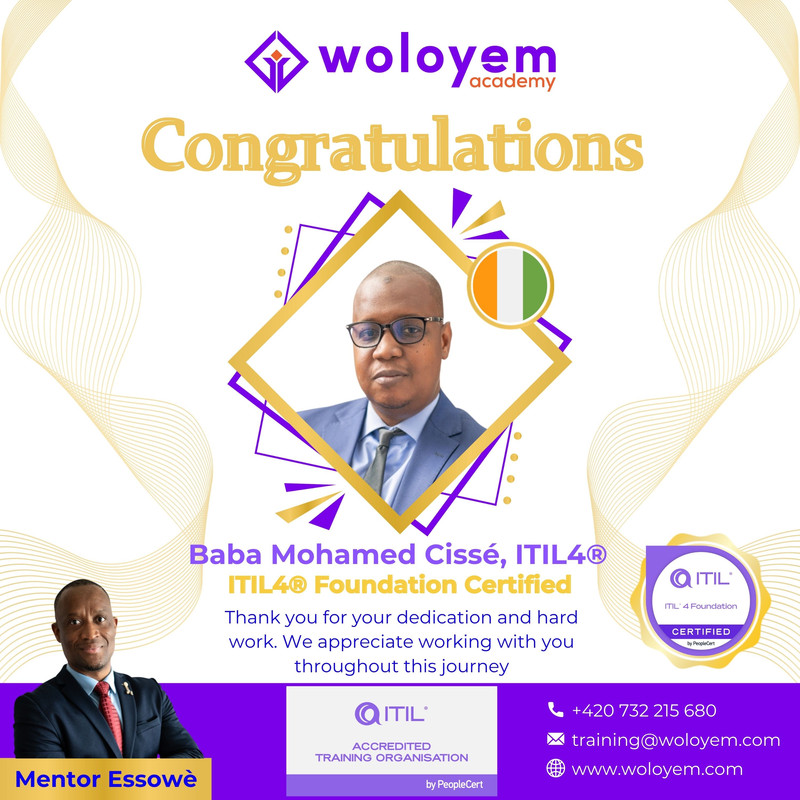
Our ITIL 5® successes





Latest news from our blog
Courses