Project Management Methodologies Comparison: The 2026 Strategic Guide

Essowè Abalo
A project management methodology is a structured system of practices, principles, and procedures used to guide a project from initiation to completion. In 2026, a strategic project management methodologies comparison demonstrates that the most effective approach combines global standards like PMP or PRINCE2 with adaptive Agile techniques to meet the specific demands of digital transformation and organizational governance.

The most reliable way to fail a project in 2026 isn't through a lack of effort, but through the blind application of a popular framework to the wrong environment. This project management methodologies comparison challenges the assumption that there is a single "best" way to deliver value. As project complexity increases, the ability to discern when to use predictive control and when to pivot to iterative agility becomes the ultimate professional differentiator. Understanding these nuances is where Woloyem helps you to learn and master projet and service management, providing the strategic bridge between academic theory and operational success.

We agree that the confusion between overlapping frameworks often leads to inefficient delivery and missed milestones. This guide promises to master the strengths and weaknesses of leading frameworks to optimize your results and advance your career. We'll preview the critical differences between global standards like PMP and PRINCE2, while exploring the integration of AI-native ITIL 5 guidance. By following this decision-making framework, you'll improve your project success rates and secure your position as a leader in digital transformation.

Key Takeaways

  • Master a detailed project management methodologies comparison to choose between linear Waterfall and iterative Agile based on your project's specific complexity and volatility.

  • Distinguish between PMP’s competency-based standards and PRINCE2’s process-oriented governance to better align with global organizational requirements.

  • Apply the Stacey Matrix to evaluate project uncertainty and transition toward the "Adaptive Governance" models required for success in 2026.

  • Identify the specific salary impact of PMP and PRINCE2 certifications and how they contribute to your growth as a "T-Shaped" professional.

  • Learn how to integrate the latest ITIL 5 AI-native guidance into your project management strategy to drive more effective digital transformations.

Table of Contents

I. Understanding Project Management Frameworks in 2026

Performing a project management methodologies comparison is essential because no single framework fits every organizational culture or project risk profile. In 2026, leaders must evaluate frameworks based on their ability to integrate AI, manage distributed teams, and maintain governance. Choosing the right methodology ensures that resources are optimized, stakeholders are aligned, and project success rates are maximized across the entire corporate portfolio.


The industry has moved rapidly since the digital release of the PMBOK Guide 8th Edition in November 2025. We've seen a decisive shift away from the "one size fits all" trap, with 31.5% of organizations now utilizing hybrid approaches to manage complexity. While we provide universal guidance, it is important to note that Woloyem helps you to learn and master projet and service management by focusing on the PMP, PRINCE2, and ITIL 5 standards as the primary drivers of global success.


To better understand this concept, watch this helpful video:

It's vital to distinguish between your professional resources. A methodology like PRINCE2 provides a specific "how-to" for governance and decision-making. A body of knowledge, such as the PMBOK Guide, offers a comprehensive library of proven practices. Meanwhile, a framework like Scrum provides a lightweight structure for iterative work. Understanding these distinctions is the first step in effective Project management and ensures you don't apply an iterative framework to a project that requires strict linear control.

A. The Core Components of a Modern Methodology

Modern governance structures define who has the authority to approve changes and how risks are escalated. Successful delivery isn't driven by process groups alone but by the principles that guide them. Your Project Management Office (PMO) plays a critical role here. It acts as the guardian of these standards, ensuring consistency across the portfolio while allowing individual teams enough flexibility to remain productive. We prioritize these governance principles to ensure that every project aligns with the broader business strategy.
B. Methodology vs. Tooling: Why Software Isn’t the Solution

Many teams mistake Jira or MS Project for a methodology. They aren't; they're just tools. Implementing software without a clear framework is like buying a high-end oven without knowing how to cook; it won't improve your results. We focus on establishing the right mindset and governance first. Through our corporate consulting services, Woloyem helps you to learn and master projet and service management by aligning your digital tools with strategic frameworks. This ensures the software supports the methodology rather than creating unnecessary administrative overhead.

II. Waterfall vs. Agile: Comparing Linear and Iterative Approaches

Waterfall is a linear, predictive methodology best suited for projects with fixed requirements and high stakes, while Agile is an iterative, adaptive approach designed for volatile environments where requirements evolve. In 2026, the most effective project manaproject management methodologies comparison highlights that choosing between them depends on the cost of change and the level of stakeholder involvement required throughout the project lifecycle.


When the cost of change is high, predictive models are often the only viable option for maintaining fiscal responsibility. I've seen infrastructure projects face significant delays because they attempted to apply iterative changes to a foundation pour; some things simply cannot be undone without catastrophic expense. These environments demand the fixed-scope certainty that Waterfall provides. It's about front-loading the planning phase to mitigate risks before execution begins. While it's less flexible, it offers a level of predictability that stakeholders in construction and hardware manufacturing require.

A. When to Choose Waterfall

Predictive models excel in projects governed by strict regulatory compliance and fixed-price contracts. If your technology is stable and your deliverables are well-understood, the PRINCE2 linear approach provides the necessary stage-gate governance to ensure quality. We often recommend this for high-stakes infrastructure projects where clear, unchanging milestones are a prerequisite for funding. In these cases, Woloyem helps you to learn and master projet and service management by establishing the rigorous documentation and reporting structures needed for success.

B. The Agile Advantage in 2026

Conversely, in software and digital product development, the cost of delivering the wrong feature is often higher than the cost of changing the code. Agile thrives here by focusing on value streams and short feedback loops. Frameworks like Scrum, Kanban, and Lean allow teams to pivot based on actual user data rather than assumptions made months prior. You can explore our deeper analysis of these iterative systems in our guide on Agile Methodology: Transforming Project Delivery.


The 2026 standard for enterprise transformation is the hybrid model. It addresses the reality that most corporate projects have both fixed regulatory components and evolving user requirements. Hybrid strategies combine the high-level governance of a predictive model with the execution speed of an iterative one. This balance is critical for optimizing ROI. Instead of waiting for a single "big bang" release, you deliver value in increments while maintaining a clear long-term roadmap. If your team is struggling to find this balance, Woloyem helps you to learn and master projet and service management through our corporate consulting services, where we design custom delivery frameworks tailored to your specific risk profile.

III. Global Standards Comparison: PMP, PRINCE2, and ITIL

A strategic project management methodologies comparison is incomplete without examining the global standards that define professional excellence. In 2026, the lines between these certifications have blurred. They no longer compete as isolated islands of knowledge. Instead, they form a comprehensive ecosystem for the modern leader. I've observed that the most successful practitioners don't choose just one; they synthesize the competency-driven approach of the PMP with the governance-heavy structure of PRINCE2 and the service-centric focus of ITIL 5. At its core, Woloyem helps you to learn and master projet and service management by providing the bridge between these diverse frameworks.

A. PMP vs. PRINCE2: Which Certification Should You Pursue?

The choice between these two heavyweights often depends on your geographic market and the level of structural guidance your organization requires. PMP is the dominant standard in North America and much of Asia. It's a competency-based framework. It focuses on the "how" of management. With the July 2026 update to align with the Eighth Edition of the global body of knowledge, the PMP now offers a refined balance between process groups and performance domains. If you're ready to master these global standards, Woloyem helps you to learn and master projet and service management through expert-led bootcamps like our PMP certification program.


PRINCE2 takes a different path. It's a methodology-based standard that excels in the UK, Europe, and Australia. It answers the questions of "who, when, and what." It provides a clear governance structure with defined roles and stages. While the PMP provides the tools to manage the team, PRINCE2 ensures the project remains viable through its continuous business justification. We find that professionals working in highly regulated or government-adjacent sectors benefit significantly from the rigid themes PRINCE2 offers. I should clarify that while we provide strategic training for these frameworks, exam administration itself is handled by the respective official bodies.

B. Integrating ITIL into Project Delivery

A major gap in traditional project management is the disconnect between "project completion" and "service value." This is where ITIL 4 and the newly launched ITIL 5 become essential. ITIL 5, released in January 2026, introduces AI-native guidance that helps project managers transition deliverables into live environments without service disruption. It's no longer enough to deliver a product on time; you must ensure it fits into the organization's Service Value System (SVS). Woloyem helps you to learn and master projet and service management by integrating these service management principles into the project lifecycle.


Modern PMs leading digital transformations need this service management perspective to avoid the "silo" trap. By integrating ITIL practices, you ensure that the project's output is supportable and creates long-term value. This is why we've expanded our curriculum to help you  get ITIL 5 certified certified. Combining these standards allows you to bridge the gap between technical delivery and operational excellence, securing your role as a strategic asset in any IT-driven organization. We're here to help you navigate this integration through our specialized masterclasses where Woloyem helps you to learn and master projet and service management in a practical, real-world context.

Project Management Methodologies Comparison

The 2026 Strategic Guide

The most effective approach combines global standards such as PMP or PRINCE2 with adaptive Agile techniques to meet the demands of digital transformation and organizational governance.

Understanding the Terminology

Methodology

A prescriptive “how-to” guide for governance and decision-making.

Example: PRINCE2

Body of Knowledge

A comprehensive library of proven practices, tools, and techniques.

Example: PMBOK Guide

Framework

A lightweight, adaptable structure for iterative work.

Example: Scrum

Foundational Approaches: Linear vs. Iterative

Waterfall (Predictive)

A linear, sequential approach where each phase must be completed before the next begins.

  • Best For: Projects with stable requirements and low uncertainty.
  • Key Trait: Heavy upfront planning and formal change control.
  • Challenge: Inflexible once a phase is closed.

Agile (Adaptive)

An iterative approach that delivers work in small, consumable increments (sprints) and adapts based on feedback.

  • Best For: Projects with evolving requirements and high uncertainty.
  • Key Trait: Collaboration, continuous feedback, and flexibility.
  • Benefit: Delivers value faster and more frequently.

Global Standards: PMP vs. PRINCE2

PMP® (Based on PMBOK®)

A competency-based PMI standard that certifies a professional’s knowledge and skills.

  • Focus: What a project manager must know.
  • Approach: Descriptive—guides judgment rather than prescribing steps.
  • Alignment: Strong global recognition across industries.

PRINCE2®

A process-driven methodology that provides a detailed framework for project governance and control.

  • Focus: What the team must do, who is accountable, and when.
  • Approach: Prescriptive—clear processes, roles, and stages.
  • Alignment: De facto standard across much of Europe and government.

Strategic Selection for 2026: Adaptive Governance

Evaluate Uncertainty with the Stacey Matrix

Use this model to choose the right approach based on uncertainty of requirements (“What”) and technology (“How”).

  • Simple: Clear cause-and-effect—predictive methods excel.
  • Complicated: Expertise needed—PMP / PRINCE2 fit well.
  • Complex: Emergent patterns—Agile / Scrum preferred.
  • Chaotic: Act first to stabilize, then sense and respond.

Integrate ITIL 5 AI-Native Guidance

Effective delivery requires integrating IT service management principles. AI is used for:

  • Predictive risk analysis
  • Automated resource allocation
  • Enhanced decision support
woloyem.com

IV. Selection Criteria: How to Align Methodology with Organizational Goals

Selecting the right framework requires more than following the latest industry trends. It's a strategic governance decision that impacts your entire portfolio. This project management methodologies comparison provides a roadmap for alignment based on five critical steps. I've found that organizations failing to perform this up-front analysis often face a 34% project success rate, as noted in recent 2026 performance data.


First, evaluate project complexity using the Stacey Matrix. If your requirements are clear and the technology is stable, predictive models work best. However, if you're dealing with high uncertainty, an adaptive approach is necessary. Second, assess your organizational culture. A command-and-control environment will struggle with the decentralized decision-making required for pure Agile. Third, consider your regulatory landscape. If you're in a sector with strict compliance needs, the stage-gate governance of PRINCE2 might be non-negotiable. Fourth, look at your team's experience. An Agile transformation requires high levels of self-organization that junior teams may not yet possess. Finally, define your reporting needs. Does your board require fixed milestones, or are they comfortable with velocity-based progress?

A. The Woloyem Methodology Selection Framework

We use a weighted scoring model to help high-level decision makers choose the right path. This framework balances "Speed to Market" against "Risk Mitigation." For instance, a digital product might prioritize speed, favoring Scrum, while a data center migration prioritizes risk, favoring a Waterfall-Hybrid mix. Our corporate consulting services specialize in tailoring these global standards to your specific operational reality, ensuring the methodology supports the business goal rather than hindering it.

B. Common Pitfalls in Methodology Implementation

One major risk is "Cargo Cult" Agile. This happens when teams adopt the ceremonies, like daily stand-ups, without embracing the underlying mindset of iterative value. It leads to "Agile in name only" and rarely improves success rates. Conversely, over-engineering Waterfall creates a level of bureaucracy that kills momentum. I've seen projects stall for months in the planning phase while the market moves on.


Pivoting mid-project is possible but requires a structured approach. You don't just stop one way and start another. You must re-baseline your governance and retrain your stakeholders on new reporting expectations. If your organization is facing these challenges, we can help you navigate the transition through our  strategic advisory masterclasses. We'll help you identify the specific friction points in your current delivery model and implement a framework that actually drives results.

V. Mastering Methodologies: Career Impact and ROI

Mastering these frameworks isn't just about technical proficiency; it's a significant financial investment in your future. Our project management methodologies comparison shows that PMP-certified professionals report a median salary approximately 33% higher than their non-certified peers. With the average project manager salary in the US reaching $110,740 in June 2026, that premium represents a substantial career jump. Organizations are willing to pay more because they see a direct correlation between standardized training and reduced project failure rates. They recognize that a certified leader brings a level of predictability that an accidental project manager cannot provide.

The modern market demands "T-Shaped" professionals. These are leaders who possess deep expertise in a specific methodology, like PRINCE2 or PMP, but also maintain broad skills in leadership and digital agility. As routine tasks become automated, your ability to guide teams through complex transformations becomes your most valuable asset. Businesses invest in our training bootcamps because they need project leaders who can navigate the global shortage of 30 million project professionals projected by 2035. Corporate ROI is measured not just in completed tasks, but in the strategic alignment of every project to the organization's bottom line.

A. The 2026 Project Manager Career Roadmap

The path from a junior role to a Strategic Transformation Lead now requires a mastery of AI-assisted project management. With 70% of professionals currently using AI for planning and reporting, staying relevant means integrating these tools into your chosen framework. You must evolve from a tactical scheduler into a strategic advisor who can manage both human and digital resources. To begin this transition, you can explore our full Catalogue of Woloyem Certification Courses, which includes the latest PMBOK 8 and ITIL 5 updates.

B. Why Woloyem for Your Professional Development?

We don't just prepare you for an exam; we prepare you for the reality of high-stakes project delivery. Our approach combines expert mentorship with real-world application, ensuring you can apply theoretical concepts to your daily operations immediately. We offer flexible learning through intensive bootcamps and specialized masterclasses that focus on leadership and digital excellence. I've seen many professionals pass their exams only to struggle with implementation; we bridge that gap by providing the strategic insights needed to lead with confidence. If you're ready to advance, we're here to support your journey with a focus on practical mastery and long-term career growth.

VI. Strategic Delivery in an AI-Driven Era

Mastering the delivery landscape in 2026 requires more than just knowing definitions. This project management methodologies comparison has shown that success depends on aligning framework selection with organizational maturity and project uncertainty. Whether you're implementing the structured governance of PRINCE2 or the iterative speed of Agile, your role as a leader is to bridge the gap between strategic intent and operational reality.

I've observed that the highest ROI comes from professionals who navigate these global standards with agility. We provide PMP®, PRINCE2®, and ITIL 5® accredited content designed to solve real-world problems through our global corporate consulting expertise. Our bilingual English and French training options ensure your team can lead digital excellence regardless of geographic boundaries. We're here to help you transition from theory to professional mastery with a focus on practical results.

Ready to secure your place as a transformation leader? Master Your Project Management Career with Woloyem Certification Bootcamps and gain the expertise needed to drive project success. Your path to professional growth starts with a commitment to strategic leadership and continuous improvement.

VII. Frequently Asked Questions

Which is better, PMP or PRINCE2, for my career in 2026?

The best choice depends on your geographic focus and the type of governance your organization requires. PMP is the global standard for competency, particularly in North America, while PRINCE2 is often preferred in Europe and the UK for its structured, process-oriented governance. Woloyem helps you to learn and master projet and service management by providing expert-led pathways to both certifications, ensuring you remain competitive in any market.

Can I use Agile for non-software projects?

Yes, Agile is highly effective for any project with high uncertainty or evolving requirements. While it started in software, many organizations now use it for marketing campaigns, product design, and organizational change. It's about iterative value delivery rather than the specific industry. If your project requires frequent stakeholder feedback, an Agile framework will likely outperform a linear one.

What is the most popular project management methodology for 2026?

Waterfall remains the most used methodology at 43.9%, but hybrid models are the fastest-growing segment at 31.5%. A project management methodologies comparison shows that organizations are moving away from "pure" frameworks. They're choosing to blend predictive planning with iterative execution to handle the complexity of modern digital transformation projects.

How does ITIL 4/5 differ from traditional project management?

Traditional project management focuses on delivering a specific output within a set timeframe. ITIL 4 and the new ITIL 5 focus on the entire service lifecycle and ongoing value co-creation. ITIL 5, launched in January 2026, integrates AI-native guidance to ensure that project deliverables remain sustainable and valuable long after the initial "go-live" date.

Is a hybrid methodology the best choice for large organizations?

Hybrid models are often the most practical choice for large enterprises because they balance rigid governance with team-level flexibility. This approach allows a PMO to maintain high-level reporting and budget control while letting development teams work in sprints. It's a strategic way to mitigate risk without stifling the speed of innovation.

What are the prerequisites for the PMP certification exam?

You need a four-year degree and 36 months of unique, non-overlapping professional project management experience. If you have a high school diploma or associate degree, the requirement increases to 60 months of experience. Both paths require 35 contact hours of formal project management education. Woloyem helps you to learn and master projet and service management by providing these accredited hours through our intensive training programs.

How long does it take to get PRINCE2 certified with Woloyem helps you to learn and master projet and service management?

Our intensive bootcamps are designed to prepare you for certification in a matter of days. While the study time varies by individual, our masterclasses focus on the most critical themes and processes to ensure rapid mastery. Woloyem helps you to learn and master projet and service management by providing the strategic insights you need to pass the exam and apply the methodology to your projects immediately.

Does Woloyem helps you to learn and master projet and service management offer project management training in French?

Yes, we offer our full range of masterclasses and corporate consulting in both English and French. We're committed to supporting global teams and bilingual professionals who need to master these standards in multiple languages. This dual-language capability is a core part of how Woloyem helps you to learn and master projet and service management to drive leadership and digital transformation worldwide.

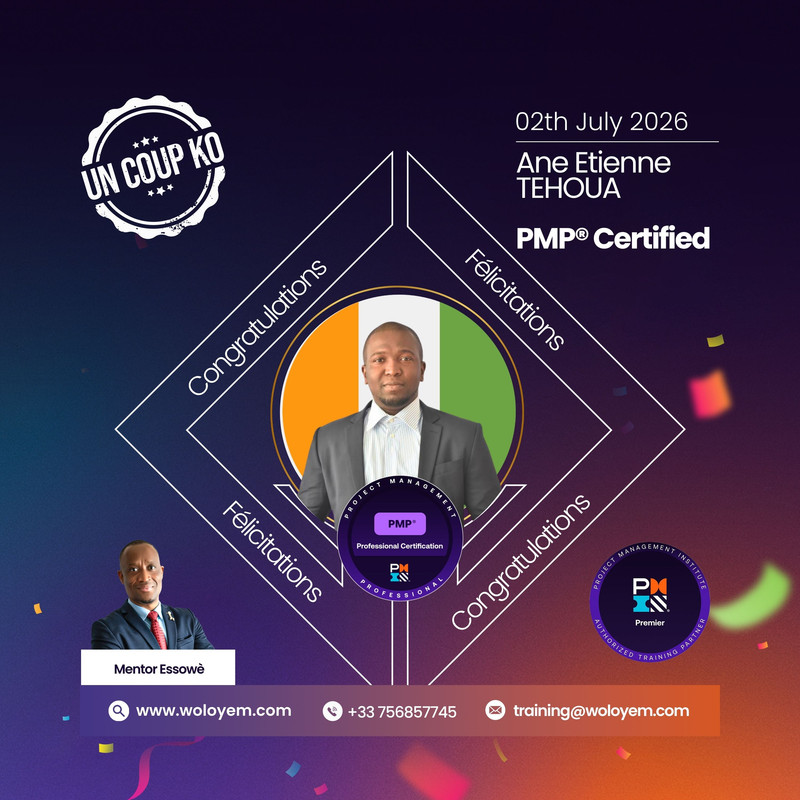
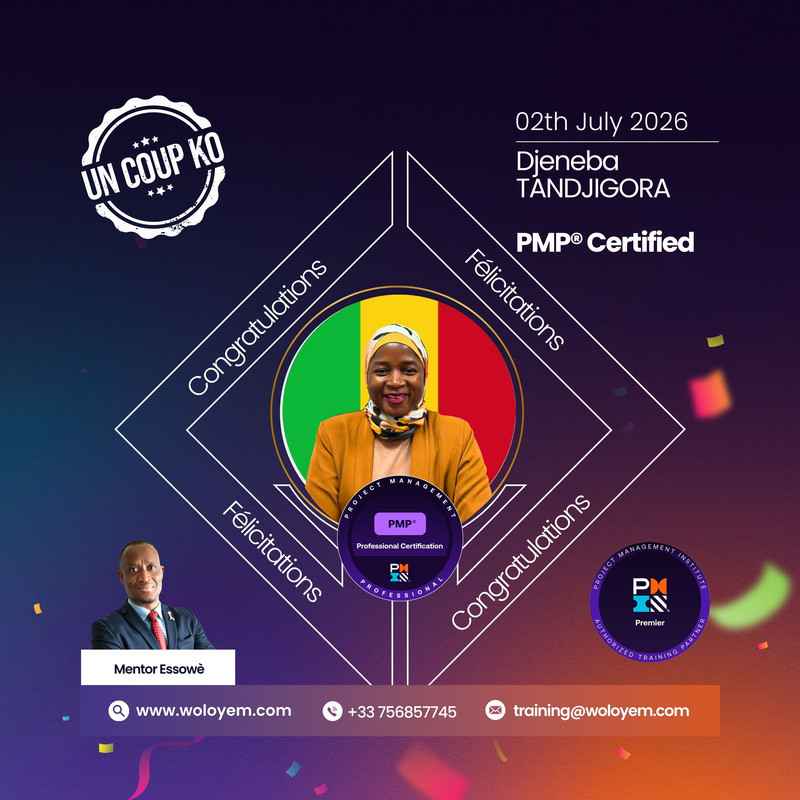
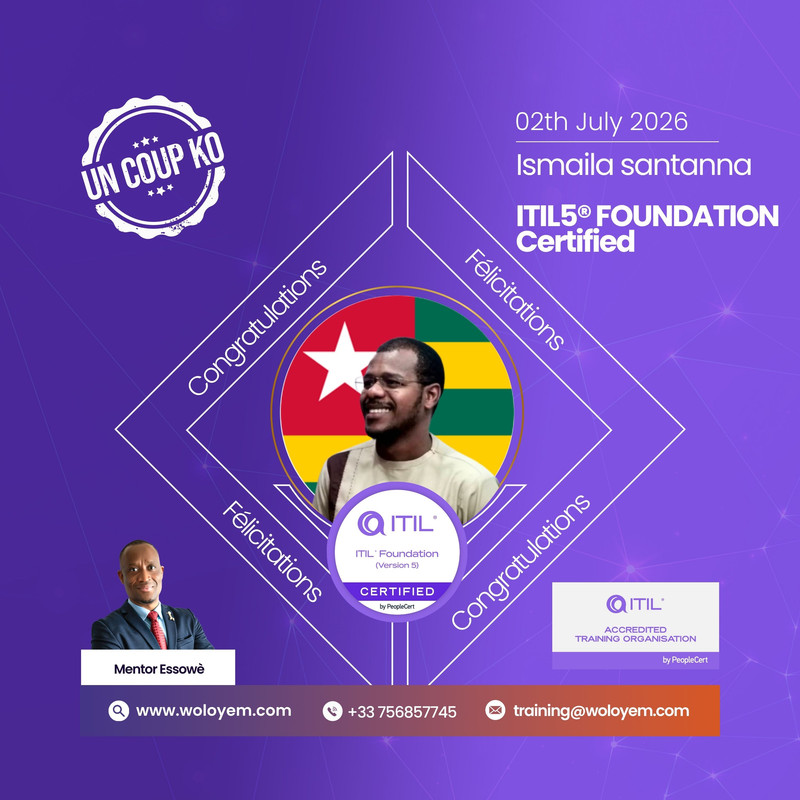
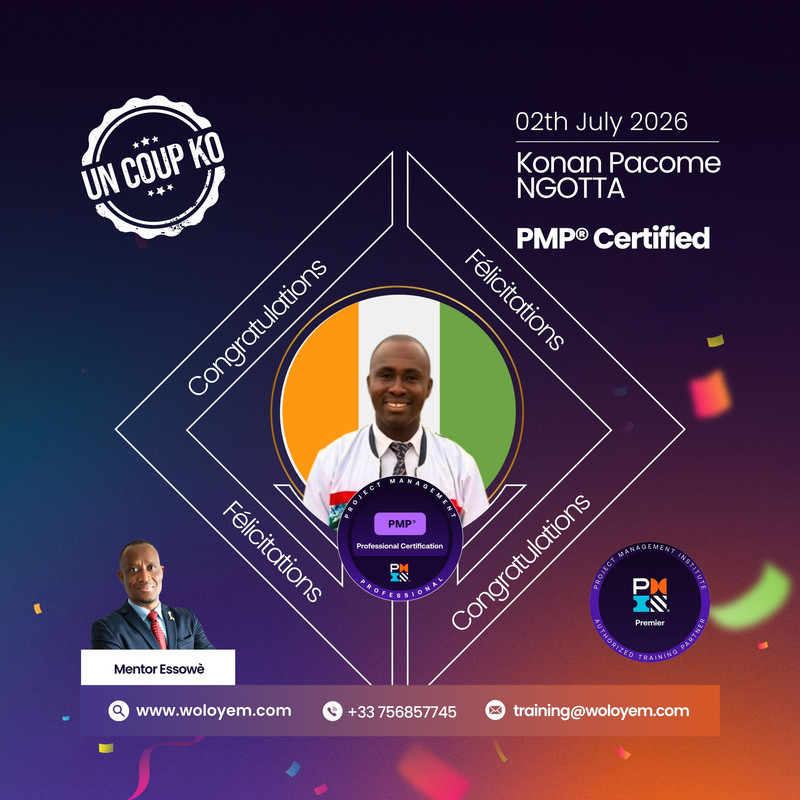
Our successes

Our successes with the "Un Coup K.O." method
Our successes

Courses

Privacy Policy Cookie Policy Terms and Conditions