
Key Takeaways
Table of Contents
I. How PRINCE2® Can Support Your Project Management Career: prince2 as a stepping stone in career
PRINCE2® is a project management method that offers a structured approach to organizing and managing projects. Its concepts can help you understand how project work is planned, coordinated, governed, and communicated. The qualification is most relevant when its learning fits the responsibilities you want to take on.
A qualification can give you a shared vocabulary and a framework for discussing project work, but it can’t prove by itself that you can apply those ideas effectively. Certification shows that you’ve studied and met an assessment standard; demonstrated capability comes from applying project knowledge and explaining what you contributed at work. You can read a neutral overview of the PRINCE2 methodology for more background.
To hear a perspective on how the method may relate to career development, watch this video:
A. What career value can PRINCE2® offer?
B. Who might consider PRINCE2® as a career step?
II. Does PRINCE2® Certification Alone Advance Your Career?
No. PRINCE2® certification can support your professional development, but it doesn’t guarantee a job, promotion, or readiness for every project role. Its career value depends on how closely it relates to an employer’s requirements and whether you can show relevant workplace capability.
A credential indicates that you’ve completed the applicable assessment requirements. Evidence of project delivery means explaining how you contributed to real work, handled responsibilities, communicated with others, and learned from the results. These are related, but they aren’t interchangeable. The Association for Project Management’s overview helps place PRINCE2® within the wider project management profession.
A. What PRINCE2® certification can and cannot demonstrate
A qualification can provide evidence of assessed learning and familiarity with a structured project management approach. On its own, it can’t demonstrate how you’ll respond to changing priorities, work with stakeholders, or deliver in a specific organization. Those abilities depend on practice and context.
Qualification names, syllabus details, and exam requirements can change. Check current information from the official certification owner before relying on specific details. When evaluating a role, compare its stated criteria with your learning and experience instead of assuming a certificate automatically meets them.
B. How to pair learning with workplace evidence
Make your learning more useful by recording examples of how you applied it. For each relevant project, note your responsibilities, decisions, contribution, and lessons. Keep the focus on your role and the work you actually did, rather than claiming ownership of the entire outcome.
If you have limited project experience, ask your manager about taking on a supervised project task. Agree on a defined responsibility, such as tracking actions or preparing a progress update, so you can apply what you’ve learned and capture a concrete example for future role discussions.
For related qualification context, explore this PRINCE2® certification training information. It can help you assess whether structured learning fits your development goals. You’ll still need to connect that learning to relevant experience.
III. Which Career Paths Could PRINCE2® Help You Explore?
PRINCE2® learning may be relevant to project support, coordination, or management work, but it doesn’t create a guaranteed career route. Your next realistic step depends on your current responsibilities, experience, and the criteria in the roles you’re targeting. Use the examples below to identify what you can already demonstrate and what you may need to develop.
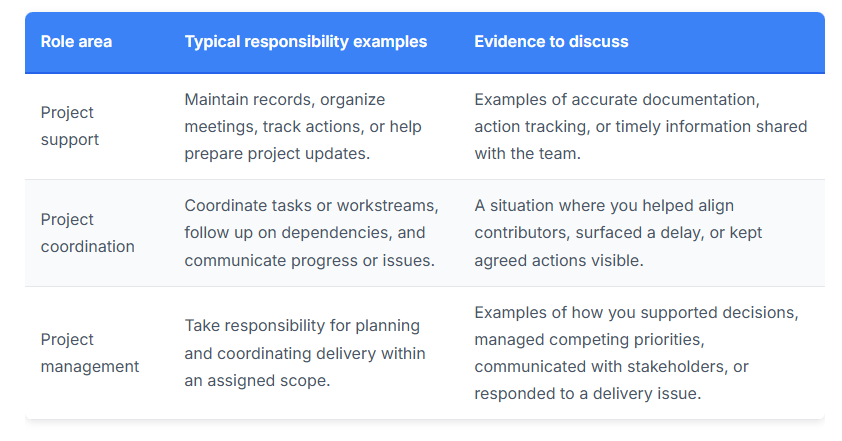
These are responsibility areas, not formal eligibility routes. Titles and expectations vary across organizations and industries. A project coordinator in one workplace may handle tasks another employer assigns to a project administrator or project manager. Read the full job description, not just the title.
A. How responsibilities can grow across project roles
Progression often involves taking on broader responsibility: moving from maintaining project information, to coordinating work across contributors, to managing delivery within an agreed remit. For example, someone who currently tracks actions might take the next step by coordinating follow-ups across a workstream. In an application, describe what you actually coordinated and the evidence you can share, rather than implying you managed the whole project.
If you’re early in project management, compare career-development options by the experience and learning they require, and by how closely they fit the responsibilities you want to pursue.
B. How to compare PRINCE2® with other development options
IV. How to Turn PRINCE2® Learning into a Career Action Plan
Turn PRINCE2® learning into career progress by connecting a target role to relevant study, practical responsibilities, and clear evidence of your contribution. This sequence will help you make your next step specific and grounded in real expectations.
A. A reusable project evidence checklist
After a project task, use this checklist to capture useful details for a development conversation, application, or interview. Keep your claims accurate and distinguish your contribution from the team’s overall result.
B. Present your learning credibly
Prepare a short explanation that links your learning to the role you’re pursuing. For example: “I studied a structured project management approach, applied relevant ideas while coordinating action tracking for a workstream, and learned how to make follow-ups clearer.” Adapt the example to your actual contribution. Don’t imply that you owned decisions or outcomes that belonged to the wider team.
For prince2 as a stepping stone in career development, use the plan as a working document, not a promise of promotion. If PRINCE2® aligns with your goals, explore PRINCE2® certification training and connect the learning to a suitable workplace opportunity.
V. Choosing PRINCE2® Training and Taking Your Next Career Step
A. What to check before choosing a PRINCE2® course
B. When to seek training or career guidance
VI. Make Your Next Career Step Practical
VII. Frequently Asked Questions
Can PRINCE2® help me get a project management job?
Is PRINCE2® useful if I have no project management experience?
What jobs can I pursue after PRINCE2® certification?
Does PRINCE2® certification guarantee a promotion or higher salary?
Should I choose PRINCE2® or PMP® for my career?
How can I show employers that I applied PRINCE2® learning?
Can PRINCE2® support a career change into project management?
Our successes

.jpg)
.jpg)
.jpg)
.jpg)




.jpg)
.jpg)
.jpg)









.jpg)
.jpg)
.jpg)
.jpg)
.jpg)








.jpg)


















































.jpg)

















Latest news from our blog
Courses