Key Takeaways
Table of Contents
I. PMP Exam Prep Bootcamp: What It Helps You Solve Before Exam Day
A PMP exam prep bootcamp is a structured training option for candidates preparing for the Project Management Professional exam. Rather than choosing every resource and setting the sequence yourself, you follow a guided learning format. That structure can make a broad syllabus easier to organize, but you remain responsible for studying, practising, and deciding when you’re ready.
This distinction matters when preparation has to fit around project deadlines, family responsibilities, and other commitments. A course can help you organize your learning, but it cannot remove the need to make time for it or guarantee a passing result. For context on the credential, see this overview of the Project Management Professional (PMP) certification.
For a look at one perspective on preparing for the 2026 exam, watch this video:
A.What does a PMP exam prep bootcamp provide?
B. Who may benefit from structured PMP preparation?
II. What Effective PMP Exam Preparation Should Cover in 2026
Effective PMP preparation starts with current PMI guidance, then builds understanding through application, practice, and review. Don’t assume older notes or course materials still reflect the exam guidance for your date. Check PMI’s official exam content outline and announcements, then use the information that applies to shape your study plan.
PMI’s current official exam guidance is the reference point for deciding what your PMP preparation should cover. This is especially important when you come across conflicting claims about exam changes or transition dates. Verify claims through PMI before relying on them, rather than building your plan around an undated social post, an old study guide, or a course description without a clear source.
A. Check current PMP exam guidance before choosing study materials
Start with PMI’s current exam content outline and official announcements. Check that your chosen study resources reflect the guidance relevant to your planned exam date. If a resource makes specific claims about domains, question types, timing, or transition details, compare those claims with PMI’s published information before using them to plan your studies.
Keep a note of the source and publication date for the guidance you use, and revisit it if PMI publishes new information. This gives you a straightforward way to separate confirmed updates from speculation. A PMP exam prep bootcamp can provide a structured learning route, but that structure is most useful when it is aligned with current official guidance.
B. Build understanding through application and review
Connect project-management concepts to decisions you might face at work. For example, imagine a stakeholder requests a late change while a project deadline and budget are fixed. Use the Project Management Triangle to examine how scope, time, and cost affect one another. Then consider what trade-offs you would discuss with the team and sponsor before deciding how to respond.
Practice questions and scenario exercises can help reveal gaps in your knowledge or reasoning. After answering, review why an option fits the situation and why other choices may be less suitable. Record recurring misunderstandings, revisit the relevant concept, and test your understanding with a new example. Practice results can guide further study, but they do not guarantee an exam outcome.
Use free PMP practice questions to work through sample items and reflect on the reasoning behind your answers. Pair practice with current PMI guidance and focused review so each study session has a clear purpose, rather than repeating questions without addressing the concepts behind them.
III. PMP Bootcamp vs. Self-Study: Compare the Preparation Approaches
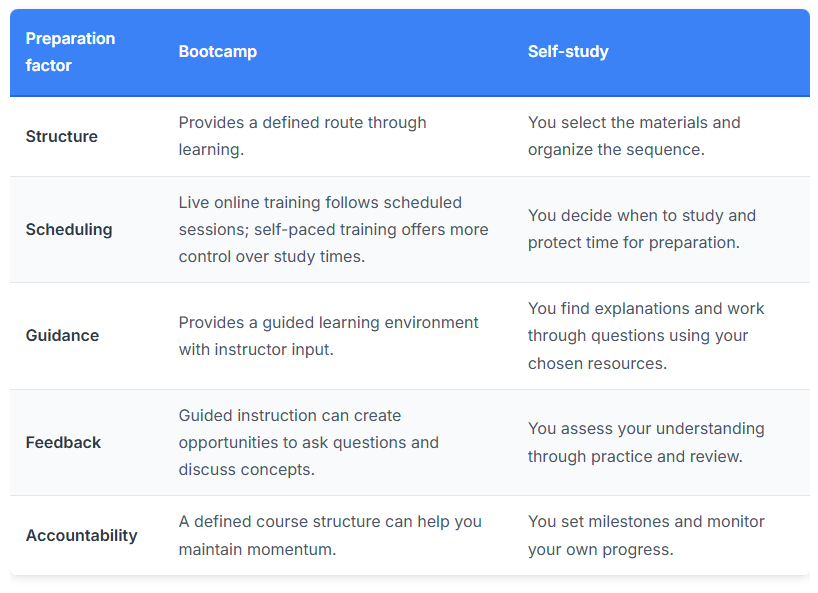
A bootcamp and self-study can both support PMP exam preparation, but they ask you to organize your time in different ways. A bootcamp provides a defined learning route, while self-study gives you greater control over materials and pace. Choose by considering whether external structure helps you progress or whether you can reliably create and follow your own plan.
Rule of thumb: Choose guided preparation if a learning sequence and instructor input help you stay focused. Choose self-study if you can plan, practise, and review consistently on your own.
A. When a structured bootcamp may fit your needs
A bootcamp may suit you if choosing what to study next feels like a barrier or instructor guidance helps you work through challenging concepts. Live online and self-paced formats support different scheduling preferences. Compare the structure you want with the time you can realistically set aside. WOLOYEM’s PMI® Approved PMP® Bootcamp offers a guided preparation option, not a promise of an exam result.
For example, a learner who benefits from scheduled sessions may prefer live online instruction, while someone with a changing work calendar may prefer self-paced learning. Structure only helps when you can engage with it consistently. Consider how you learn best, not just which format sounds more intensive.
B. When independent study may be a better fit
Self-study may work well for experienced, self-directed learners who can organize a syllabus, select current materials, and maintain a steady routine. It gives you control over priorities and pace, but you must also create the sequence, practise regularly, and review your progress without relying on a course schedule.
Ask yourself whether you can identify knowledge gaps and follow through on a plan during busy periods. If so, independent preparation may fit your habits. If you tend to postpone studying without a defined structure, guided training may provide a more suitable framework. Neither format guarantees a result; both require active preparation.
To compare your options, note your preferred learning style, the study windows you can protect, and the level of guidance you want. You can also use the free PMP training demo to get a sense of the learning approach before choosing a format.
IV. Build a Practical PMP Exam Study Plan Around Your Starting Point
A practical PMP study plan starts with your current knowledge, available study time, and the latest PMI guidance. Use those factors to decide what to learn, when to practise, and how to review. Make the plan specific enough to guide your next step, but flexible enough to accommodate changes at work and at home.
A. Start with a knowledge and schedule assessment
Before choosing a sequence, take stock of what you understand and where you feel uncertain. Note the project-management topics you use regularly, the concepts you need to revisit, and the kinds of questions that make you hesitate. Then check your calendar and identify realistic study windows. Build around time you can protect instead of copying another candidate’s schedule.
Check that your materials reflect current PMI guidance. If a resource makes claims about exam content or changes, compare them with PMI’s official publications before relying on it. This alignment check helps you avoid spending study time on material that does not match the guidance for your exam date.
B. Organize learning into manageable milestones
Turn your assessment into a sequence of milestones rather than a rigid timetable. For example, revisit an unfamiliar concept, apply it to a project scenario, and later review questions that test the same idea. Set milestones around evidence of progress, such as being able to explain a concept or reason through a decision, not simply finishing a chapter.
Keep a short study log. Record the topic you worked on, what you learned, and what remains unclear. If a busy week interrupts your schedule, adjust the next milestone instead of treating the disruption as failure. A PMP exam prep bootcamp can provide a defined learning structure, while your personal plan connects that structure to your priorities and calendar.
C. Use practice and review to guide your next steps
Practice questions can reveal gaps in both knowledge and reasoning. You may understand a concept but still struggle to choose an appropriate response in a particular situation. After answering, review the explanation and note whether the issue was unfamiliar knowledge, a missed detail, or difficulty comparing possible actions.
Look for patterns over time. If several uncertain answers involve the same concept, return to that material and test your understanding with a new scenario. Don’t move on just because you completed a set of questions. Move on when you can explain the reasoning more clearly. Review can be useful without relying on an invented target score or prescribed question count.
Use WOLOYEM’s free PMP practice questions to explore practice items as part of this process. If you prefer a guided structure, consider the PMI® Approved PMP® Bootcamp as an option for organizing your learning.
V. What to Expect from WOLOYEM’s PMI® Approved PMP® Bootcamp
WOLOYEM’s PMI® Approved PMP® Bootcamp provides structured PMP training in live online and self-paced formats. WOLOYEM is a PMI Premier Authorized Training Partner. These details help you understand the training provider and delivery options as you consider your preparation. The bootcamp supports exam preparation, but it does not guarantee a passing result. Your own study, practice, and readiness remain essential.
A. How accreditation and delivery format inform your choice
Training partner status offers useful context about the provider. WOLOYEM’s PMI Premier Authorized Training Partner status and PMI® Approved PMP® Bootcamp identify the provider and its offering. Explore the bootcamp and consider whether guided training fits your preparation needs.
Format matters too. Live online and self-paced options support different scheduling preferences, so consider how you learn and what your calendar can accommodate. If you value a defined learning setting, live online training may suit you. If you need more control over when you study, a self-paced format may fit better. Choose based on your routine, not assumptions about which format produces a particular exam outcome.
When comparing a PMP exam prep bootcamp, focus on the details of the offer and how its format fits your circumstances. Don’t assume every bootcamp includes the same materials, practice resources, or support. The practical question is whether the training approach gives you a useful way to organize preparation while leaving time for your own study and review.
B. Choose your next step with confidence
A demonstration can help you understand the training approach before deciding whether to proceed. WOLOYEM offers a free PMP demo for learners who want to explore the experience. WOLOYEM also brings 18+ years of expertise in project management, portfolio management, and business transformation to its work in project-management training.
WOLOYEM’s stated promise is 100 % satisfaction guaranteed. This guarantee concerns satisfaction, not a promise that a learner will pass the PMP exam. Keep that distinction in mind as you weigh training support against your own preparation responsibilities.
Before choosing, consider a few practical points:
If you’d like to experience the training approach, explore the free PMP demo. It’s a practical next step toward deciding whether the PMI® Approved PMP® Bootcamp fits your preparation plan.
VI. Take the Next Step Toward Your PMP Preparation
VII. Frequently Asked Questions
Can a PMP exam prep bootcamp guarantee that I will pass?
Is the PMP exam changing in 2026?
Can I prepare for the PMP exam while working full-time?
Do I need to read the entire PMBOK Guide to prepare for the PMP exam?
Is a PMP bootcamp better than self-study?
What should I do if my practice answers are consistently wrong?
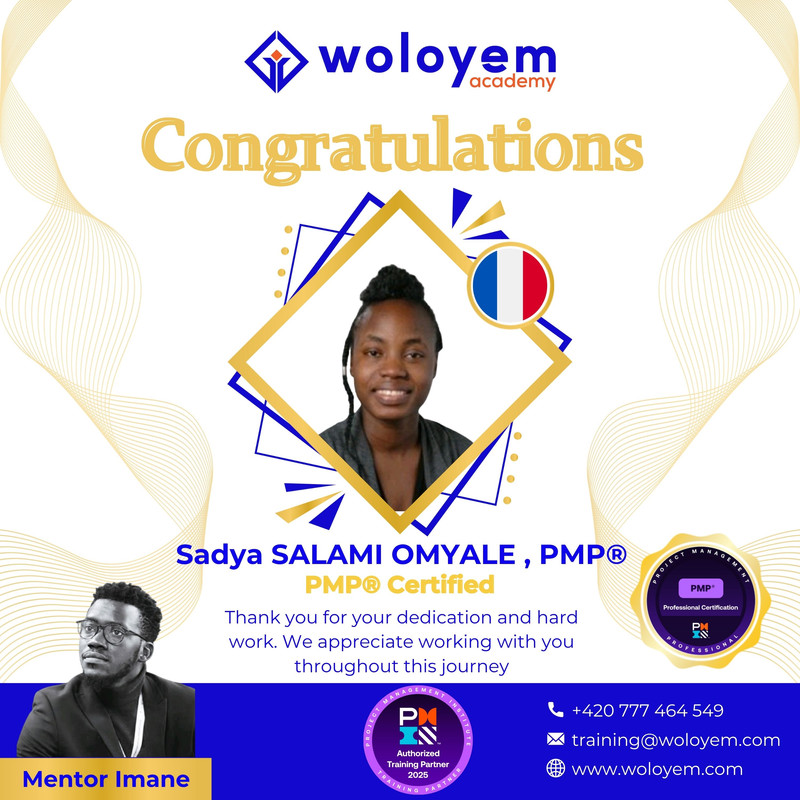
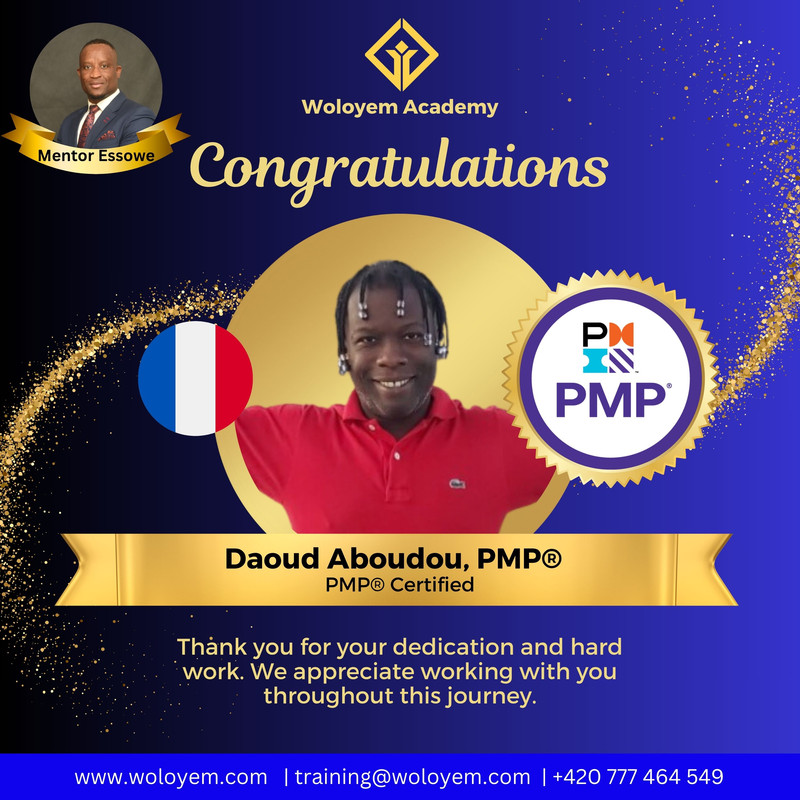
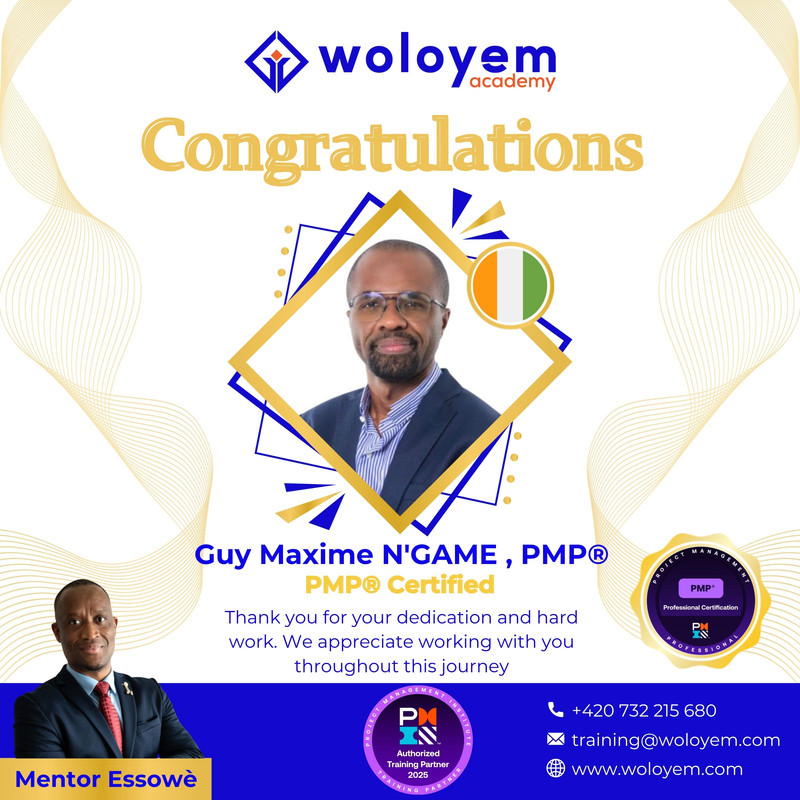
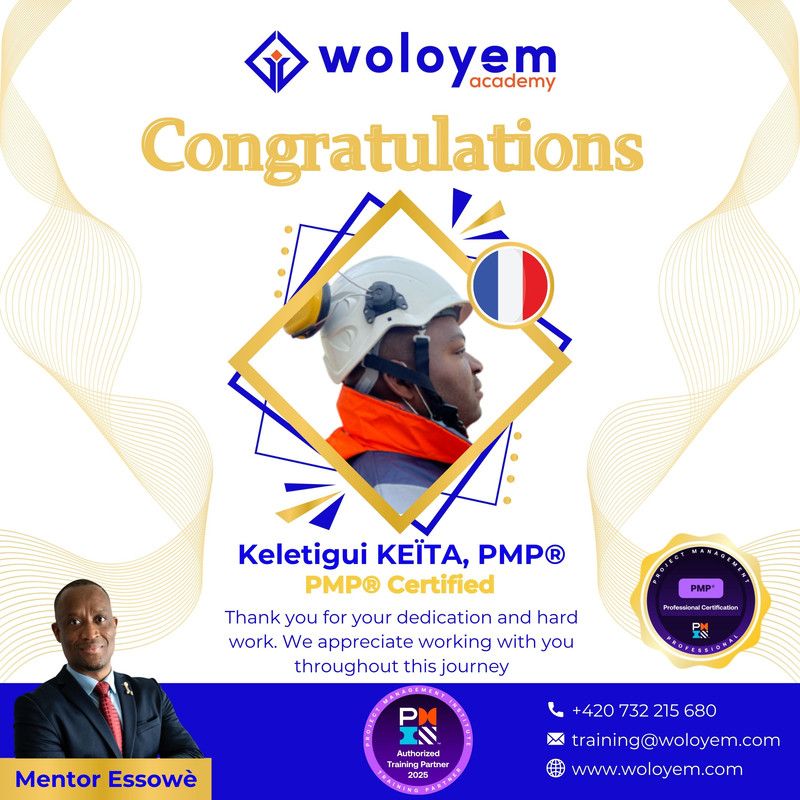
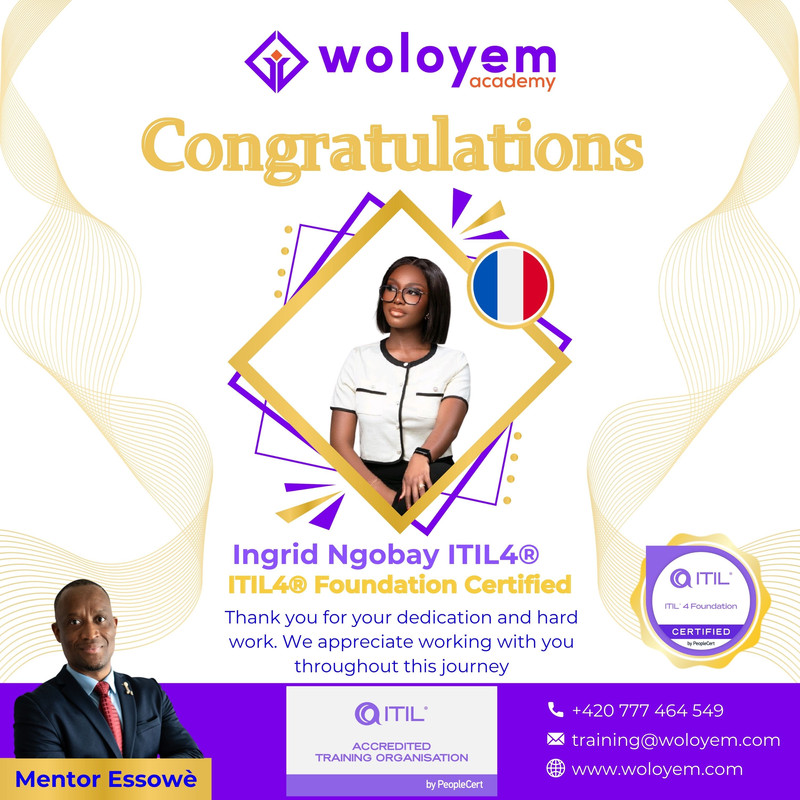
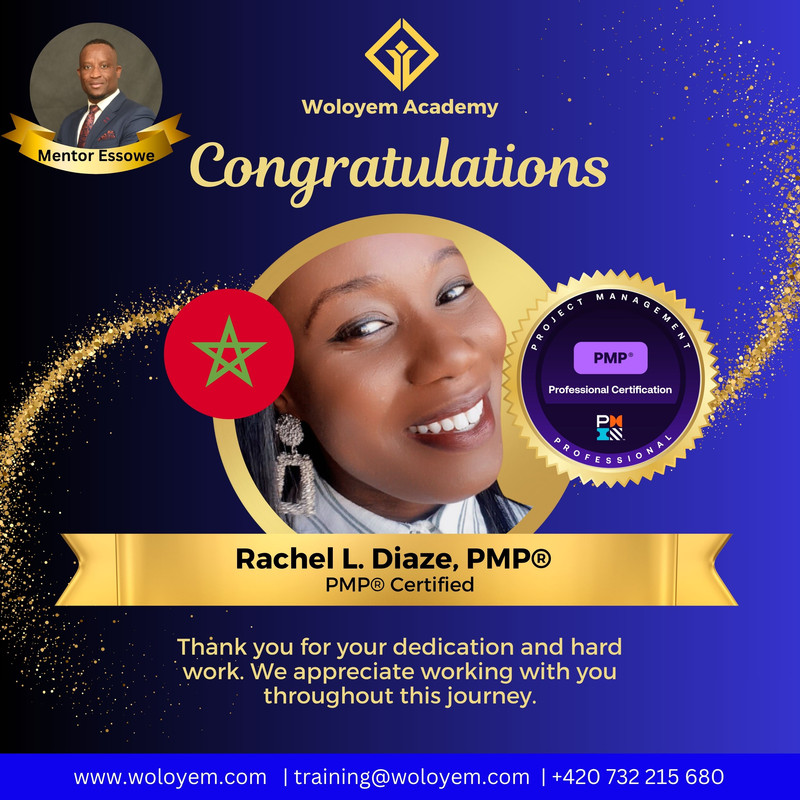
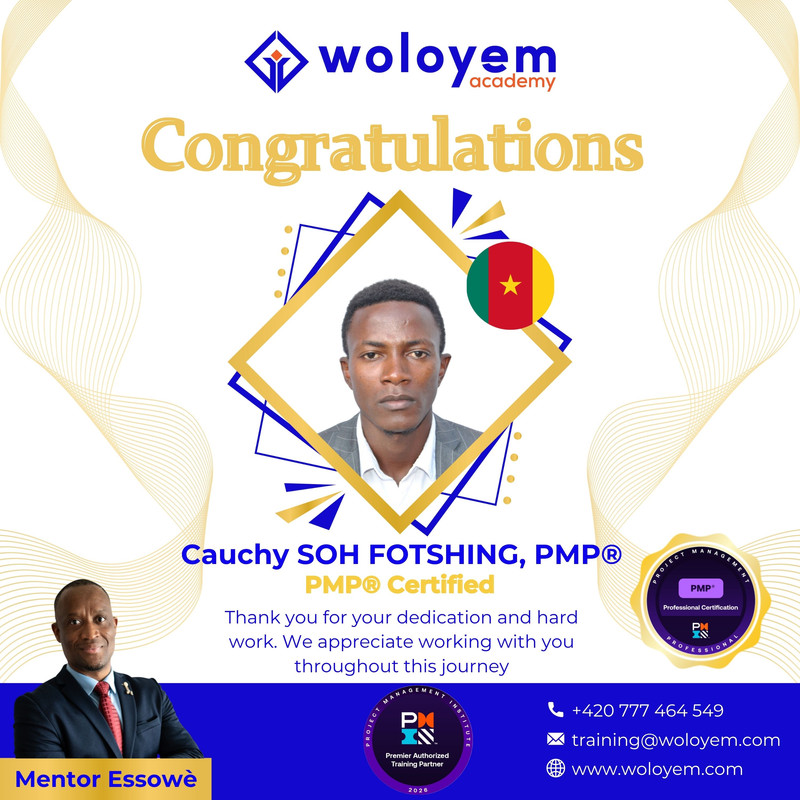
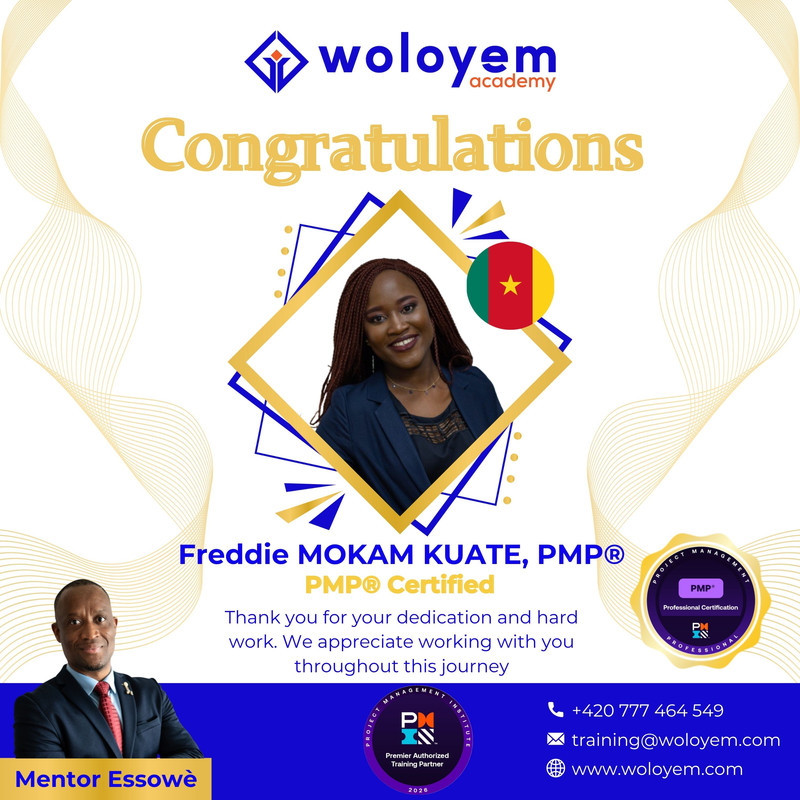
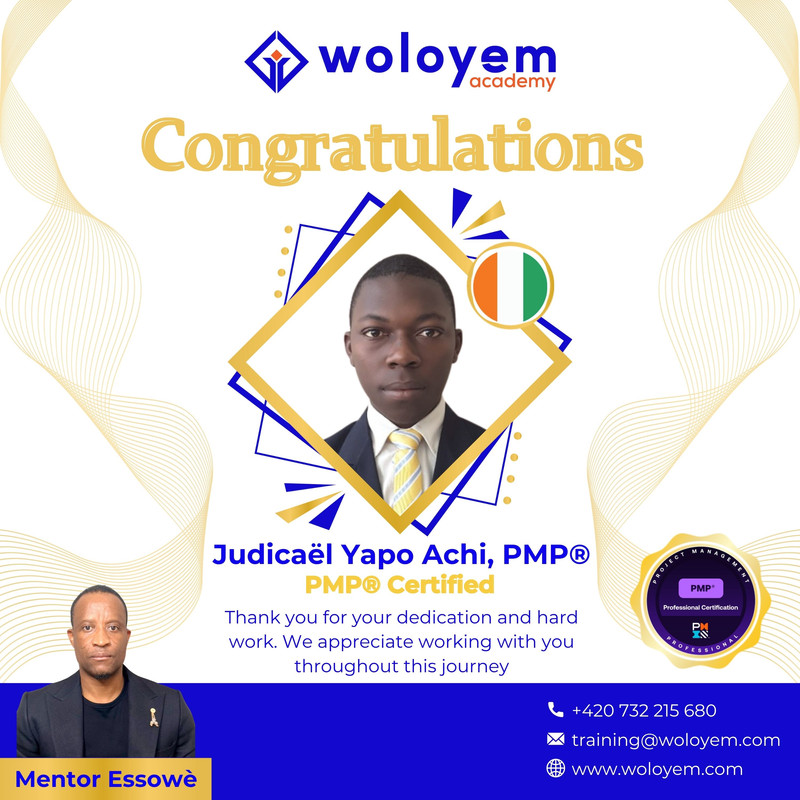
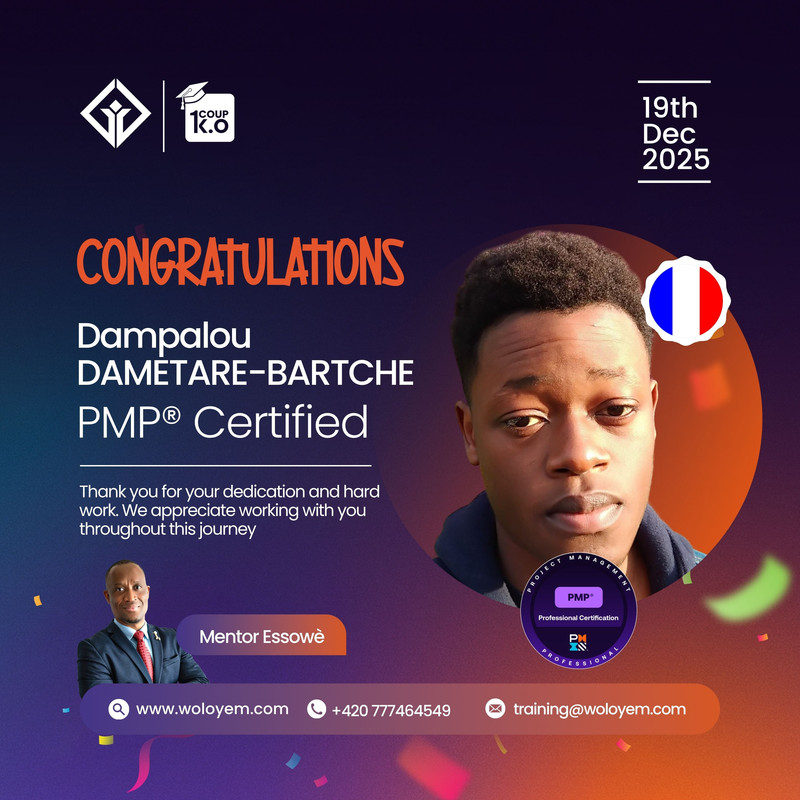
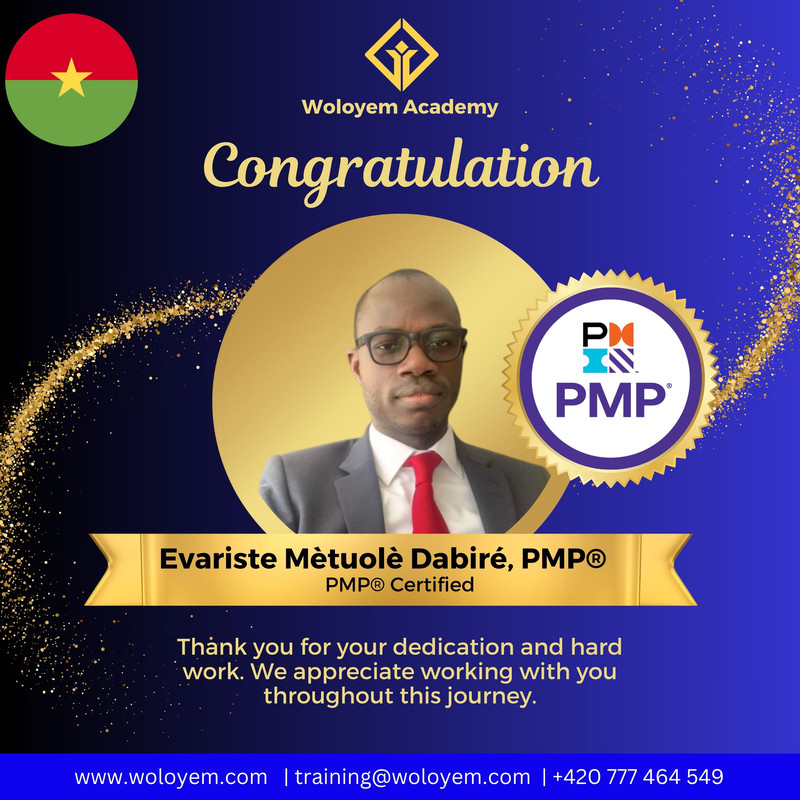
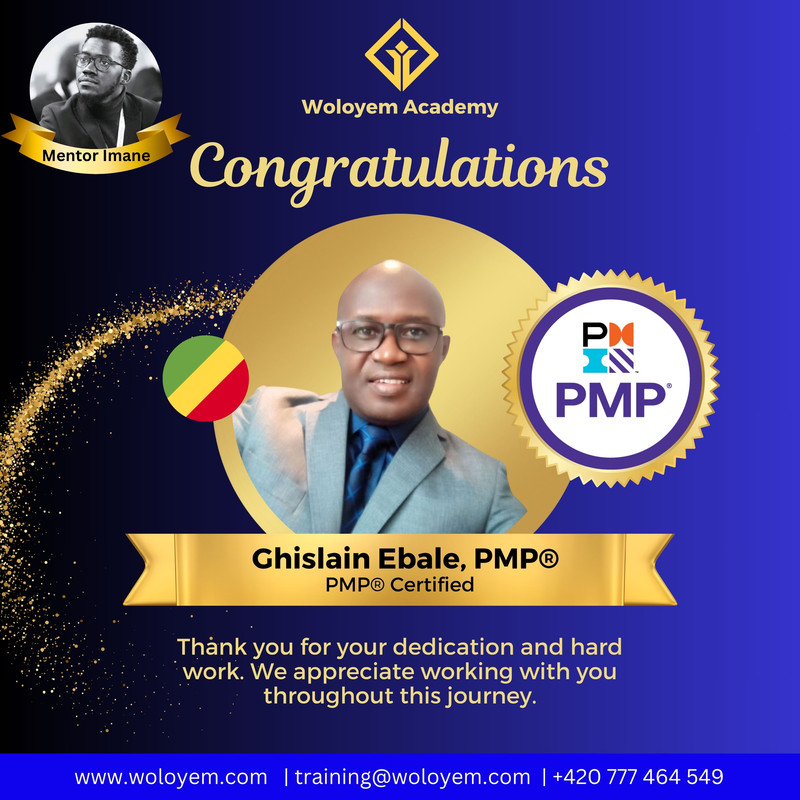
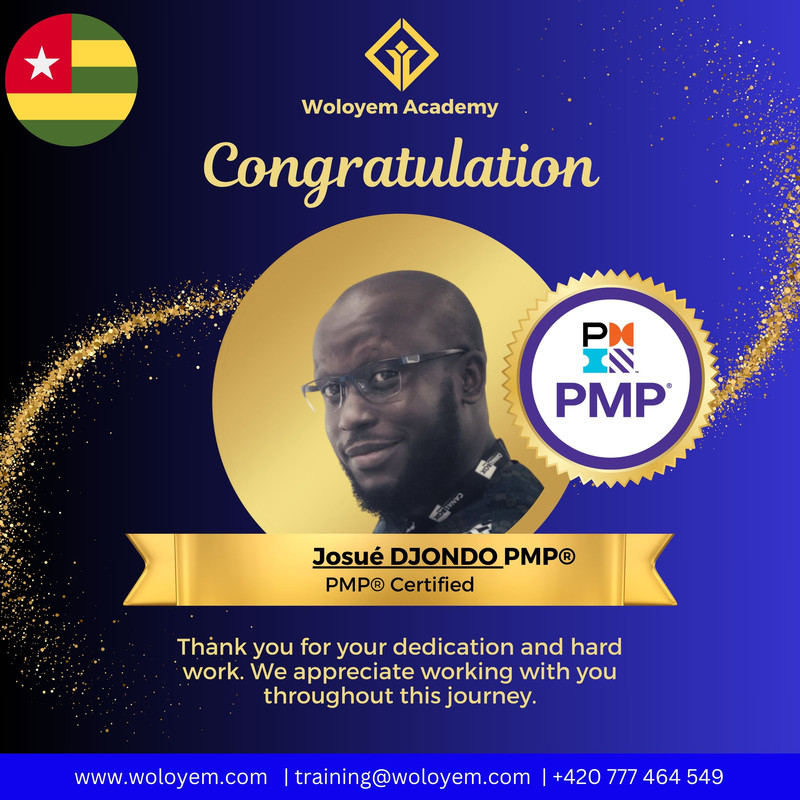
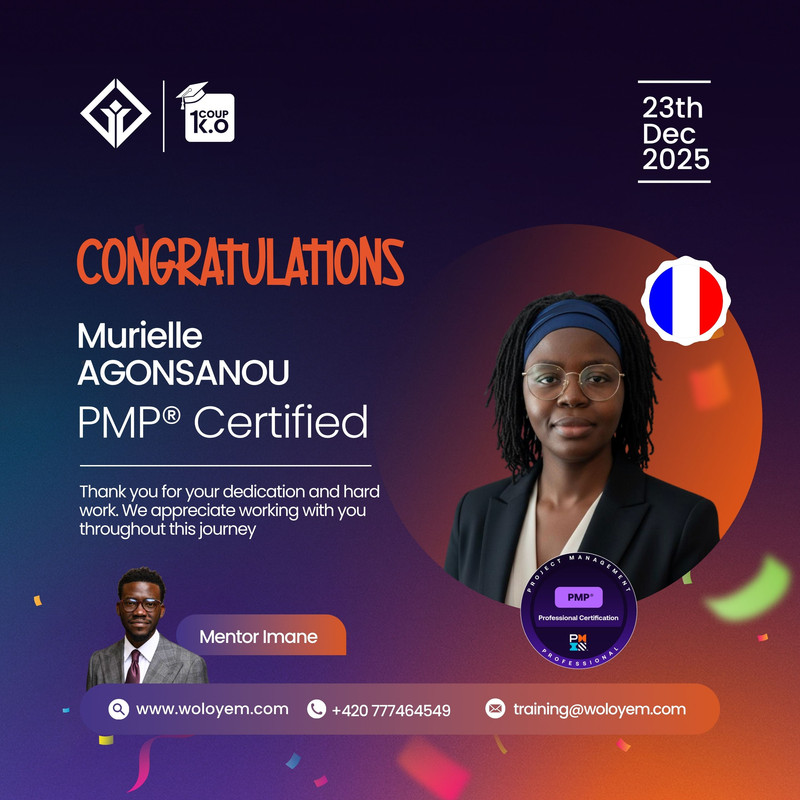
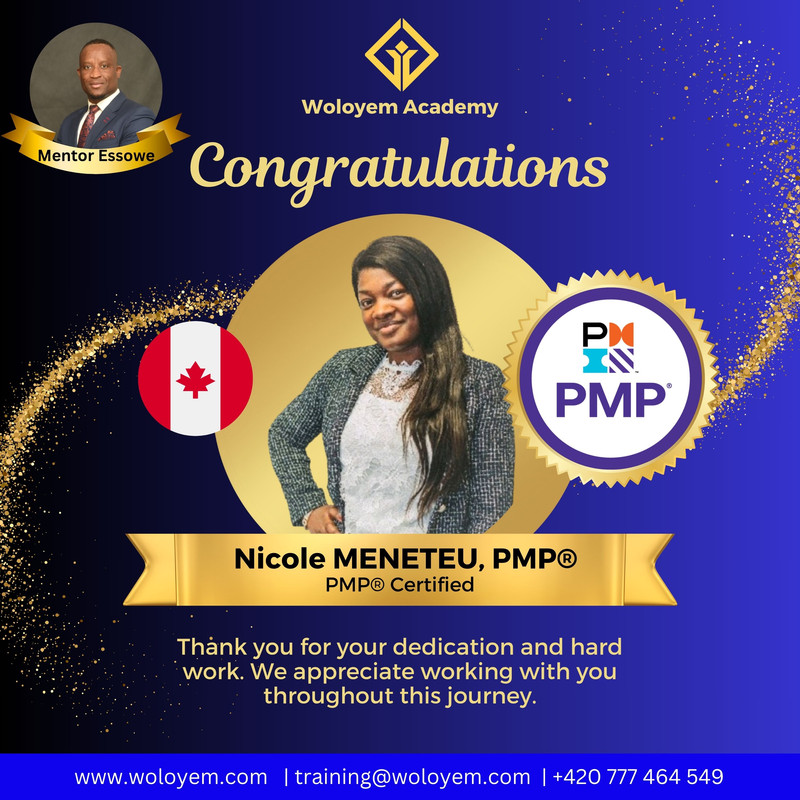
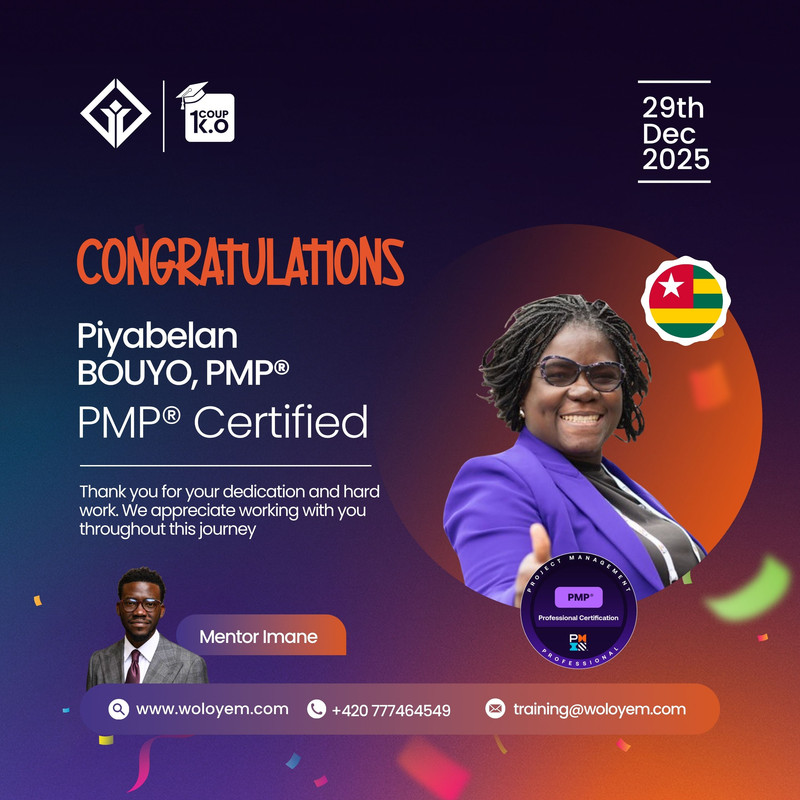
Our successes
.jpg)
.jpg)
.jpg)
.jpg)

.jpg)
.jpg)
.jpg)
.jpg)
.jpg)
.jpg)
.jpg)
.jpg)

.jpg)




.jpg)





Latest news from our blog
Courses
PREPARE EFFECTIVELY
Open PMP® Bootcamp
Pass your PMP certification in the upcoming session
ENROLL NOW