
Key Takeaways
Table of Contents
I. How Long Should You Study for the PMP Exam?
Plan for a few months of steady preparation when possible. If your exam is close, use each remaining session to identify a knowledge gap, practice applying a concept, and review your reasoning. One candidate reported preparing for 35 days, but that example isn’t a reliable schedule for every learner. Your starting knowledge, study consistency, and practice results should guide your plan.
Use practice results to decide what to study next. After each quiz or mock exam, sort missed questions by topic and error type: knowledge gap, misread detail, or rushed choice. Then review the relevant concept and answer fresh questions on it. A suggested benchmark is consistently scoring 70-75% on practice exams before scheduling. Treat that as a preparation guide, not proof that every topic is secure.
Active learning makes review more purposeful than rereading alone. Try flashcards for terminology, explain a process aloud, or write down why each answer choice is right or wrong. For example, after a stakeholder question, explain how the project context affects your next action. Active learning can include practice questions, flashcards, study groups, and teaching concepts to yourself or others.
Practice critical-path calculations by writing down the activity sequence, dependencies, and durations before identifying the longest path. One candidate reported seeing four critical-path questions, so practice the method rather than memorizing a single example. To practice on an online whiteboard, recreate a small network diagram using the basic actions available in the exam interface. Focus on clear labels and checking dependencies, not elaborate formatting.
Full-length simulations build exam stamina and reveal pacing problems that short quizzes can hide. Preparation guidance recommends simulating the full exam two to three times before exam day. After each simulation, review incorrect and flagged answers, then compare your performance by topic. A high overall score can conceal a weak area, while repeated errors in one task show where to focus your next study session.
The day before the PMP exam, review concise notes, key formulas, and mistakes you recorded during practice. Avoid starting a broad new topic or taking a tiring full-length mock exam. Use the time to reinforce familiar material and prepare your exam setup. A brief review of critical-path steps can help you recall the method without turning the evening into another marathon.
For a focused practice session, use PMP practice resources to work through questions and examine your reasoning. Let the pattern in your results decide what deserves attention next, rather than counting study hours alone.
II. Online exam experience and time management
Prepare your exam setup before test day so logistics don’t compete with concentration. For an online session, read the candidate instructions and arrange your space accordingly. Keep required identification nearby, clear your work area, and make sure you can sit without interruptions. Treat this as a separate preparation task, not something to improvise during check-in.
For a testing-center appointment, plan your route and what you’ll need to carry. Keep identification somewhere easy to reach. If you’re taking the exam online, close unrelated applications and silence notifications on nearby devices. A prepared environment removes small distractions before they interrupt your focus.
A short setup rehearsal can reduce uncertainty. Sit at your study space, arrange materials as permitted by the instructions, and practice starting a timed study session without searching for anything. For a testing center, mentally walk through leaving home, arrival, check-in, and settling into the room. This makes those first steps familiar rather than another source of pressure.
Use a repeatable method to review formulas. On a blank page, write each formula you’re studying from memory, define its variables, and note what the result tells you. Compare your work with your study reference and correct errors in a different color. This shows whether you forgot a symbol, confused a variable, or understood the formula but misread the problem.
Keep formula review focused on application. For each formula, create a short practice problem and explain the result in plain language. If you can calculate an answer but can’t explain what it signals, revisit the concept. These last minute PMP exam tips turn formula practice into interpretation, rather than a list of symbols to memorize.
If anxiety rises, bring your attention back to one action you can take now. Relax your shoulders, take a slow breath, and reread the current instruction. Avoid judging your performance based on one uncertain response. A brief reset can interrupt that spiral and help you focus on the information in front of you.
Choose a calm routine for the evening before: prepare your setup, review a concise formula sheet, and stop when your concentration drops. Practical project management techniques can help you break preparation into clear actions instead of treating it as one overwhelming task. Use that structured approach to enter the exam focused and ready to work.
III. Reading scenario-based questions carefully
Scenario questions test how you apply project management concepts, not simply whether you can recall terms. The PMP exam uses multiple-choice, matching, and scenario-based formats. Before considering the answer choices, read each prompt for the project context, the problem, and the action requested.
For eligibility, candidates must complete 35 hours of project management education to sit for the PMP exam. The exam is available online or at a testing center, and candidates may take it up to three times in a year.
Paraphrasing helps separate useful details from distracting background. After reading a scenario, restate its core issue in one short sentence: “The team found a risk after work began, and I need to decide what to do next.” Then identify the question’s timing, role, and desired outcome. A program scenario might ask how to respond to a new stakeholder concern, not how to revise the entire plan.
Look for signal words such as “first,” “next,” and “before.” They define the sequence the question tests. If a project manager discovers a missed dependency, for example, distinguish between assessing its impact and immediately changing the schedule. Choose the response that addresses the situation and follows a reasoned project-management sequence.
Different answer formats call for slightly different reading habits. For multiple-choice items, compare every option with the scenario instead of selecting the first plausible response. For matching items, identify the relationship being tested, such as linking a stakeholder concern with an appropriate response. In either format, ignore options that introduce actions or facts absent from the prompt.
If a question remains difficult, eliminate choices that conflict with the scenario, select the strongest remaining answer, and flag it for review if the exam interface allows. Don’t let an unfamiliar phrase consume time meant for later questions. When you return, reread the prompt before the choices. This can prevent an earlier assumption from controlling your decision.
Use practice questions to train this process. After each answer, briefly paraphrase the prompt and explain why your chosen response fits. If your explanation relies on information the question never gave, reconsider your interpretation. This method also helps distinguish a genuine knowledge gap from a misread detail.
Base your review on evidence in the question, not on guessing the writer’s intent. Once you finish the exam, results appear on screen. Treat every response as a decision to reason through carefully, even when the final item uses a format you’ve practiced less often.
IV. Exam breaks and section structure
Plan each break around the PMP exam’s three-section structure. You can’t return to a section after submitting it, so review flagged questions before you move on. The exam offers two optional 10-minute breaks. Treat each pause as a reset between completed sections, not as time to reconsider answers from a section you’ve already submitted.
Before submitting a section, use any remaining time to revisit flagged items and check that every question has an answer. For a difficult scenario, reread the prompt, confirm what it asks, and compare your choice with the project facts. Once you submit that section, you cannot reopen it, so make your final review before submitting rather than relying on the break.
A break can restore focus after sustained reading, but only if you return ready for the next section. Step away from the screen, drink water if available, and avoid reviewing notes or discussing questions. Those activities can pull your attention back to finished items. Use the pause to reset, then start the next section with a fresh reading routine.
Online exam reports describe an automatic break after question 89, but that detail comes from one candidate’s experience. Don’t build your entire pacing plan around that report. Instead, learn the section transitions shown in your exam interface and follow the instructions presented on test day. The key rule remains: a submitted section is closed to review.
Practice the transition during a mock exam or course. At each section boundary, stop, review flagged responses, and decide whether you’re ready to submit. This rehearsal makes the boundary a deliberate checkpoint. If a question remains uncertain, choose the best answer supported by its wording before leaving the section.
Keep a simple break routine in mind: finish the current section, use its review time, submit only when ready, then take the optional pause. Don’t spend the break mentally replaying difficult answers. The next section deserves your attention, and a clear reset helps you return to its questions with focus.
Because the two breaks are optional, use them according to your concentration. If you’re alert, continue without a pause. If fatigue is affecting your reading, take the available break at the section transition. Protect the review window first. A calm routine helps you manage the exam structure without sacrificing answers you can still check.
The PMP exam has 3 sections and is divided into three sections; candidates cannot return to a submitted section to review or change answers, or return after a break.
V. PMP Exam Content Outline and domain weighting
Use the PMP Exam Content Outline to prioritize review by domain and task. It describes the exam’s domains, tasks, and overall structure, helping you connect study topics with the work being tested. The exam covers People, Process, and Business Environment, alongside predictive, agile, and hybrid approaches. Review all three domains instead of assuming one approach or topic dominates.
For the PMP exam scheduled for July 9, 2026, the domain weighting is People at 33%, Process at 41%, and Business Environment at 26%. Process has the largest share, but that doesn’t make the other domains optional. Weighting can guide how you allocate remaining study time; it doesn’t identify the exact questions you’ll see.
Turn the outline into a practical review map. For each domain, identify tasks that feel familiar and those that still lead to errors. Connect each weak task to a practice question or concise review note. For example, if a question about team conflict repeatedly causes hesitation, revisit the relevant People task and practice explaining the best next action.
Don’t treat domain weighting as a way to predict individual questions. A broad domain includes different tasks, and scenario wording can combine concepts across approaches. A question about a schedule change might require you to interpret the project context before deciding whether a predictive, agile, or hybrid response fits. Use the outline to organize your knowledge, then practice applying it.
Balance your final review using both domain weighting and evidence from your practice results. Give more attention to a larger domain when your results also show a gap there. If your Process answers are strong but People questions repeatedly expose a misunderstanding, target that weakness instead of automatically reviewing Process. This keeps your study plan responsive and builds confidence through specific corrections.
For a focused review, mark each task as secure, uncertain, or weak, then revisit the uncertain and weak areas first. After answering a practice question, name its domain and explain which task it tested. This simple step checks that you understand the outline as a working map, not just a list of labels.
Apply the domain map with PMP practice questions, then use missed answers to choose your next review topic.
VI. Woloyem helps you to learn and master projet and service management: Project Management Techniques
VII. Carry Your Exam Preparation Into Your Next Project
VIII. Frequently Asked Questions
How Long Should You Study for the PMP Exam?
What are the most important PMP formulas and calculations to memorize?
What is the PMP exam format, duration, and number of questions?
What breaks are allowed during the PMP exam?
What are the best time-management strategies for the PMP exam?
What are common PMP exam traps and how can I avoid them?
What last-minute strategies help reduce PMP exam anxiety?
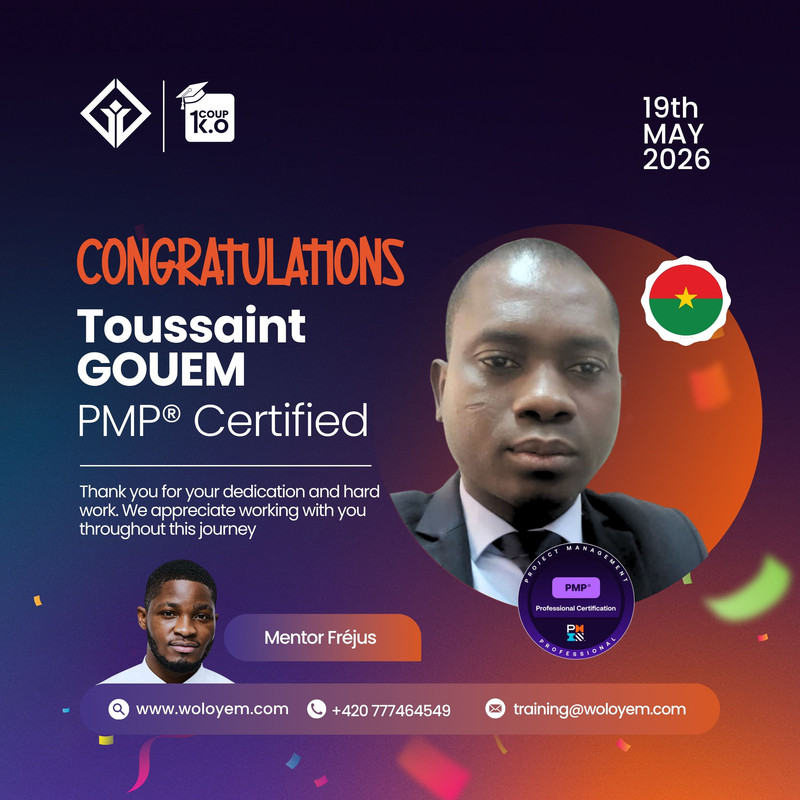
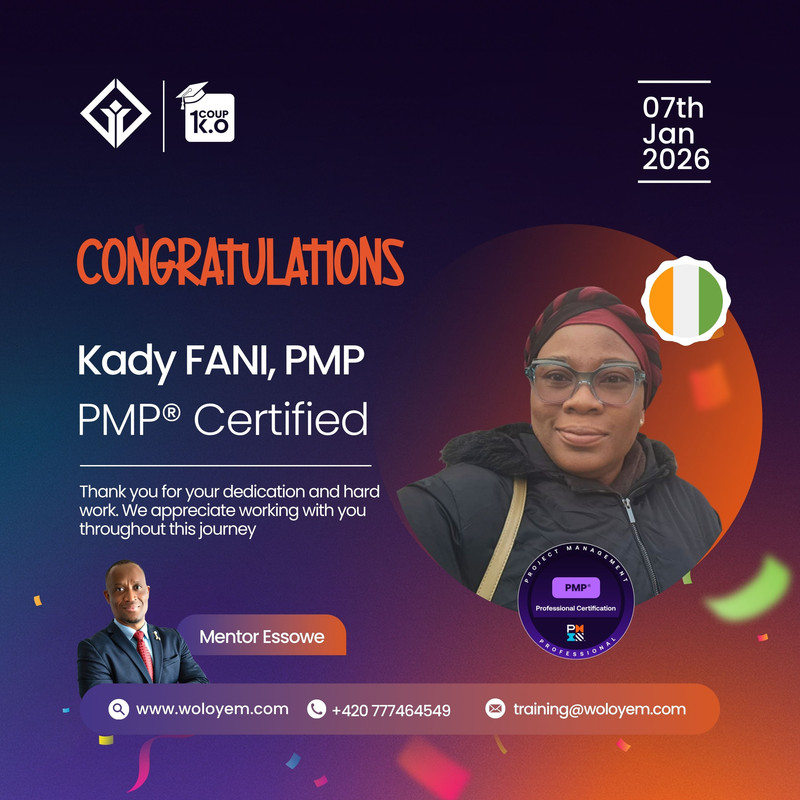
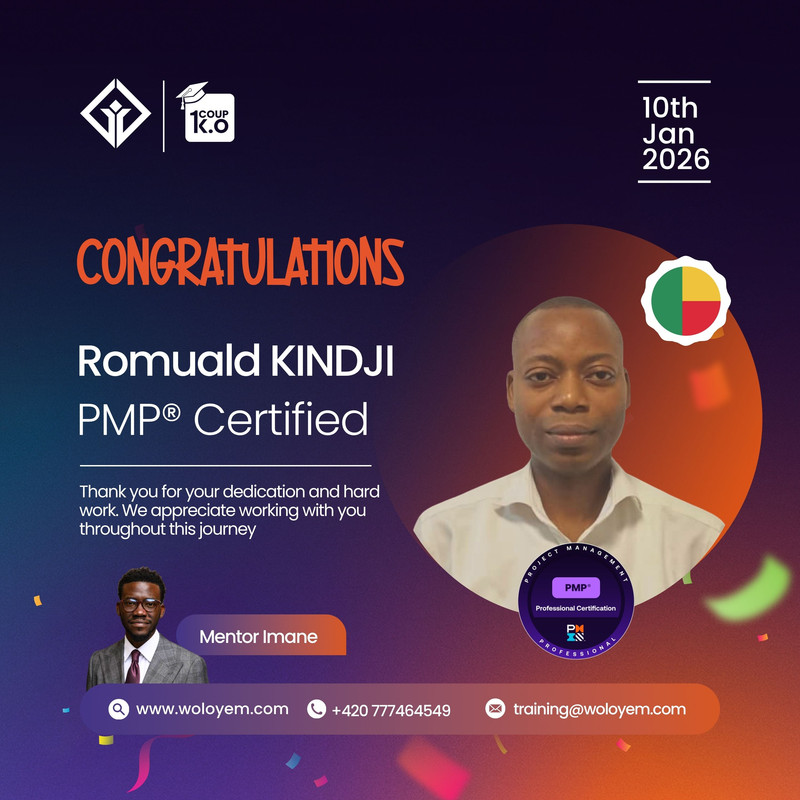
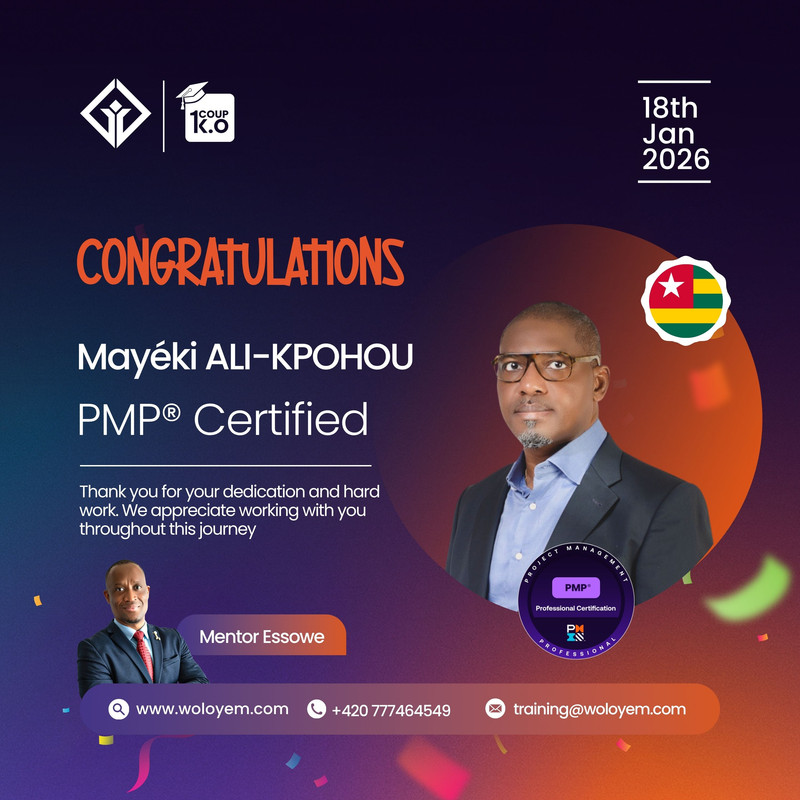
Our successes























































































Latest news from our blog
Courses
PREPARE EFFECTIVELY
Open PMP® Bootcamp
Pass your PMP certification in the upcoming session
ENROLL NOW