The new PMP exam 2026

Essowè Abalo
Did you know that as of July 9, 2026, the Business Environment domain now accounts for a staggering 26% of your PMP exam score? It's a massive jump from the previous 8%, signaling a fundamental shift in how the PMI evaluates leadership. You've likely felt the pressure of keeping up with these changes, especially with the PMP PMBOK 8 transition reintroducing 40 non-prescriptive processes and consolidating 12 principles into 6 core pillars.

I understand the anxiety that comes with such a significant overhaul. It's overwhelming to balance your daily project load while trying to decode new AI governance requirements and shifting exam domains. This article provides the strategic clarity you need to master the 2026 requirements, focusing on practical application rather than just rote memorization. We'll break down the 7 performance domains, explain the new AI integration, and provide an actionable study plan to ensure your certification success.

The new PMP exam 2026, launching July 9, reflects the PMBOK 8 focus on 6 core principles and 7 performance domains. Key changes include a 26% weighting on the Business Environment, the reintroduction of 40 processes, and a heavy emphasis on AI governance. Candidates must pivot from pure methodology to demonstrating strategic business value and technological adaptability.

Key Takeaways

  • Understand the structural transition from the 12 principles of the previous edition to the 6 core principles and 7 performance domains defined for the 2026 update.

  • Master the reintroduction of 40 non-prescriptive processes within the PMP PMBOK 8 framework to balance technical rigor with agile flexibility in your project execution.

  • Gain clarity on the integration of Artificial Intelligence and the PMI-CPMAI standards to navigate the new AI governance requirements featured in the 2026 exam.

  • Adapt your study strategy to account for the Business Environment domain’s increased weighting, which now represents 26% of the total exam content.

  • Discover how Woloyem’s 2026 PMP Bootcamp bridges the gap between theoretical PMI standards and professional certification through expert-led coaching in English and French.

Table of Contents

I. Understanding PMBOK 8: The Evolution of Project Management Standards

PMBOK 8 is the latest global standard from the Project Management Institute (PMI), released in late 2025 to govern the July 9, 2026, PMP exam update. This edition streamlines the 12 principles found in the 7th edition into 6 core strategic principles while reintroducing 40 non-prescriptive processes. It serves as a comprehensive framework that balances agile flexibility with the technical rigor required for modern, complex delivery environments.


The evolution of the  Project Management Body of Knowledge (PMBOK) reflects a response to a rapidly changing professional landscape. While the previous edition focused heavily on a principles-based mindset, practitioners reported a gap in practical, process-oriented guidance. The PMP PMBOK 8 update addresses this by restoring structural clarity without returning to the rigid, prescriptive nature of older versions. It integrates high-level governance with actionable focus areas like AI integration and PMO strategic alignment.

To better understand the structural changes and how they impact your certification journey, watch this helpful video:

A. Why PMI Updated the Standard for 2026

The primary driver for this update is the explosive growth of Artificial Intelligence (AI) and automation within project lifecycles. PMI recognized that project managers now require specific competencies in AI governance and data-driven decision-making to remain competitive. Additionally, the update responds to global feedback from thousands of practitioners who requested a more balanced approach between the "what" of principles and the "how" of processes. By aligning project outcomes more closely with organizational strategy, PMBOK 8 ensures that project managers act as strategic partners rather than just task executors.

B. PMBOK 7 vs. PMBOK 8: Key Philosophical Shifts

The shift from the 7th to the 8th edition represents a move toward strategic consolidation. The 12 behavioral principles have been refined into 6 core principles that emphasize high-level leadership and accountability. Similarly, the 8 performance domains from the previous guide are now 7 refined domains, optimized for hybrid environments where predictive and adaptive methodologies coexist. This version places a significantly higher premium on adaptability, requiring candidates to demonstrate how they tailor their approach to specific project contexts. For those preparing for this transition, our PMP Bootcamp is specifically designed to bridge these philosophical shifts with practical exam success.

II. The 6 Principles and 7 Performance Domains: A Structural Breakdown

The transition to PMP PMBOK 8 represents a refined architecture for project governance. Instead of the previous 12 behavioral principles, the Eighth Edition consolidates these into 6 core principles that dictate how professionals should behave and make decisions. This structural shift moves away from purely academic definitions toward a practical, strategic mindset that aligns project delivery with organizational ROI. By streamlining these foundational elements, PMI ensures that project managers can navigate complex environments with greater agility and technical precision.

A. The 6 Core Principles of Project Management

These six principles serve as the ethical and professional foundation for every project manager. They emphasize stewardship, complex stakeholder environments, and the relentless pursuit of value. Unlike the Seventh Edition, which focused heavily on individual behaviors, these principles demand high-level accountability and a holistic understanding of the business ecosystem. For instance, the principle of leadership now requires navigating the convergence of human talent and AI automation. Effective leadership techniques are no longer just about soft skills; they're about strategic decision-making in high-uncertainty environments where stakeholder expectations are constantly evolving. These principles don't just suggest how to act; they define the professional standards required to lead multi-million dollar initiatives successfully.

B. Navigating the 7 Performance Domains

The 7 performance domains in the Eighth Edition replace the previous 8, streamlining the areas of practice where project managers must demonstrate expertise. These domains cover the entire project lifecycle, from initial procurement strategies to final value realization. A key change in this version is the heightened focus on PMO governance and the Business Environment, which now accounts for 26% of the exam weighting. Project managers are expected to manage not just the work, but the strategic frameworks that enable that work to happen efficiently.


Consider the "Accountability" domain in a remote team setting. In a hybrid or fully remote environment, accountability shifts from monitoring hours to measuring outcomes and value delivery. This requires a robust system of transparent communication and clear ownership, often supported by AI-driven tracking tools. By mastering these domains, you ensure that your project remains aligned with the broader corporate strategy while maintaining technical excellence. If you're looking to deepen your understanding of these frameworks, our PMP certification program offers a direct path to mastering these complex shifts and securing your professional future.


The Standard for Project Management within this guide establishes global consistency across industries. It ensures that whether you're managing a digital transformation in Paris or a construction project in Montreal, the underlying principles remain the same. This consistency is what makes the PMP credential so valuable to international employers, providing a universal language for risk, quality, and leadership.

III. Reintroducing Processes and AI: What is New in the Eighth Edition?

The PMP PMBOK 8 framework marks a significant departure from the purely principles-based approach of its predecessor by reintroducing 40 technical processes. This isn't a return to the rigid waterfall structures of the past; instead, it's a strategic response to a global demand for more practical, hands-on guidance. By integrating these processes with advanced AI governance, PMI provides a toolkit that supports both digital transformation and traditional delivery models.

A. The Return of Process Rigor

Many practitioners felt the previous edition lacked the "how-to" necessary for complex execution. The Eighth Edition solves this by restoring 40 processes that serve as a non-prescriptive framework for project success. These workflows provide the necessary structure for high-stakes environments without trapping teams in a linear sequence. Non-prescriptive process guidance refers to a flexible framework of standardized workflows that project managers can adapt and tailor to their specific project environment without being forced into a rigid, sequential methodology.


Avoiding the waterfall trap requires a mindset shift. You should view these processes as modular components rather than a fixed checklist. In a hybrid environment, you might use the rigorous procurement processes from PMBOK 8 while maintaining agile delivery cycles. This balance ensures technical integrity while preserving the speed required for modern business. It's about having the right tool for the job, whether you're managing a global supply chain or a software sprint.

B. AI Governance and the Project Manager

The integration of Artificial Intelligence is perhaps the most transformative aspect of this update. PMBOK 8 aligns closely with the PMI-CPMAI standards, requiring project managers to understand how AI impacts estimation, risk analysis, and resource leveling. AI tools can now process thousands of variables to predict project delays or budget overruns with far greater accuracy than manual methods. However, this power requires a robust governance framework to manage ethical considerations and data integrity.


Project managers must now act as the primary governors of AI implementation within their teams. This involves setting clear boundaries for AI-driven decision-making and ensuring that automated outputs align with organizational values. For those looking to master these complex dependencies, implementing Advanced Risk Analysis Strategies is essential for navigating the uncertainties of AI-enhanced project lifecycles. This level of technical oversight is what separates a standard project manager from a strategic leader in the age of digital transformation.


Finally, the expanded sections on PMO governance and procurement reflect the reality of modern global supply chains. PMOs are no longer just reporting hubs; they're centers of excellence that drive digital strategy and ensure that procurement strategies are resilient against global disruptions. This holistic view ensures that every process, from AI estimation to vendor management, contributes directly to the organization's strategic goals.

woloyem.com

PMP® EXAM EVOLUTION

MASTERING THE 2026 CHANGES

A strategic breakdown of the PMBOK® 8 framework and the new exam format effective July 9, 2026.

The Core Shift: From PMBOK® 7 to PMBOK® 8

PREVIOUS FRAMEWORK

PMBOK® 7

12 Principles
8 Domains

NEW STANDARD

PMBOK® 8

6 Core Principles
7 Domains

Exam Domain Overhaul: The Rise of Business Acumen

The Business Environment domain sees a significant weighting increase, demanding a strategic focus.

This shift requires candidates to pivot from pure methodology to demonstrating strategic business value and technological adaptability.

Key Structural Changes in PMBOK® 8

Reintroduction of 40 Processes

Balances high-level principles with actionable, non-prescriptive guidance to bridge the gap between “what” to do and “how” to do it.

AI & Governance Integration

A new, heavy emphasis on AI governance, data-driven decision-making, and alignment with PMI-CPMAI™ standards for digital transformation.

6 Consolidated Core Principles

Streamlines 12 previous principles into 6 core tenets focused on stewardship, stakeholder engagement, and relentless value delivery.

7 Refined Performance Domains

Optimized to govern project work in modern hybrid environments where predictive and adaptive methodologies coexist and must be tailored.

The New Mandate: A Strategic Mindset Shift

FROM Task Execution
TO Strategic Partnership
FROM Pure Methodology
TO Demonstrating Business Value
FROM Rote Memorization
TO Adaptability & Application

IV. Preparing for the PMP Exam in 2026: Study Strategies and Focus Areas

The transition to the July 9, 2026, exam requires a fundamental shift in how you approach your preparation. Success under the PMP PMBOK 8 standard is no longer about rote memorization of inputs and outputs. Instead, the PMI now prioritizes a candidate's ability to demonstrate situational judgment within a complex, AI-enhanced business ecosystem. You must align your study plan with the new Examination Content Outline (ECO) to ensure you are focusing on the areas with the highest point density, particularly the expanded Business Environment domain.

A. The 2026 Exam Content Outline (ECO) Shift

The most critical change in the 2026 ECO is the weighting of the Business Environment domain. This section has increased from a mere 8% to 26% of the total exam questions. This shift reflects the industry's demand for project managers who understand organizational strategy, ROI, and compliance. You will face questions that test your ability to evaluate how external changes impact project scope and how to maintain alignment with corporate goals. Additionally, AI governance and PMO strategic integration are now core components of the "Process" domain, requiring you to understand how to leverage automation without compromising ethical standards.


Candidates often struggle with the application process before they even reach the testing center. Properly translating your professional history into the PMI's required format is essential. For a detailed breakdown on how to document project experience, you can review our guide on certification fundamentals. Mastering this step ensures your application reflects the leadership and technical rigor the PMI expects for the 2026 cycle.

B. Strategic Study Plan for PMBOK 8

A common pitfall is attempting to digest the 40 processes before understanding the underlying principles. I recommend a "top-down" reading sequence. Start with the 6 core principles to establish the philosophical foundation. Move into the 7 performance domains to understand the areas of practice. Only then should you dive into the 40 non-prescriptive processes. This approach helps you see the processes as tools for value delivery rather than a rigid checklist. You must also balance your time with the Agile Practice Guide, as hybrid methodologies continue to represent approximately 50% of the exam questions.


Simulation exams are your most powerful tool for identifying knowledge gaps. Use high-fidelity simulators that feature the new interactive question formats, such as drag-and-drop and case sets. Once you feel confident in your practice scores, you should locate the  official PMP exam centers worldwide to schedule your session. If you want to accelerate your preparation and avoid the common mistakes that lead to retakes, consider enrolling in our  premium PMP Bootcamp. We provide the personalized coaching and updated materials necessary to master the 2026 requirements on your first attempt.

V. Mastering PMBOK 8 with Woloyem: Strategic Training for Global Certification

Success in the 2026 project management landscape requires more than just reading a guide. It's about synthesizing the technical rigor of the 40 processes with the strategic mindset of the 6 core principles. At Woloyem, we've rebuilt our curriculum to reflect the PMP PMBOK 8  standard, ensuring you don't just pass the exam but emerge as a high-impact leader. Our approach bridges the gap between theoretical PMI requirements and the practical demands of modern, AI-driven business environments.

A. Woloyem’s PMP Bootcamp: A Proven Framework

We recognize that every professional's journey is unique. That's why we offer tiered mentorship programs, including 8-month, 3-month, and intensive 1-month options. These tracks are designed to fit your schedule while providing the depth needed to master the 7 performance domains. Our expert-led coaching is available in both English and French, catering to a global audience of aspirants who demand excellence. By focusing on situational judgment and the Business Environment domain, we prepare you to achieve Success with Woloyem PMP Bootcamp on your very first attempt.

Our training doesn't stop at rote memorization. We integrate specific modules on AI governance and advanced leadership techniques, aligning your skills with the PMI-CPMAI standards. You'll learn how to leverage AI for project estimation and risk analysis while maintaining the ethical oversight required in the Eighth Edition. This holistic training ensures you're ready for the July 9, 2026, exam update and the digital transformation challenges that follow. It's a comprehensive system built for those who refuse to settle for average results.

For those looking to supplement their leadership training with advanced mindset and communication skills, you can visit Toby and Kate McCartney for NLP certification and professional growth resources.

B. Beyond the Exam: Career Impact and ROI

Mastering the Eighth Edition isn't just a certification milestone; it's a strategic career investment. Professionals who demonstrate proficiency in high-level governance and value delivery often see significant increases in salary potential and access to senior leadership roles. Companies are actively seeking project managers who can navigate the convergence of technology and strategy. Woloyem acts as your partner in this transition, providing the credibility and expertise needed to command respect in the boardroom.

For organizations, we offer tailored  Woloyem Corporate Consulting services. If your PMO is struggling to transition to the PMBOK 8 standard, we provide the roadmap for integrating non-prescriptive processes and AI governance into your existing workflows. This ensures your teams aren't just compliant with global standards but are actively driving ROI through efficient, modern project delivery. Whether you're an individual aspirant or a corporate leader, our mission is to turn the complexity of the new PMP exam into a competitive advantage for your career.

VI. Secure Your Leadership Future in the 2026 Project Landscape

The July 9, 2026, exam update represents a definitive shift from theoretical principles to strategic business application. By mastering the PMP PMBOK 8 framework, you're adopting a governance mindset that successfully integrates AI precision with high-level human leadership. We've examined how the 26% weighting of the Business Environment domain and the reintroduction of 40 technical processes demand a more sophisticated study plan than previous exam cycles. Success now requires a balance of technical rigor and strategic adaptability to deliver measurable organizational value.

I'm here to provide the expert mentorship you need to navigate these complex changes with confidence. Our bilingual training in English and French focuses on practical career impact and AI governance, moving far beyond simple test-taking strategies to prepare you for real-world challenges. Join the Woloyem PMP Bootcamp and Master PMBOK 8 for the 2026 Exam to secure your professional future and pass on your first attempt. Your leadership is the primary driver of success in this new era. I look forward to supporting your certification journey and seeing you excel as a strategic project leader.

VII. Frequently Asked Questions

Is the PMP exam changing in 2026 because of PMBOK 8?

Yes, the PMP exam is officially transitioning on July 9, 2026, to align with the PMBOK Guide, Eighth Edition. This update integrates the new Examination Content Outline (ECO), which places a significantly higher emphasis on the Business Environment and AI governance. Candidates testing before July 8, 2026, will still follow the Seventh Edition standards, while all subsequent tests will reflect the new 2026 requirements.

What are the 6 core principles in the PMBOK Guide Eighth Edition?

The Eighth Edition consolidates the previous 12 behavioral principles into 6 strategic pillars: Stewardship, Team, Stakeholders, Value, Systems Thinking, and Leadership. These principles focus on strategic alignment and behavioral outcomes rather than simple task completion. They provide a high-level framework for decision-making in complex, hybrid project environments, ensuring that every action contributes directly to organizational ROI and project success.

Does PMBOK 8 replace PMBOK 7 completely for the PMP exam?

The Eighth Edition becomes the primary reference for the 2026 exam, effectively replacing the Seventh Edition's structure for all candidates testing after July 9. It restores technical process rigor that practitioners found missing in the previous version while maintaining an agile mindset. Mastering the 7 performance domains and 40 processes in this version is essential for anyone seeking certification in the new exam cycle.

How much AI knowledge is required for the 2026 PMP exam?

Candidates must understand AI governance, ethical implementation, and the use of AI tools for estimation and risk analysis. The 2026 exam aligns with PMI-CPMAI standards, requiring you to demonstrate how AI enhances project efficiency without compromising data integrity. It's no longer an optional skill; it's a core competency evaluated within the Process and Business Environment domains to ensure you can lead digital transformations.

Can I still use PMBOK 7 materials to study for my 2026 certification?

Using only Seventh Edition materials is risky because they lack the 40 processes and AI governance requirements specific to the PMP PMBOK 8 update. The 2026 exam features a 26% weighting on the Business Environment, which is a significant increase that older materials don't adequately cover. I recommend upgrading to resources that reflect the current ECO and the Eighth Edition's structural changes to avoid failing the updated exam.

What is the "non-prescriptive" process guidance in PMBOK 8?

Non-prescriptive guidance provides a flexible toolkit of 40 processes that you can tailor to your project's specific needs. Unlike older waterfall-heavy editions, this approach doesn't mandate a linear, rigid sequence for every project. It allows project managers to select and adapt the most effective workflows for their environment, whether they're using predictive, agile, or hybrid methodologies to achieve the best possible outcomes.

How does PMBOK 8 address PMO governance and procurement?

The Eighth Edition expands the role of the PMO from a reporting hub to a strategic center of excellence that drives digital strategy. Procurement sections now include modern supply chain resilience and vendor management strategies for high-uncertainty global markets. These updates ensure that project managers can navigate complex global logistics and organizational governance with the technical precision required in today's volatile business landscape.

Where can I find a PMP Bootcamp that covers the PMBOK 8 standard?

Woloyem offers a premium PMP Bootcamp specifically updated for the PMP PMBOK 8 standard and the 2026 exam environment. Our mentorship programs include 1-month, 3-month, and 8-month options available in both English and French to suit your professional schedule. We provide the strategic coaching, AI governance training, and high-fidelity simulation exams necessary to master the new domains and pass your certification on the first attempt.

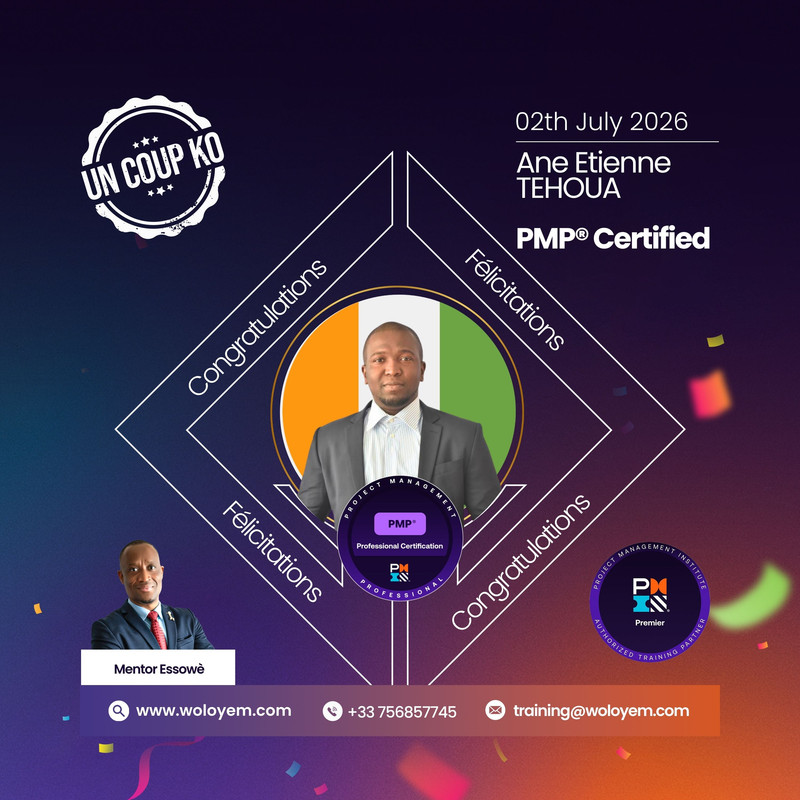
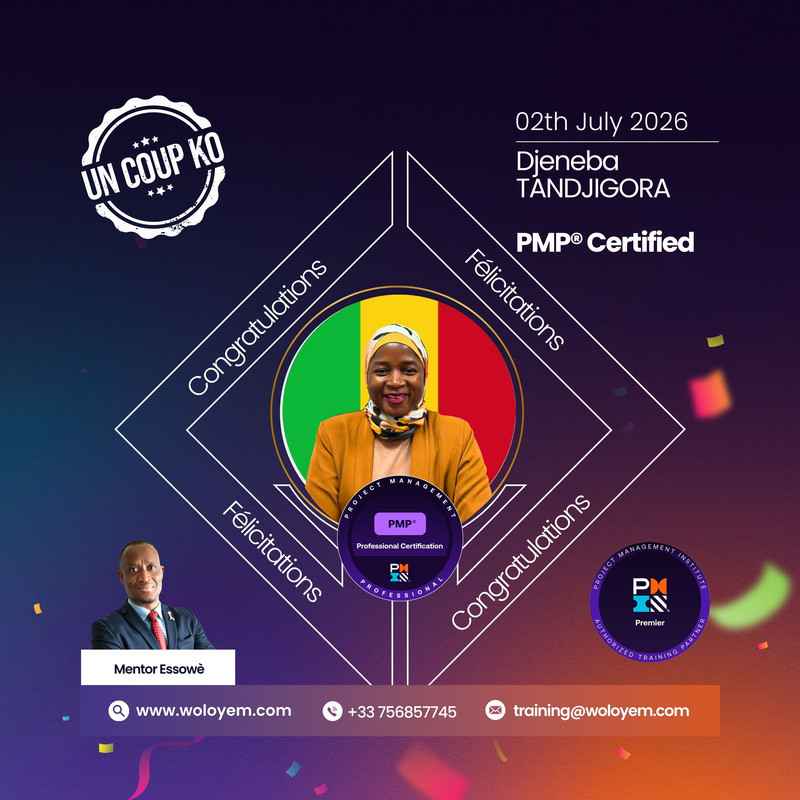
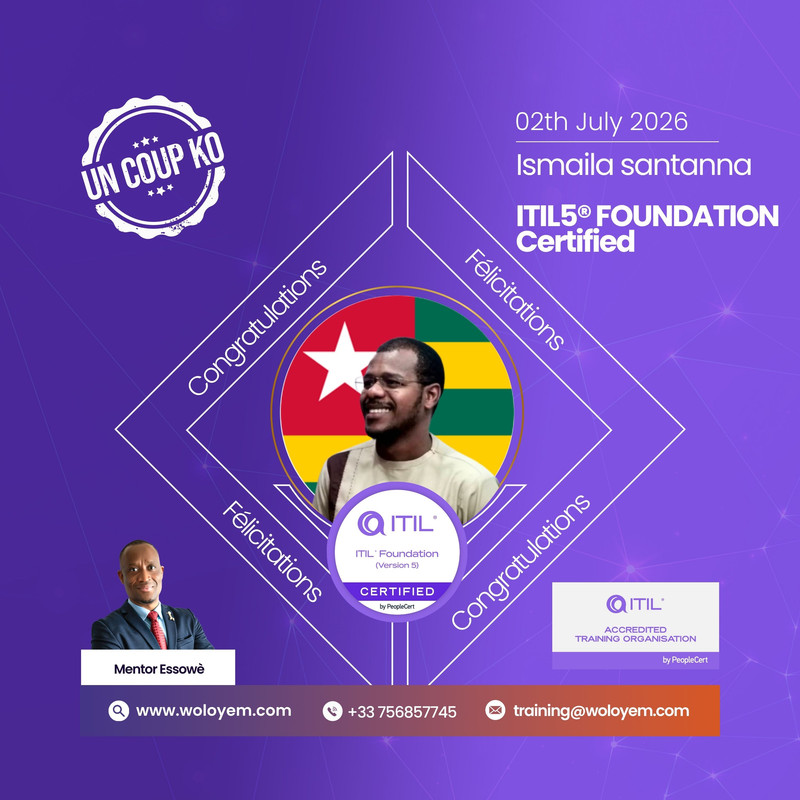
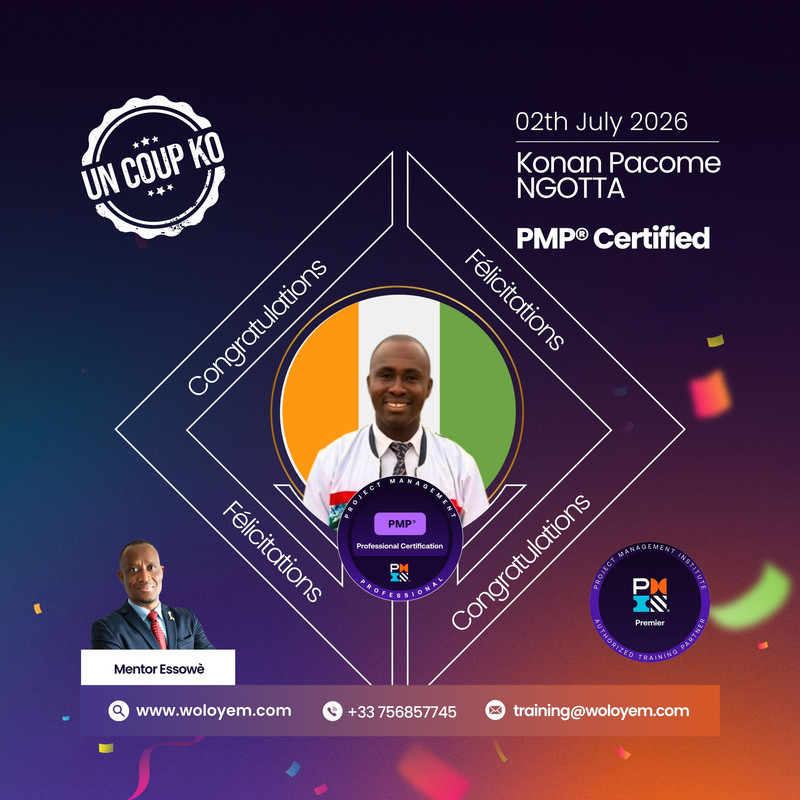
Our successes

Our successes with the "Un Coup K.O." method
Our successes

Courses

Privacy Policy Cookie Policy Terms and Conditions