How to start your PMP® preparation in Nigeria?
To prepare effectively for the PMP® certification, start by checking your eligibility, then assess your level, choose a suitable training programme, organise your study time and plan your PMI application.
A common mistake is to buy several study guides or start practice exams without a defined method.
Here are the five key decisions to make.
1. Check your eligibility for the PMP® certification
Before choosing a PMP® Bootcamp or coaching programme, make sure you meet the official requirements of the Project Management Institute.
The PMP® is designed for professionals with relevant experience leading or directing projects.
The criteria notably take into account:
- Your level of education.
- The length of your qualifying project management experience.
- The responsibilities you have actually held.
- The training hours required by PMI, where applicable.
Depending on your background, the current requirements may correspond to different lengths of qualifying experience.
You do not always need the official job title of “project manager”. An engineer in oil and gas, a product lead in a fintech, a consultant on a donor-funded programme or an operations lead in a bank may have held relevant project responsibilities.
Check your eligibility before paying for training
Do you work in oil and gas, telecoms, banking, fintech, construction and infrastructure, power, manufacturing, the public sector or an NGO in Nigeria?
Start by analysing your background.
Recommended step: check your eligibility before enrolling.
This assessment is a guidance tool. Only PMI can officially approve a certification application.
2. Choose a PMP® training programme that matches your level
Once your eligibility has been reviewed, the next step is to choose your preparation method.
Not all candidates have the same needs.
An experienced professional who already masters project management fundamentals will not necessarily follow the same path as a candidate discovering agile, hybrid and predictive approaches.
PMP® Bootcamp in English: learn with a structured method
The WOLOYEM PMP® Bootcamp offers guided preparation for professionals who want to progress with trainers.
The programme notably covers:
- Project management fundamentals.
- Leadership and team management.
- Agile, hybrid and predictive approaches.
- Risks, changes and stakeholders.
- Value delivery.
- Analysis of situational exam questions.
The live online sessions allow candidates based in Abuja, Lagos, Port Harcourt, Ibadan, Kano, Enugu, Benin City, Warri, Kaduna or anywhere else in Nigeria to train remotely, without losing hours in traffic.
Personalised PMP® coaching: support tailored to your goals
Have you already started studying, but are struggling with complex questions or time management?
WOLOYEM offers several coaching plans:
The right choice depends on your experience, your practice results and your availability.
3. Understand the PMP® exam before you start studying
Effective preparation must be based on the official exam content outline.
Since 9 July 2026, PMI has applied an updated exam content outline that places greater emphasis on value delivery, the business environment and emerging topics.
The three domains of the PMP® exam
| Domain | Weighting |
|---|
| People | 33% |
| Process | 41% |
| Business Environment | 26% |
The updated format includes 180 questions, 10 of which are unscored, over 240 minutes.
The exam assesses your ability to make good decisions in professional situations.
Memorising definitions is therefore not enough.
You need to learn to:
- Identify the real problem in a scenario.
- Distinguish a risk from an issue that has already occurred.
- Choose an answer suited to the context.
- Understand the role of the project manager and the stakeholders.
- Apply the right reasoning in agile, hybrid and predictive environments.
The WOLOYEM UN COUP KO® method
The UN COUP KO® method helps candidates approach PMP® questions with a structured approach.
The goal is to learn to understand the situation, identify the decisive information and compare the possible answers before choosing the best one.
This method is especially useful when several options seem correct.
4. Organise your first month of PMP® preparation in Nigeria
To avoid wasting time, your first month should build solid foundations rather than multiply practice exams.
Here is an example of progression.
| Period | Priority actions |
|---|
| Week 1 | Check eligibility, set your goal and identify your available time |
| Week 2 | Choose your training and discover the exam content outline |
| Week 3 | Study the fundamentals and project management approaches |
| Week 4 | Start situational questions and analyse your first mistakes |
This plan is indicative. Adapt it to your experience and the time you can dedicate to studying — for example early mornings or weekends if your weekdays are taken by work and long commutes.
Can you prepare for the PMP® in 12 weeks?
A 12-week schedule may suit some candidates, but it is not a universal timeframe.
A professional working full time, travelling between states or working on rotation (offshore and onshore oil and gas, project sites) may need more time.
What matters is setting a realistic routine and measuring your progress regularly.
WOLOYEM tip:
do not choose your exam date only because you have finished a course. Consider your ability to handle varied situational questions and the consistency of your results.
5. Prepare your PMI application and schedule the exam
Training and exam registration are two separate steps.
To obtain the PMP® certification, you must submit an application to PMI.
Main steps:
- Gather information about your education, experience and training.
- Build your application on the official PMI website.
- Wait for your application to be approved and provide supporting documents if requested.
- Pay the official fees, which PMI charges in US dollars: with naira exchange-rate fluctuations, check the rate and your card's international payment limits before paying. PMI membership can reduce the exam fee.
- Schedule your exam according to the available options.
Important: fees and procedures may change. Always check the official information before paying.
Where to take the PMP® exam in Nigeria?
Exam booking depends on the options offered by PMI and its exam delivery provider.
Depending on your situation, you can look for an available approved test centre or check whether online proctoring is allowed for you. For online proctoring, plan a quiet room, a stable internet connection and a reliable power backup (generator, inverter or UPS) in case of an outage.
It is better to check official availability directly rather than assume that a specific centre or slot is accessible.
Why choose WOLOYEM for your PMP® preparation in Nigeria?
A PMI Premier Authorized Training Partner
WOLOYEM presents itself as a PMI Premier Authorized Training Partner (ATP).
This status is a relevant criterion when comparing PMP® training providers. It should be checked in PMI's official directory at the time of enrolment.
English-language training available remotely
You can follow WOLOYEM programmes from anywhere in Nigeria without travelling every day.
This flexibility suits professionals in oil and gas, telecoms, banking, fintech, construction, power, manufacturing, consulting, the public sector and NGOs who want to prepare for a certification while continuing to work. The PMP® is also a globally recognised credential, useful for professionals working with international companies or considering opportunities abroad.
Nigeria is on West Africa Time (WAT, GMT+1): check session times against your working hours.
WOLOYEM offers remote preparation here: this does not mean it has a physical training centre in Nigeria.
Bootcamps, coaching and practice exams
WOLOYEM combines several preparation tools:
- Structured training in English.
- Support adapted to each candidate's level.
- Exercises and situational questions.
- Revision resources.
- The UN COUP KO® method.
The goal is to help you develop the reasoning expected in the exam and identify the areas that still need work.
Mistakes to avoid when preparing for the PMP®
Mistake 1: starting without checking your eligibility
You risk investing in training without knowing the exact requirements for your application.
Solution: start with the eligibility assessment.
Mistake 2: piling up resources without a study plan
Accumulating books, videos and simulators does not guarantee progress.
Solution: choose a consistent programme and follow a study schedule.
Mistake 3: memorising practice exam answers
Recognising a question you have already seen does not mean you master the expected reasoning.
Solution: analyse why an answer is appropriate and why the others are less so.
Mistake 4: booking the exam too early
A date that is too close can create unnecessary pressure if some skills are not yet consolidated.
Solution: assess your level before scheduling your exam.
Mistake 5: ignoring PMI updates
Older resources do not necessarily cover all changes to the content outline.
Solution: check that your preparation is aligned with the official Examination Content Outline in force.
FAQ: PMP® training and certification in Nigeria
What is the best way to start the PMP® in Nigeria?
Start by checking your eligibility, assessing your level and choosing a preparation programme that fits your goals. You can then organise your studies and prepare your PMI application.
Can I take PMP® training fully online from Nigeria?
Yes. WOLOYEM programmes are delivered live online, so you can follow them from Abuja, Lagos, Port Harcourt or anywhere in Nigeria.
How long does it take to prepare for the PMP® certification?
It depends on your experience and availability. Some candidates need around 12 weeks, others longer. What matters is a realistic routine and regular progress checks.
Should I submit my PMI application before starting training?
Not necessarily. Many candidates start training first, since the required training hours are part of the application. Check your eligibility first, then plan both steps.
Is WOLOYEM PMP® training suitable for working professionals?
Yes. Live sessions, coaching plans of 1, 3 or 8 months and revision resources let you prepare while keeping your job, including if you work on rotation.
How can I maximise my chances of passing the PMP®?
Follow the official content outline, practise situational questions regularly, analyse your mistakes and book your exam only when your results are consistent.
Testimonials
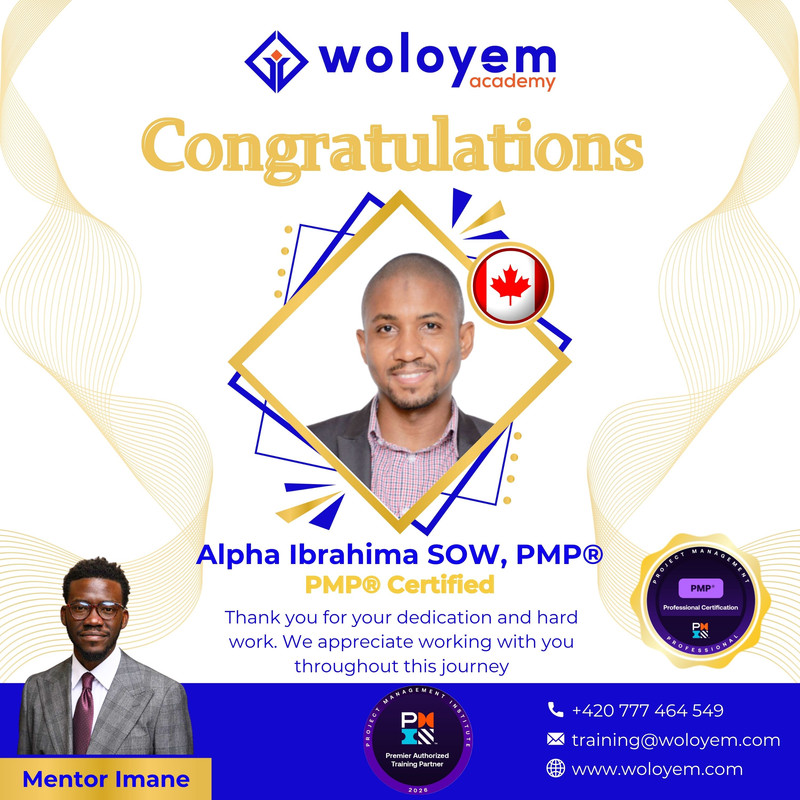
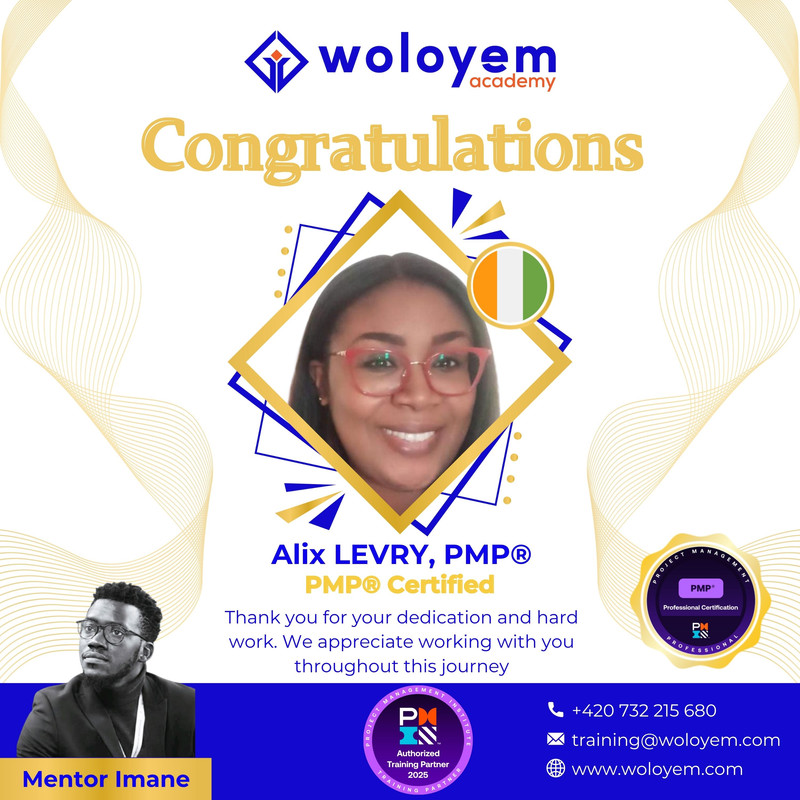
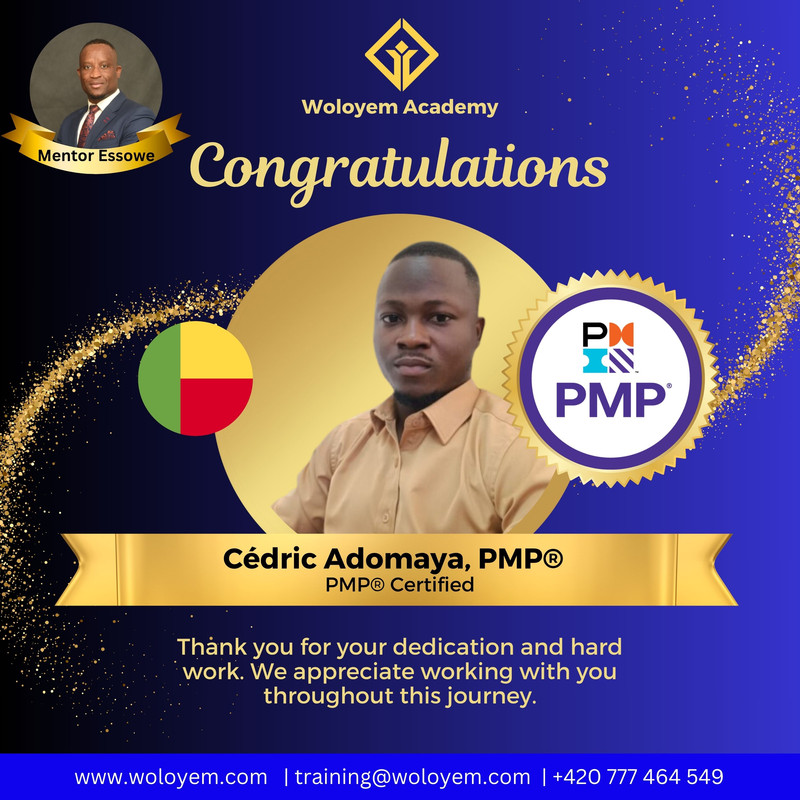
Discover feedback from candidates who prepared for the PMP® certification with WOLOYEM, as well as useful replays for your preparation.
Conclusion: start your PMP® certification in Nigeria with WOLOYEM
Preparing for the PMP® certification is a professional investment that deserves a clear method.
For project managers, engineers, consultants and managers in Nigeria, the key is to start with the right decisions: check your eligibility, select suitable training and build a realistic study plan.
With its English-language PMP® Bootcamps, personalised coaching and the UN COUP KO® method, WOLOYEM offers several paths to support your preparation remotely.