Key Takeaways
Table of Contents
I. The Evolution of Service Delivery: Why ITIL and DevOps Integration is Mandatory in 2026
The digital landscape of 2026 demands a level of operational synchronization that legacy frameworks simply can't provide in isolation. I define itil and devops integration as the seamless alignment of the ITIL Service Value Chain (SVC) with high-velocity DevOps CI/CD pipelines. This isn't a cosmetic change. It's a structural necessity. When organizations treat these frameworks as rivals, they suffer from "bottlenecked agility." Your developers might push code in minutes, but if your operations and governance layers still rely on manual meetings and paper-based change logs, your time-to-market stays stagnant.
ITIL 5 marks a radical shift from a "Process-First" mentality to a "Value-First" approach. In previous iterations, practitioners often got lost in the mechanics of incident or change management. Now, the focus is strictly on how these activities contribute to the final business outcome. For AI-native organizations, this integration becomes the foundation for survival. Automated governance is no longer a luxury. It's the only way to manage the sheer volume and speed of AI-driven deployments without risking catastrophic service failure.
A. From Silos to Flow: The Cultural Shift
B. The Role of ITIL 5 in Modern DevOps Environments
II. Mapping the ITIL Service Value Chain to the DevOps Lifecycle
I view the connection between the ITIL Service Value Chain (SVC) and the DevOps lifecycle as a blueprint for high-performance delivery. The "Plan, Design, and Transition" activities in ITIL shouldn't exist in a vacuum separate from "Code, Build, and Test" in DevOps. Instead, they provide the strategic guardrails. When we map these correctly, the itil and devops integration ensures that every technical sprint contributes directly to a stable, business-aligned service. I've found that the most successful teams treat their ITIL service requirements as the architectural foundation for their DevOps automation.
Service Design is where this synergy becomes most visible through Infrastructure as Code (IaC). Rather than relying on manual configuration documents, your service design requirements are baked directly into deployment scripts. This ensures the environment where your code runs is an exact reflection of the authorized design. Change Enablement also evolves in this model. It shifts from being a manual gatekeeper to an automated validator. If your CI/CD pipeline passes all security and performance tests, the change is automatically authorized for production, maintaining speed without losing control.
A. Value Streams and CI/CD Pipelines
Aligning the ITIL Service Value Chain with technical CI/CD pipelines allows you to see exactly where handovers create friction. By applying Lean principles, you can identify and remove "waste," such as redundant approvals or manual data entry that adds no value to the end user. I recommend focusing on the flow of work from the initial demand to the final value delivery. Value Stream Mapping is the primary tool for framework reconciliation.
This mapping exercise reveals how technical tasks like unit testing or container scanning fulfill specific ITIL practices like Quality Assurance and Risk Management. By making these connections explicit, you provide your development teams with clear boundaries while giving your operations teams the transparency they need to trust the automated process.
B. Automated Governance and AI-Driven Service Management
The latest industry standards for AI Governance introduce a new layer of automation for the service desk. We can now use DevOps telemetry to feed AI models that resolve standard service requests or categorize incidents without human intervention. Predictive incident management is a key outcome here. By analyzing patterns in your deployment data, ITIL practices can trigger proactive problem management before a service degradation actually occurs.
Real-time compliance is the final piece of this puzzle. Instead of traditional point-in-time audits, your integrated system generates a continuous, automated audit trail. You don't need to pause operations to prove compliance because every change, test, and deployment is logged in a tamper-proof history. If you're looking to refine these operational layers, the corporate consulting services from Woloyem helps you to learn and master projet and service management provide the strategic guidance needed to align high-velocity engineering with enterprise governance through our consulting page.
III. Breaking the Bureaucracy Myth: How ITIL 5 Enables DevOps Speed
I've heard it many times: ITIL is where speed goes to die. That's a legacy perspective based on outdated versions of the framework. Modern itil and devops integration actually removes the manual brakes. ITIL 5 uses intelligent automation to replace the dreaded Change Advisory Board (CAB) meetings that used to take weeks. Instead of manual reviews for every minor update, we use automated risk assessment. If a change meets specific criteria, it's classified as a "Standard Change." This means it's pre-approved. DevOps teams can deploy these thousands of times a day without ever waiting for a human signature.
ITIL 5 provides the governance framework to define these criteria, while DevOps provides the pipeline to execute them. By moving away from subjective human reviews toward data-driven guardrails, you eliminate the friction that usually stalls CI/CD pipelines. This isn't about reducing oversight. It's about making oversight invisible and instantaneous. When your governance is baked into the code, compliance becomes a byproduct of the development process rather than a separate, painful step.
A. Standard Changes vs. Automated Deployments
Standard changes are the primary tool for scaling deployment frequency. In a mature itil and devops integration, you define low-risk, repeatable changes that don't require individual authorization. By moving away from manual approval toward automated risk scoring, you empower teams to move at the speed of code. This shift doesn't compromise stability. It actually enhances it by ensuring every release follows a proven, pre-validated path. If you want to move beyond the theory and implement these speed-enabling practices, consider our ITIL 5 certification program to master these modern workflows.
B. Incident Management in High-Velocity Environments
When you're deploying constantly, you need a response system that's just as fast. This is where Site Reliability Engineering (SRE) acts as a bridge. SRE is essentially a hybrid of ITIL practices and DevOps engineering. By using DevOps monitoring tools to trigger ITIL-defined incident workflows, you ensure that service stability isn't sacrificed for the sake of the release train. Automated alerts don't just tell you something is broken. They trigger pre-defined recovery procedures that align with your service level agreements. This synergy keeps the business running while developers keep innovating.
IV. A 5-Step Framework for Successful ITIL and DevOps Integration
Moving from conceptual theory to operational reality requires a structured approach that respects both technical speed and enterprise integrity. I've developed a methodology that focuses on high-speed delivery without compromising the governance standards required by large-scale organizations. Implementing a robust itil and devops integration isn't just about software. It involves a fundamental redesign of how your teams interact with the service value chain to ensure every release is both fast and stable.
A. Cultural Alignment and Value Mapping
Building a unified culture starts with breaking the traditional incentive model. If developers are only measured on feature delivery while operations teams are only measured on uptime, conflict is inevitable. I recommend defining shared KPIs, such as measuring the speed of recovery alongside deployment frequency. This ensures that every team member shares responsibility for the entire lifecycle. When Woloyem helps you to learn and master projet and service management guides organizations through this shift, we focus on establishing a common terminology based on the latest standards to prevent communication breakdowns.
B. Toolchain Integration and Measurement
Technical integration is the engine of this framework. I've seen the most significant improvements when organizations connect their version control systems directly to their service desk. This creates an automated audit trail for every code change without human intervention. You can then measure DORA metrics in the same dashboard as your service level agreements. This visibility allows leadership to see the health of the entire value stream at a glance. If you're ready to master these techniques, I invite you to get ITIL 5 certified through the intensive bootcamps offered by Woloyem helps you to learn and master projet and service management.
V. Leading the Transformation: Woloyem’s Approach to Integrated Mastery
A. Upskilling Leaders for Dual-Framework Excellence
B. Corporate Consulting for Strategic Alignment
VI. Future-Proofing Your Service Delivery with Integrated Governance
VII. Frequently Asked Questions
Is ITIL 5 compatible with DevOps practices?
Does DevOps replace ITIL in modern IT organizations?
How does ITIL 5 AI Governance impact DevOps speed?
What are the first steps to integrate ITIL and DevOps?
Can a PMP certified manager lead an ITIL-DevOps integration?
What are the best metrics for measuring integrated ITIL and DevOps success?
How do ITIL 4 and ITIL 5 differ regarding DevOps support?
Is ITIL 5 certification worth it for DevOps engineers?
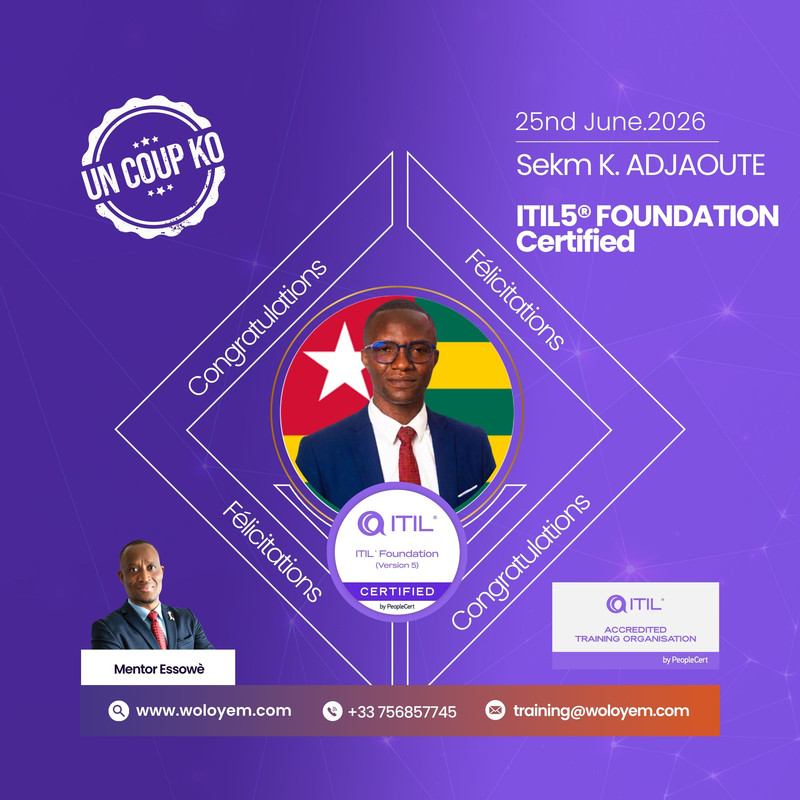
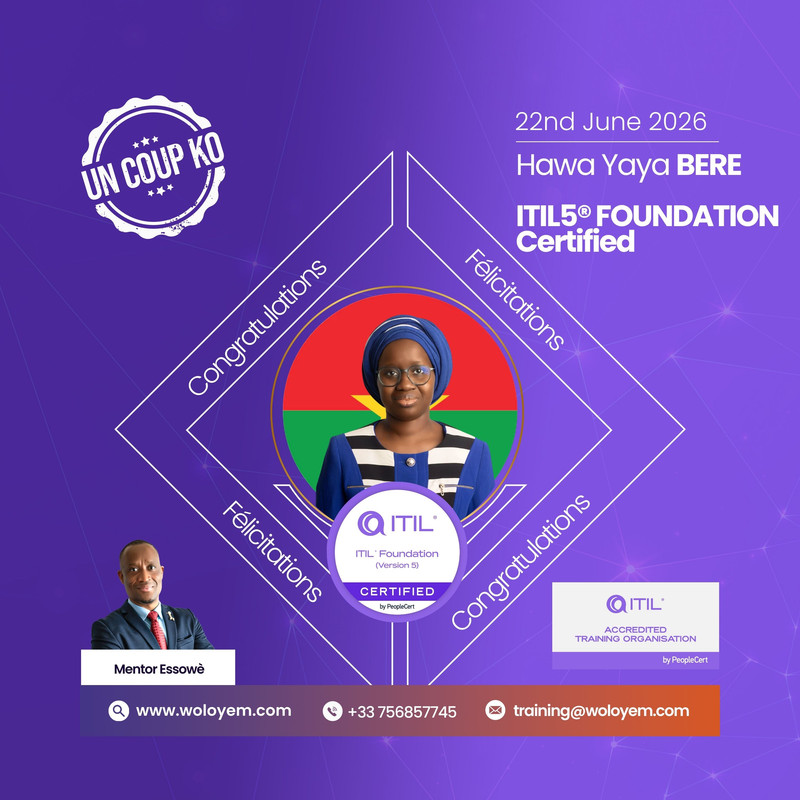
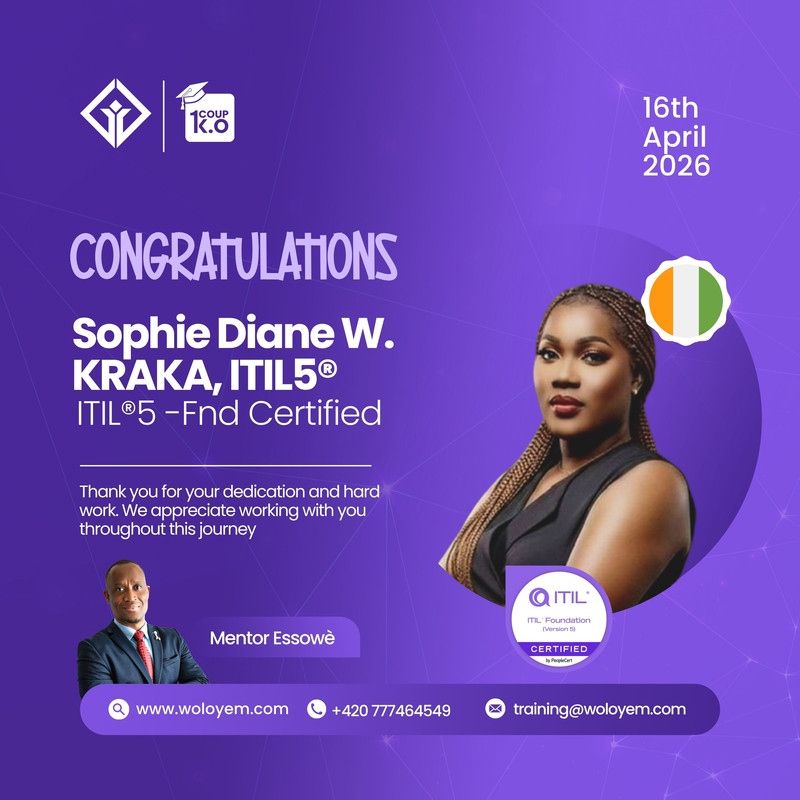
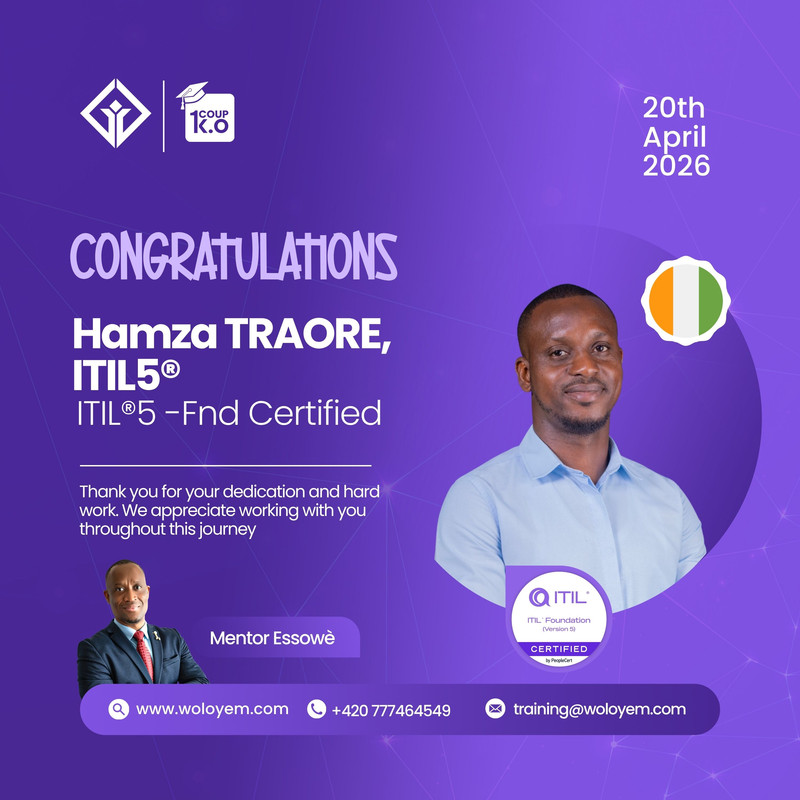
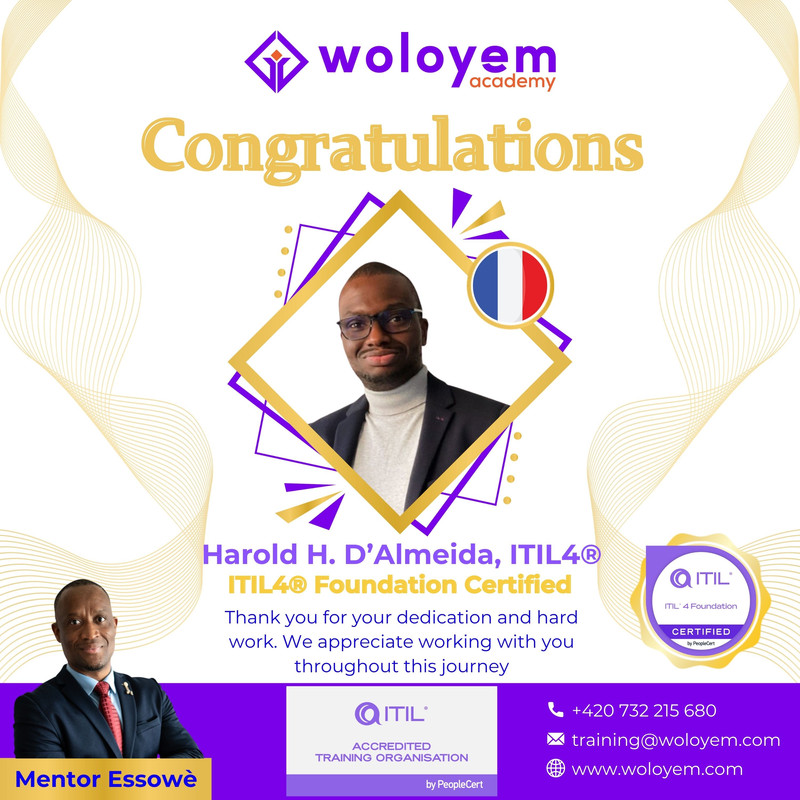
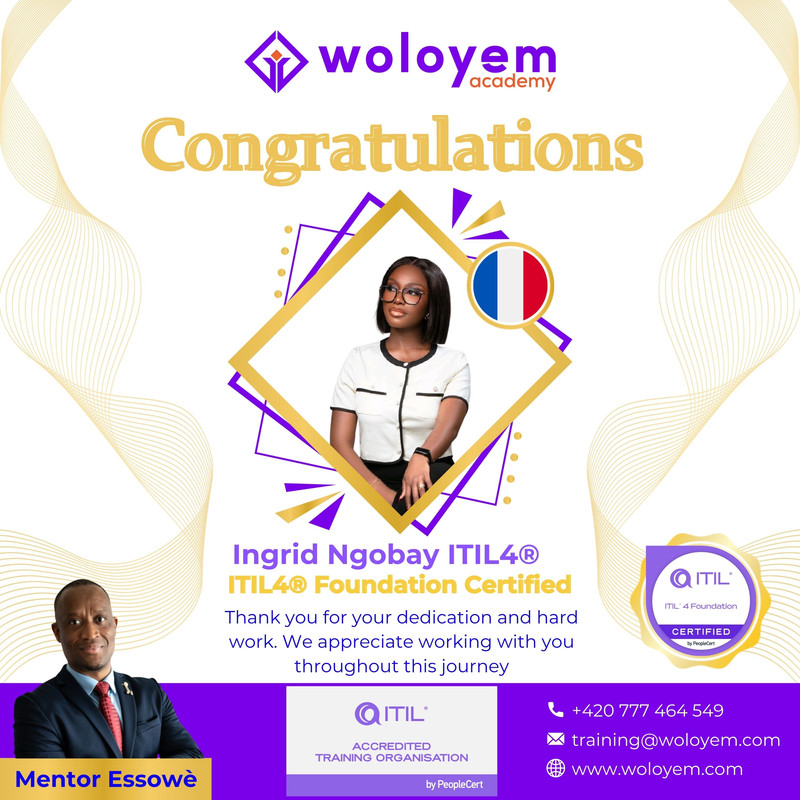
Our ITIL 5® successes


Latest news from our blog
Courses