
Key Takeaways
Table of Contents
I. Decoding the PMP Formula Cheat Sheet for 2026
The PMP landscape is fundamentally changing with the July 9, 2026 exam update. While many candidates believe the shift toward the Project Management Body of Knowledge (PMBOK) Eighth Edition means fewer formulas, the reality is more strategic. The current Exam Content Outline (ECO) now places 41% of the weight on Process and 26% on Business Environment. This means your pmp formulas cheat sheet isn't just a list of math problems; it's a diagnostic toolkit. You aren't just calculating numbers. You're interpreting project health to protect organizational ROI and improve service quality.
To better understand this concept, watch this helpful video:
In 2026, the exam moved away from rote memorization toward scenario-based interpretation. If you find that your Cost Performance Index (CPI) is 0.8, the exam won't just ask for the calculation. It'll ask what corrective action you should recommend to the C-suite. Quantitative mastery reduces project risk by providing objective data in a highly subjective environment. It also boosts your professional credibility, directly impacting your employability in a market where certified leaders earn significantly more than their peers. This focus on business acumen is why the Business Environment domain weighting tripled compared to older exam versions.
A. Why Formulas Still Matter in an Agile World
B. The "What, Why, and When" of PM Math
II. Mastering Earned Value Management (EVM) Formulas
EVM provides the objective data required to manage project performance without the bias of subjective status reports. Any effective pmp formulas cheat sheet must center on these metrics because they integrate scope, schedule, and cost into a single health check. The system relies on three fundamental pillars: Planned Value (PV), Earned Value (EV), and Actual Cost (AC). PV represents the authorized budget for the work scheduled, while EV is the measure of work actually performed expressed in terms of the budget authorized for that work. AC is simply the realized cost incurred for the work performed. By comparing these three, you can calculate Cost Variance (CV) and Schedule Variance (SV) to determine if you are operating within your baseline.
I've found that many project managers struggle to explain variances to stakeholders. A negative CV indicates you've spent more than the value you've created, while a negative SV suggests your team is working slower than the planned velocity. These aren't just numbers; they are indicators of operational health that impact organizational productivity and service quality. If you want to move beyond basic theory and apply these metrics to complex scenarios, I recommend exploring our Masterclass in Practical Project Management for execution-focused leadership techniques.
A. Performance Indices: CPI and SPI
The Cost Performance Index (CPI) and Schedule Performance Index (SPI) act as the efficiency pulse of your project. CPI is the ratio of earned value to actual cost, while SPI is the ratio of earned value to planned value. These indices follow a strict "Rule of 1" that you must master for the 2026 exam. An index of 1.0 means you're performing exactly as planned. Any value greater than 1.0 indicates efficiency, while anything less than 1.0 signals a performance issue that requires immediate intervention.
Consider a scenario where your project has a CPI of 0.85. This data point tells you that for every dollar spent, the organization is only receiving 85 cents of value. This 15% leakage in productivity is a critical risk factor that can jeopardize your professional credibility if left unaddressed. High-performing leaders use these indices to justify resource leveling or to negotiate scope adjustments with the C-suite before the budget is exhausted.
B. Forecasting the Future: EAC and ETC
Your pmp formulas cheat sheet is incomplete without forecasting tools like Estimate at Completion (EAC) and Estimate to Complete (ETC). EAC predicts the final total cost of the project based on current performance trends. There are multiple ways to calculate this depending on whether you expect current variances to continue or if you believe future work will follow the original plan. ETC then tells you exactly how much more funding you need to finish the remaining work. Using these formulas allows you to provide proactive risk mitigation rather than just reporting on past failures.
I also advise students to monitor the To-Complete Performance Index (TCPI). This metric calculates the specific cost performance required to reach your target budget. If your TCPI is significantly higher than your current CPI, your project plan is likely unrealistic. Mastering these forecasting calculations ensures you can manage organizational expectations and protect the financial health of your portfolio. Woloyem helps you to learn and master projet and service management by providing the strategic training necessary to turn these complex formulas into actionable leadership insights.
III. Time, Risk, and Communication Formulas
Mastering a project schedule requires more than just drawing Gantt charts; you must quantify uncertainty to protect your delivery dates. This pmp formulas cheat sheet section focuses on the mathematical tools used to manage time, risk, and stakeholder complexity. While EVM tracks where you are, these formulas predict where you could stumble. In the 2026 exam, you'll need to demonstrate how these calculations inform your decision-making in both predictive and hybrid environments. I've found that candidates who master these specific metrics significantly reduce their stress during the 180-question marathon because they no longer guess at probability.
A. PERT Estimation: Beta vs. Triangular
The Program Evaluation and Review Technique (PERT) offers two primary methods for dealing with uncertainty: the Triangular Distribution and the Beta Distribution. You use the Three-Point Estimate (Triangular) by averaging the Optimistic (O), Most Likely (M), and Pessimistic (P) values: (O + M + P) / 3. This is best for internal projects where historical data is scarce. Conversely, the Weighted Average (Beta) places four times the weight on the "Most Likely" outcome: (O + 4M + P) / 6. Use the Beta Distribution when you have high confidence in your historical records or expert judgment. PERT estimation transforms subjective guesses into statistically weighted forecasts that insulate project timelines from executive optimism bias.
B. Calculating Communication Channels
Communication complexity grows exponentially, not linearly. The formula n(n-1)/2, where "n" represents the number of stakeholders, reveals why adding a single team member can disproportionately increase project risk. For instance, a team of five has 10 channels. Adding just one more person increases that to 15. This 50% jump in complexity for a 20% increase in headcount is a common trap in team management and resource leveling. High-performing leaders use this math to justify smaller, more agile teams or to implement stricter communication protocols as the stakeholder list expands. If you want to dive deeper into these leadership techniques, I recommend checking our PMP certification program for advanced execution strategies.
Risk management also relies on Standard Deviation (P-O)/6 and Variance, which is simply the square of that result. These metrics allow you to calculate the probability of finishing a project within a specific timeframe. Finally, you must understand Float, or Slack, within the Critical Path Method. By calculating Late Start (LS) minus Early Start (ES), or Late Finish (LF) minus Early Finish (EF), you identify exactly how much flexibility a task has before it delays the entire project. Tasks on the critical path always have zero float. Knowing this allows you to prioritize resources effectively when bottlenecks inevitably occur.
IV. How to Use the PMP Cheat Sheet During the Exam
Having a pmp formulas cheat sheet is only half the battle; knowing how to deploy it under the pressure of a 230-minute exam is what separates successful candidates from those who fail. I've observed that the most common reason for calculation errors isn't a lack of knowledge, but rather cognitive fatigue. By the time you reach question 150, your ability to recall a complex EAC formula diminishes. You need a tactical plan to offload this mental data early so you can focus on the situational nuances of the questions rather than basic arithmetic.
A. The Strategic Brain Dump
I recommend using the first five minutes of your exam to perform a "Brain Dump." Write down the top five formulas immediately: CPI, SPI, CV, SV, and the Communication Channels formula. This strategy effectively clears your mental RAM, allowing you to focus on the 180 questions without worrying about memory slips. Our PMP Masterclass specifically trains students in this technique to ensure they don't waste precious time second-guessing their math mid-test. Writing these down early provides a psychological safety net that reduces anxiety throughout the session.
Situational word problems are often cluttered with "distractor" numbers designed to lead you astray. For instance, a question might provide the Planned Value for three different months when you only need the cumulative Actual Cost to find the variance. Always read the last sentence of the question first to identify what's actually being asked. If the math feels too complex, try working backward from the four answer choices. Often, only one answer will logically fit the trend of the data provided, allowing you to eliminate incorrect options quickly. When using the on-screen calculator, use your keyboard's numeric keypad for speed instead of clicking buttons with your mouse.
B. Interpreting Results: The "Greater than 1" Rule
Interpreting your results quickly is vital for maintaining momentum. For indices like CPI and SPI, remember the "Greater than 1" rule: anything above 1.0 is positive for the project. For variances such as CV and SV, you're looking for positive numbers. A common pitfall is misinterpreting a negative variance as "saving money." In project management math, a negative CV always means you're over budget, while a negative SV means you're behind schedule. Master these interpretations to avoid the traps set in the 2026 exam's situational questions. If you're ready to secure your certification and boost your professional credibility, book your PMP coaching session with us today.
V. Beyond the Exam: Using Formulas to Drive Business Value
A. Quantifying Project Health for Stakeholders
B. Your Path to Senior Leadership
VI. Secure Your Certification and Leadership Future
VII. Frequently Asked Questions
Do I need to memorize all PMP formulas for the 2026 exam?
How many math questions are on the PMP exam currently?
What is the difference between EAC and ETC in simple terms?
Can I use a calculator during the PMP exam?
How do I calculate the number of communication channels?
What does a negative Cost Variance (CV) indicate about my project?
How is PERT different from a simple three-point estimate?
What is the To-Complete Performance Index (TCPI) and why is it important?
Our successes

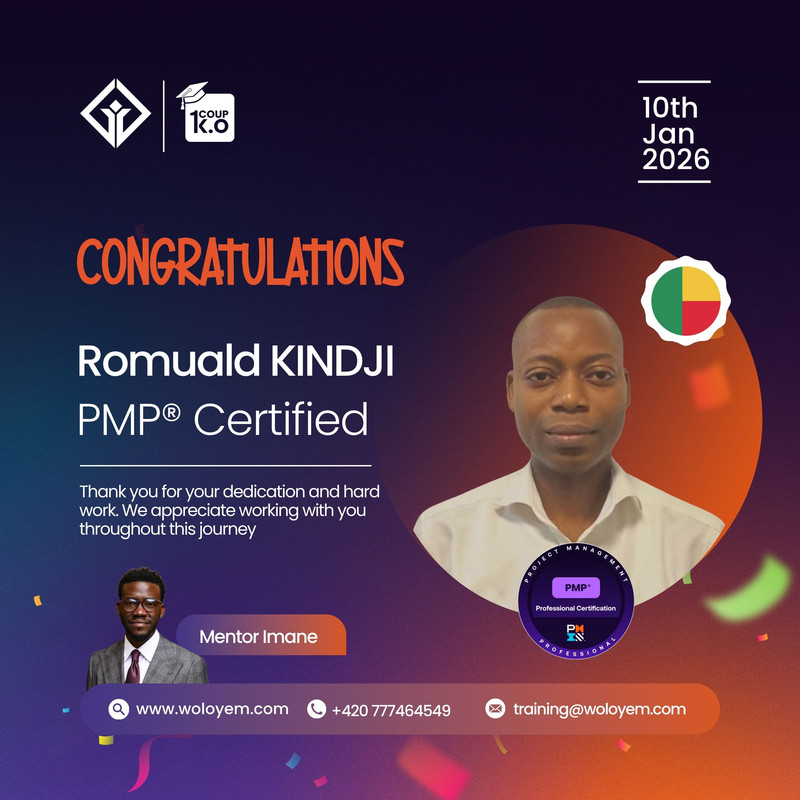
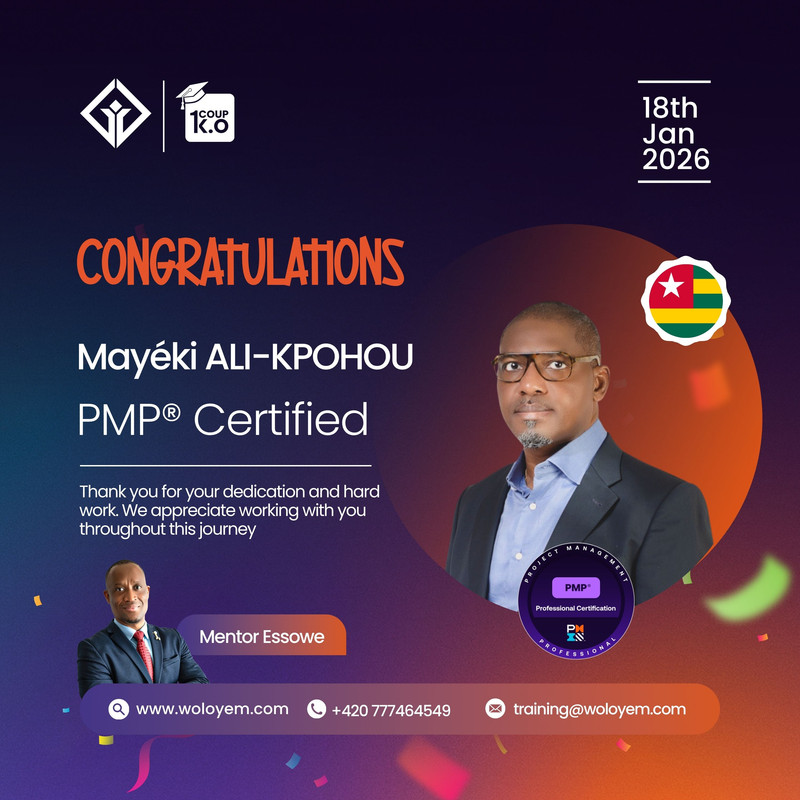

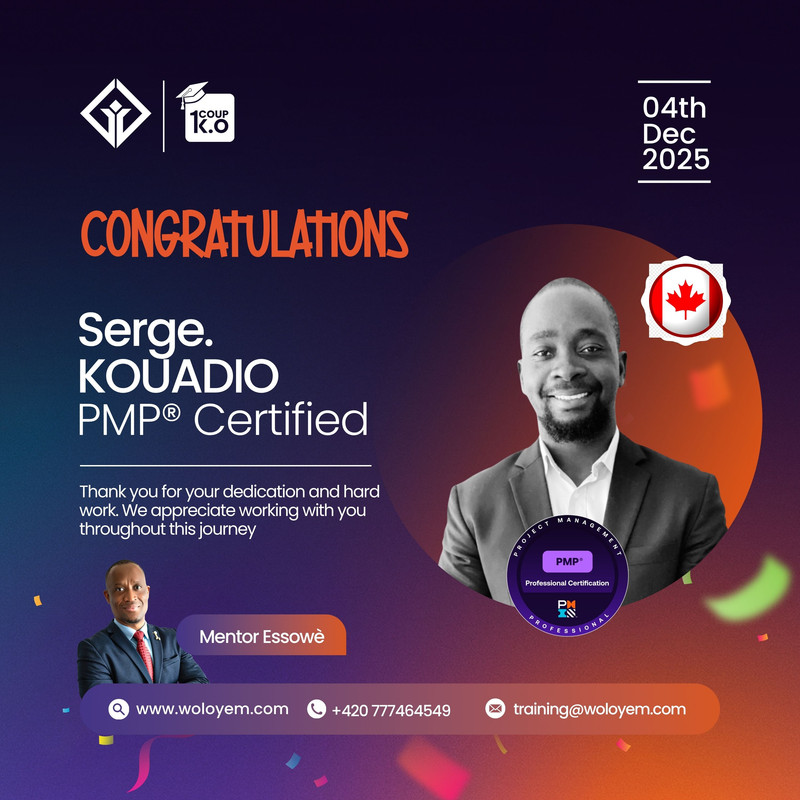
.jpg)
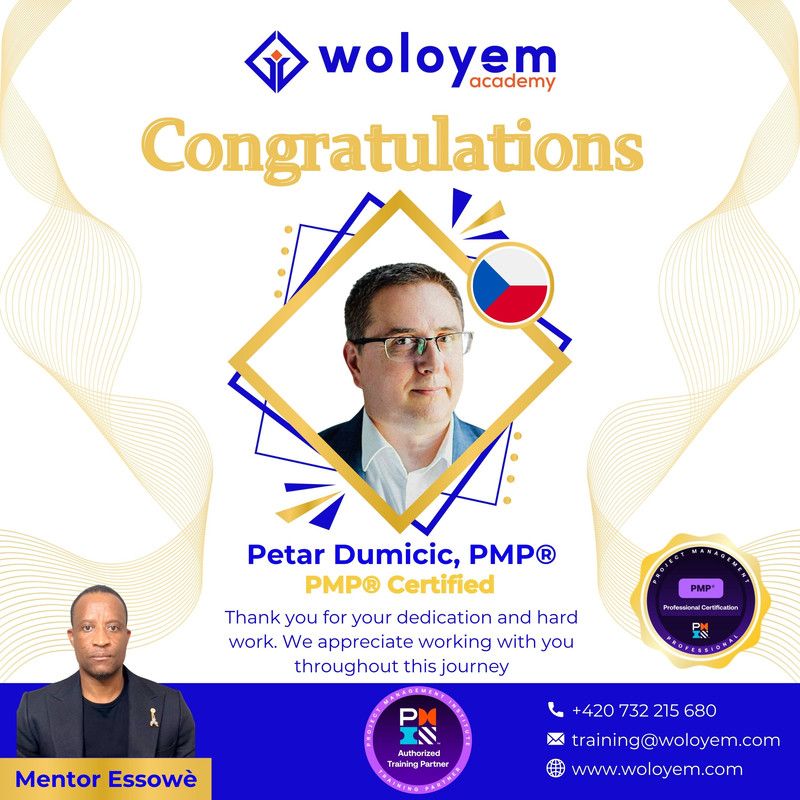












.jpg)






















































































.jpg)




































Latest news from our blog
Courses

PREPARE EFFECTIVELY
Open PMP® Bootcamp
Pass your PMP certification in the upcoming session
ENROLL NOW