PMP vs ITIL Certification: Strategic Choice for Career Excellence in 2026

Essowè Abalo
PMP certification holders now earn a median salary 33% higher than their non-certified peers, reaching approximately $123,000 in the U.S. as of 2026. Despite this clear financial incentive, choosing between a pmp vs itil certification remains a major source of confusion for leaders trying to stay relevant. You likely feel the pressure to choose a path that guarantees growth while the global economy demands 25 million new project professionals by 2030.

I recognize the challenge of selecting the right credential when your career trajectory is at stake. This article promises to reveal which certification will maximize your market value and strategic impact. You'll get a direct comparison of the PMBOK 8th Edition updates and the ITIL 5 transition. I'll break down the "build versus run" dynamic to help you decide which framework to master first for long term career excellence.

Key Takeaways

  • Understand the fundamental difference between managing temporary project lifecycles and ongoing service value streams to align your training with your daily work.

  • Analyze how the 2026 updates to the PMBOK Guide 8th Edition and ITIL 5 shift the focus toward principle-based management and digital value co-creation.

  • Master the pmp vs itil certification comparison by evaluating salary benchmarks and global market demand to maximize your return on investment.

  • Use our strategic decision matrix to choose the right credential based on your specific industry, whether you work in technology, healthcare, or construction.

  • Discover why the most successful senior leaders in 2026 combine both frameworks to bridge the gap between initial execution and long term operational excellence.

Table of Contents

I. Understanding the PMP vs ITIL Divide: Project vs. Service Lifecycle

Choosing between a pmp vs itil certification requires a clear understanding of your daily operational goals. At Woloyem, we view these frameworks as two sides of the same coin: one builds the future, while the other maintains the present. Organizations often struggle when they confuse these two distinct lifecycles. PMP focuses on projects, which are temporary endeavors with a defined start and end date. ITIL focuses on services, which are ongoing value streams that must remain stable and efficient for years.


In 2026, the global economy is projected to need 25 million new project professionals. This demand stems from a shift where projects are no longer just internal tasks; they're increasingly service-oriented. Every new AI implementation or sustainability initiative is a project that eventually becomes a permanent service. Mastering this divide is essential for anyone aiming to lead complex organizational transformations and boost their market value.

A. The PMP Focus: Delivering Change and Innovation

The PMP credential, governed by the Project Management Body of Knowledge (PMBOK Guide), centers on the "Build" phase of the business lifecycle. It's designed to manage constraints like scope, schedule, and budget to deliver a unique product or result. If you're looking to  get PMP certified, you're signaling your ability to drive innovation through structured execution. PMP is the methodology for executing strategic change.
  • Execution: Turning strategic ideas into tangible assets.

  • Risk Mitigation: Identifying potential failures before they impact delivery.

  • Leadership: Managing cross-functional teams to meet specific deadlines.

B. The ITIL Focus: Sustaining Value and Operational Stability

While PMP builds the engine, ITIL keeps it running. With the 2026 introduction of ITIL 5, the focus has expanded from traditional IT Service Management to Digital Product and Service Management. This framework uses the Service Value System (SVS) to ensure that every operational activity co-creates value with stakeholders. It's the "Run" phase where stability and service quality are the primary metrics. ITIL 5 extends far beyond the IT department, applying to any business unit that delivers consistent services to customers.
  • Value Co-creation: Ensuring services actually meet customer needs.

  • Operational Excellence: Reducing downtime and improving service reliability.

  • Continual Improvement: Using feedback loops to refine processes over time.

Understanding this distinction is the first step in your career pathing. You don't want to invest in a certification that doesn't match your professional reality. If you're tasked with launching new capabilities, PMP is your tool. If you're responsible for the health and performance of existing systems, ITIL is your framework.

II. Core Frameworks: PMBOK Guide vs. ITIL Service Value System

I see many professionals get lost in the technical jargon of these frameworks. The fundamental shift in a pmp vs itil certification choice today is the move toward value-based outcomes. PMP has pivoted from a process-heavy manual to a principle-based guide in the PMBOK 8th Edition. This allows you to focus on the "why" of a project rather than just the "how." Meanwhile, ITIL 5 centers on co-creating value. It ensures that the service provider and the customer work together to achieve the desired results.


Both frameworks have deeply integrated Lean and Agile principles to drive efficiency. PMP manages risks to protect the project's finish line. ITIL manages risks to protect the service's heartbeat. Resource allocation also differs. PMP optimizes for a specific delivery, while ITIL focuses on sustainable capacity management to keep services running without burnout.

A. PMP’s Hybrid Evolution: Waterfall meets Agile

The 2026 PMP exam is a test of adaptability. It requires mastery of predictive, agile, and hybrid approaches. This versatility is non-negotiable for senior project managers who must deliver results in volatile markets. I recommend looking at  Woloyem’s PMP Masterclass for hands-on hybrid training that goes beyond theory. You will learn to switch between methodologies based on the specific needs of your stakeholders and the complexity of the change you are driving.

B. ITIL’s Holistic Approach: The Four Dimensions of Service

ITIL’s holistic approach uses the Four Dimensions of Service. These dimensions are Organizations and People; Information and Technology; Partners and Suppliers; and Value Streams and Processes. This structure prevents the common mistake of focusing solely on technology while ignoring the people and processes that make it work. It is a strategic way to reduce operational silos and boost overall productivity. By looking at the entire ecosystem, you ensure that your service management strategy is resilient and scalable.


If you are unsure how these frameworks apply to your specific organizational structure, our corporate consulting experts can help you design a custom implementation roadmap. Integrating these standards is the only way to ensure your "Build" and "Run" teams are speaking the same language.

III. Head-to-Head Comparison: Salary, Difficulty, and Market Demand

Data from 2026 confirms that PMP holders earn a median salary 33% higher than their non-certified peers. In the U.S., this translates to a median income of $123,000 compared to $93,000 for those without the credential. When evaluating a pmp vs itil certification, the financial trajectory is clear. While PMP offers a higher immediate salary ceiling, ITIL is the backbone of the $12.2 billion global ITSM market. Operational excellence is rarely the first thing cut during a budget review, making ITIL experts indispensable for long term stability.


The "shelf life" of these credentials requires active maintenance. Both operate on a three year renewal cycle. PMP professionals must earn 60 Professional Development Units (PDUs) to stay active. ITIL 5 practitioners must log 20 Continuing Professional Development (CPD) points annually or retake an exam. In a volatile economy, ITIL is often more recession-proof because it focuses on sustaining existing revenue streams. PMP, however, is the engine of growth. Organizations that stop innovating fail, which is why project leadership remains a top priority for 2026 recruiters.

A. Certification Requirements and Exam Rigor

Earning a PMP is a significant commitment. You need 36 months of project leadership experience and 35 hours of formal education. The exam consists of 180 questions that test your ability to handle complex, real-world scenarios across predictive and agile environments. ITIL 5 follows a tiered path. It begins with Foundation and progresses to Managing Professional or Strategic Leader designations. Since navigating these prerequisites can be complex,  Woloyem’s bootcamps streamline these requirements. We help busy professionals bridge the gap between their current experience and certification standards quickly.

B. Global Market Value and Employability

Your geographic location and industry determine which certification carries more weight. PMP is the undisputed leader in North America, particularly in construction, healthcare, and manufacturing. ITIL maintains a dominant foothold in Europe and major global IT hubs. In 2026, job descriptions for "Project Managers" emphasize AI integration and speed of delivery. Conversely, "Service Manager" roles focus on value co-creation and service availability. If you aim for a role that bridges the gap between building a product and running it, possessing both is the ultimate competitive advantage.

PMP® vs. ITIL®

Your 2026 Strategic Certification Guide to Maximize Career Value

PMP®: The ‘Build’ Framework

Focuses on temporary projects with a defined start and end. It’s the engine for driving strategic change and innovation.

ITIL®: The ‘Run’ Framework

Focuses on ongoing services and value streams. It ensures operational stability, efficiency, and continual improvement to sustain business value over the long term.

Career Impact & Market Demand

33%

Higher Median Salary for PMP® certified professionals compared to their non-certified peers.

$123,000

Projected Median Salary in the U.S. for PMP® holders as of 2026.

25M

New Project Professionals Needed Globally by 2030 to meet economic demand.

Head-to-Head Framework Comparison

Dimension PMP® (PMBOK® Guide) ITIL® (Service Value System)
Core Focus Projects Services
Primary Goal Deliver change Co-create value
Key Activities Execution, risk management, stakeholder engagement Value co-creation, incident management, continual improvement
Methodology Predictive, Agile, and Hybrid approaches Service Value System and Four Dimensions model
2026 Evolution PMBOK® 8th Edition alignment ITIL 5 focus on digital products

Strategic Decision Matrix

Match your certification path to your industry and career objectives.

Technology

Choose PMP® If You… Lead new software launches, platform migrations, or digital transformation projects.

Choose ITIL® If You… Manage live applications, service desks, and ongoing IT operations.

Healthcare

Choose PMP® If You… Implement new EHR systems, facility expansions, or clinical technology rollouts.

Choose ITIL® If You… Ensure 24/7 reliability of critical systems and patient-facing services.

Construction

Choose PMP® If You… Oversee new building projects, infrastructure builds, or capital programs.

Choose ITIL® If You… Manage long-term facility operations, maintenance services, and asset lifecycle.

The Power of Synergy: Why Top Leaders Need Both

Combining PMP® and ITIL® bridges the gap between project execution and service operations—giving leaders an end-to-end view from building value to sustaining it.

IV. Strategic Decision Matrix: Which Certification is Right for You?

A common objection I hear is, "I don't work in IT, so I don't need ITIL." This is a strategic error. ITIL 5 is a framework for Digital Product and Service Management. If your business delivers value through a repeatable service, whether it's legal consulting or financial auditing, ITIL provides the structure to co-create value with your clients. It moves the conversation from "fixing tech" to "optimizing business outcomes."

A. The "IT Professional" Roadmap

For those already in technology, ITIL 5 is the baseline. It provides the language of operations and governance. But if you want to break out of the "technical silo" and lead high-stakes Digital Transformation roles, you must add PMP to your arsenal. This combination proves you can both manage the stability of current systems and lead the disruptive changes required for future growth. If you are ready to make this leap, I suggest you explore our certification catalogue to find the right path for your seniority level.

B. The "Business Leader" Roadmap

If your goal is a COO or General Manager role, PMP is your essential tool for operational leadership. It gives you the execution focus needed to turn strategy into reality. Applying ITIL principles to non-IT service businesses can significantly boost efficiency by identifying and removing bottlenecks in your value streams. This dual approach ensures you don't just complete projects on time, but you also maintain the service quality that keeps customers coming back. It bridges the gap between the CIO's digital vision and the COO's operational execution.

C. Common Mistakes to Avoid:

  • Stopping at Foundation: Entry-level certifications don't signal leadership. Aim for ITIL Managing Professional or PMP to demonstrate high-level strategic impact.

  • Ignoring Methodology Hybridization: In 2026, relying solely on Waterfall is a recipe for failure. Ensure your training covers the Agile and Hybrid approaches found in the latest PMBOK 8th Edition.

  • Certification without Application: Don't just collect badges. Use our corporate consulting services to apply these frameworks to your real-world business problems and boost professional credibility.

V. The Power of the Dual-Certified Leader: Why Woloyem Recommends Both

I believe that the most successful leaders in 2026 aren't specialists; they're hybrid professionals. While the pmp vs itil certification debate often frames these as rival paths, the reality is that top-tier executive roles now require mastery of both "Build" and "Run" frameworks. PMP gives you the execution focus to drive change, while ITIL 5 provides the value-stream focus to sustain it. When you combine these, you become a leader who doesn't just deliver a project, but also ensures it generates long term business value.

The synergy between these two is where true organizational transformation happens. PMP's rigorous risk management protects the project's delivery, while ITIL’s Service Value System ensures the project's output actually integrates with the company's operational ecosystem. At Woloyem, we position our clients to lead this integration, bridging the gap between innovative disruption and operational stability.

A. Bridging the Execution-Operation Gap

A common organizational failure occurs when project teams "throw the product over the wall" to operations without a transition plan. This lack of alignment often leads to service outages, wasted capital, and frustrated stakeholders. A dual-certified manager prevents this by using PMP techniques to manage the transition and ITIL principles to ensure the service is supportable. This holistic approach saves companies millions in risk reduction and lost productivity. It's the difference between a successful "go-live" and a successful business outcome.

B. Next Steps: Accelerate Your Career with Woloyem

I recommend a strategic 12 month plan to achieve dual certification without burning out. Start with ITIL 5 Foundation to master the language of value co-creation. Spend the next six months focusing on PMP to gain the leadership credentials needed for high-stakes execution. Finally, use the remaining months to integrate these frameworks within your current role. You can explore  Woloyem’s PMP and ITIL training programs to find expert-led bootcamps available in both English and French.

Our training goes beyond exam prep; we focus on the practical application of management techniques to solve real business problems. If you're ready to maximize your market value and lead complex transformations, now is the time to act. I invite you to book a Strategic Consulting Session with us to map your certification journey and ensure your career trajectory matches your ambitions.

VI. Future-Proof Your Leadership Strategy

The decision regarding a pmp vs itil certification isn't a zero-sum game. It's a strategic choice about how you intend to deliver value in the 2026 digital economy. You now understand that PMP provides the execution power to drive transformation, while ITIL 5 ensures those changes deliver sustainable, long term value. Mastering both frameworks allows you to bridge the gap between "building" and "running" an organization, which is the hallmark of a senior leader.

I've seen many professionals plateau because they only master one side of the business value chain. At Woloyem, we solve this by offering expert-led bootcamps that focus on real-world business applications rather than just theory. Our bilingual training in English and French prepares you for international career growth using globally recognized PMP, PRINCE2, and ITIL standards. Don't let your career growth remain stagnant while the market evolves.


Your path to senior leadership starts with a clear, execution-focused plan. We are ready to help you reach the next level of professional excellence.

VII. Frequently Asked Questions

Can I take the PMP exam without ITIL experience?

Yes, you can take the PMP exam without any prior ITIL experience or training. PMP eligibility is strictly based on your project management leadership and formal education. You'll need 36 months of project experience if you hold a four year degree, or 60 months if you don't. While ITIL knowledge helps in service-heavy projects, it's not a prerequisite for the PMI application process in 2026.

Is ITIL 4 still relevant, or should I wait for ITIL 5?

ITIL 4 remains relevant, but ITIL 5 is the current standard for digital service management. PeopleCert confirmed that ITIL 4 and ITIL 5 will run in parallel throughout 2026 to allow for a smooth transition period. If you're starting your journey now, I recommend focusing on ITIL 5 techniques. This ensures you're aligned with the latest shifts toward digital product management and AI-driven operations.

Which certification has a higher starting salary for beginners?

PMP typically commands a higher salary uplift, with 2026 data showing a 33% median increase for certified professionals. In the U.S., this brings the median salary to approximately $123,000. However, ITIL Foundation is often more accessible for true beginners because it has no prerequisites. PMP requires years of documented project leadership, making it a mid-career milestone rather than a true entry-level credential.

Does PMP cover Agile methodologies as well as ITIL does?

The 2026 PMP exam is now 50% agile or hybrid, making it incredibly robust for modern delivery environments. While ITIL 5 integrates lean and agile principles to maintain service stability, PMP focuses on using these methodologies to drive change and innovation. Both are essential in a pmp vs itil certification comparison for any leader who needs to manage complex digital transformations effectively.

How long does it take to prepare for PMP vs. ITIL Foundation?

PMP preparation usually takes two to three months of consistent study after completing your 35 mandatory training hours. ITIL Foundation is much faster, often requiring only a two or three day intensive course. I've found that most professionals can pass the ITIL exam within a week of starting their training. This makes ITIL an excellent quick win for building professional credibility while you prepare for the PMP.

Can I earn PDUs for my PMP by taking an ITIL course?

You can earn Professional Development Units (PDUs) for your PMP by taking an ITIL course. PMI allows you to claim credits for education that improves your business acumen or technical skills. This makes pursuing a dual pmp vs itil certification path highly efficient for maintaining your credentials. It's a strategic way to keep your PMP active while expanding your expertise into service management and operations.

Are these certifications recognized globally or just in certain regions?

Both certifications are recognized globally and carry weight in over 200 countries. PMP has a dominant presence in North America, the Middle East, and the construction industry. ITIL is the undisputed standard in Europe and global technology hubs. Choosing between them often depends on your target market. If you work for a multinational corporation, having both ensures you're prepared for any regional operational standard.

What happens if I fail the PMP exam? Does Woloyem offer support?

If you fail the PMP, you're allowed three attempts within a one year period. I don't provide exam administration, but my team at Woloyem offers specialized coaching and bootcamps to help you succeed on your next try. We analyze your previous results to fix specific weaknesses in your approach. Our goal is to ensure you pass while gaining practical leadership skills you can use immediately.

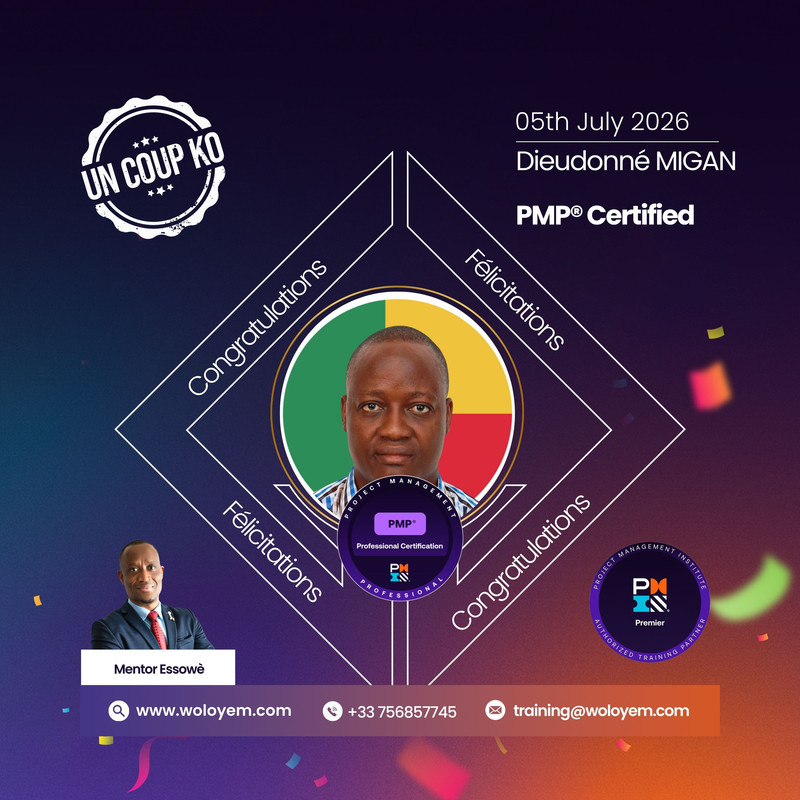
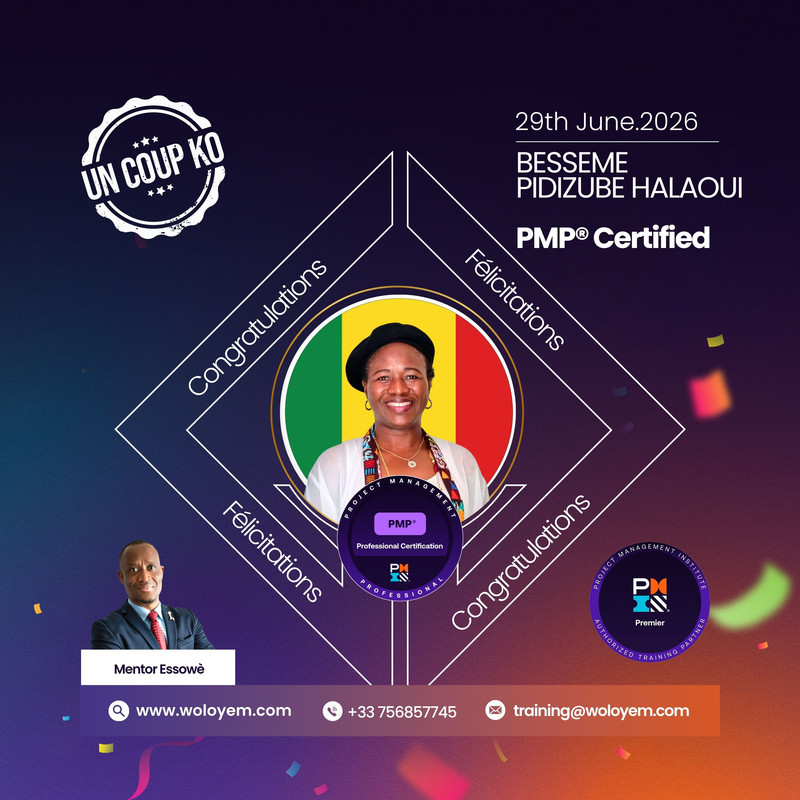
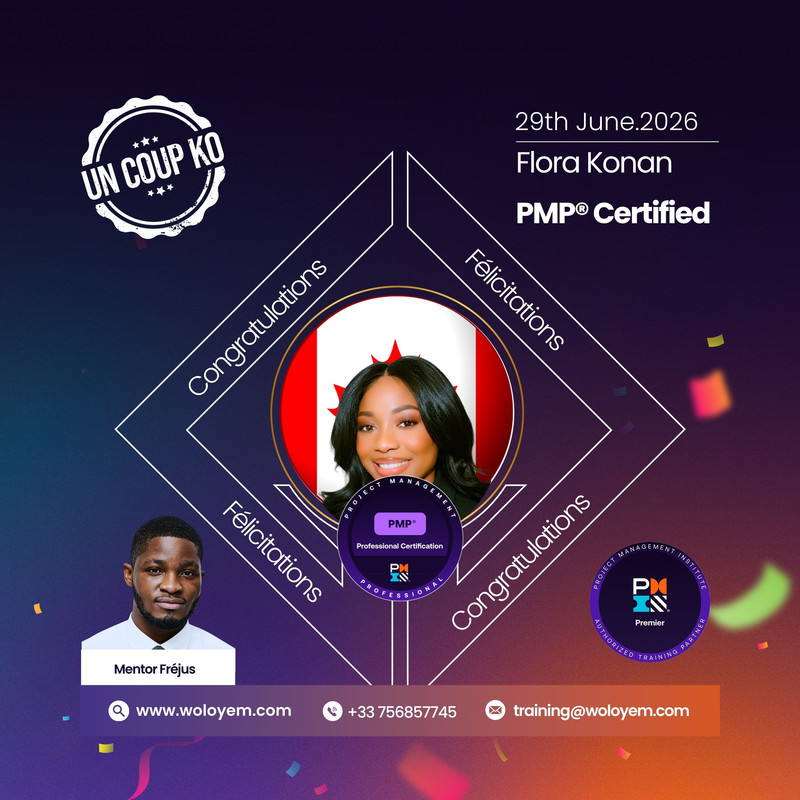
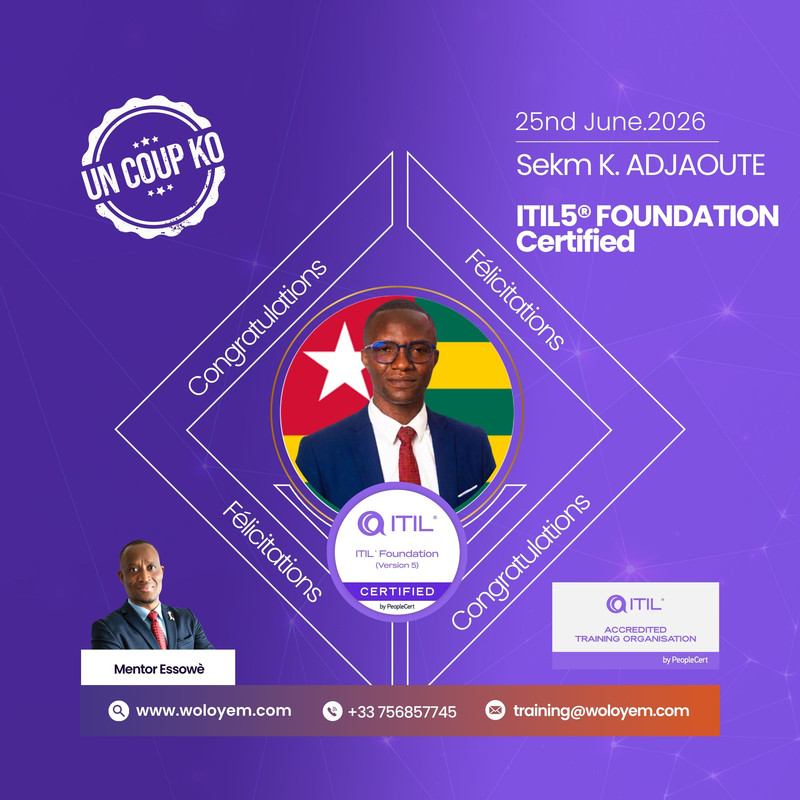
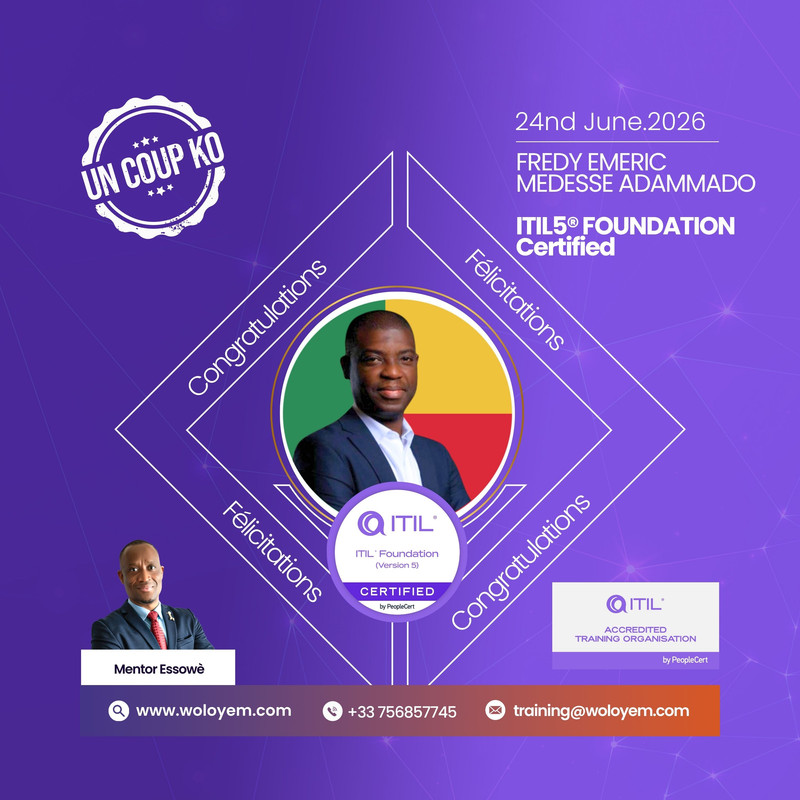
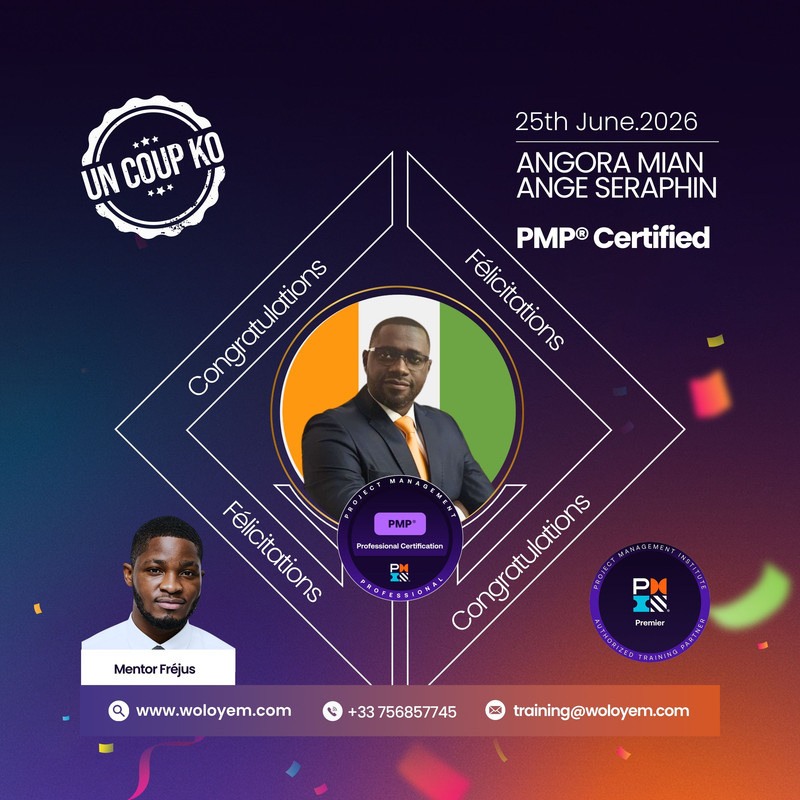
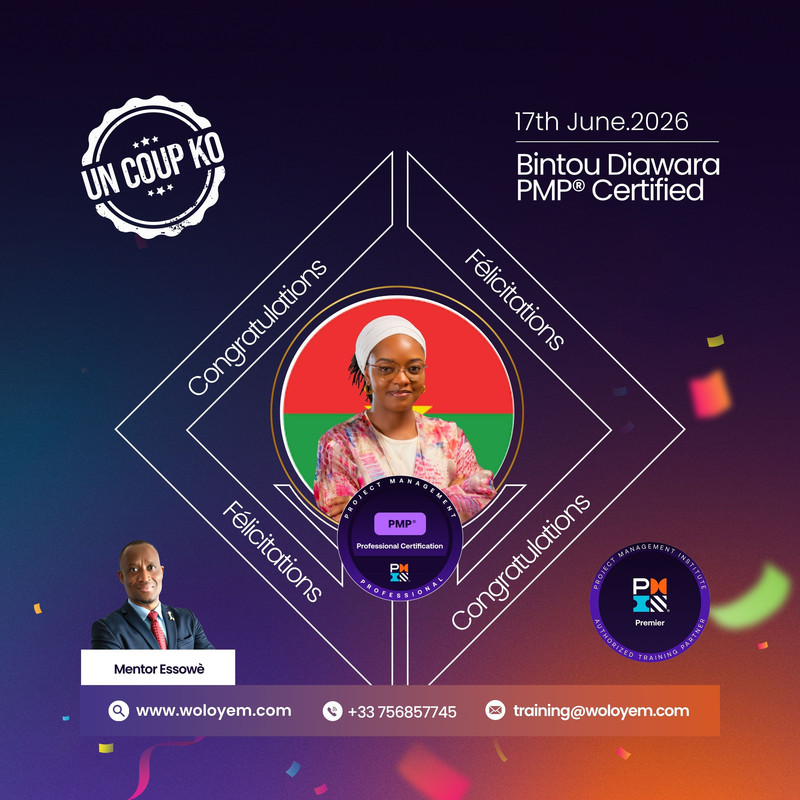
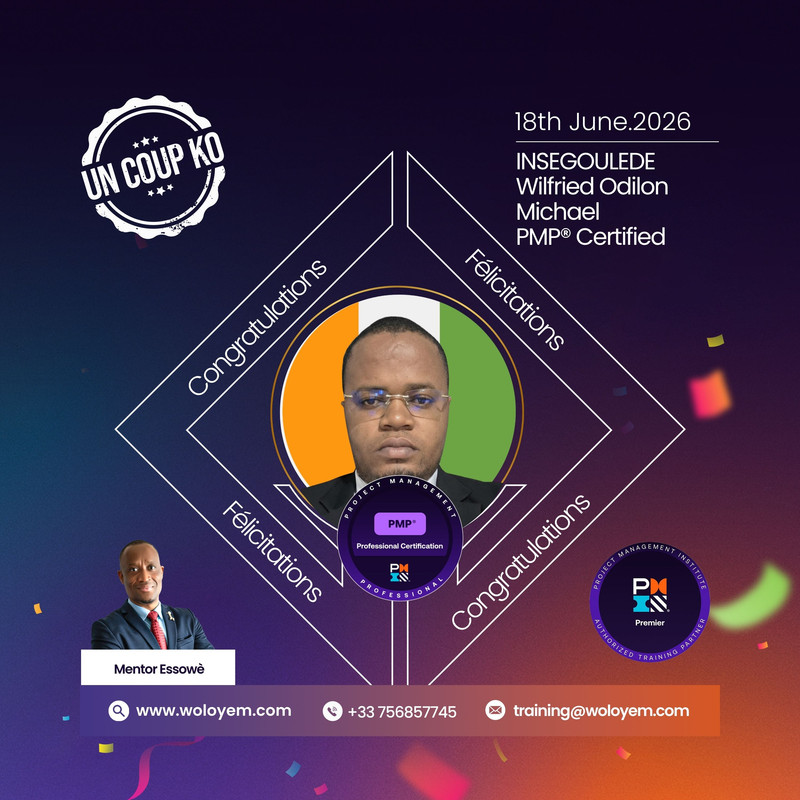
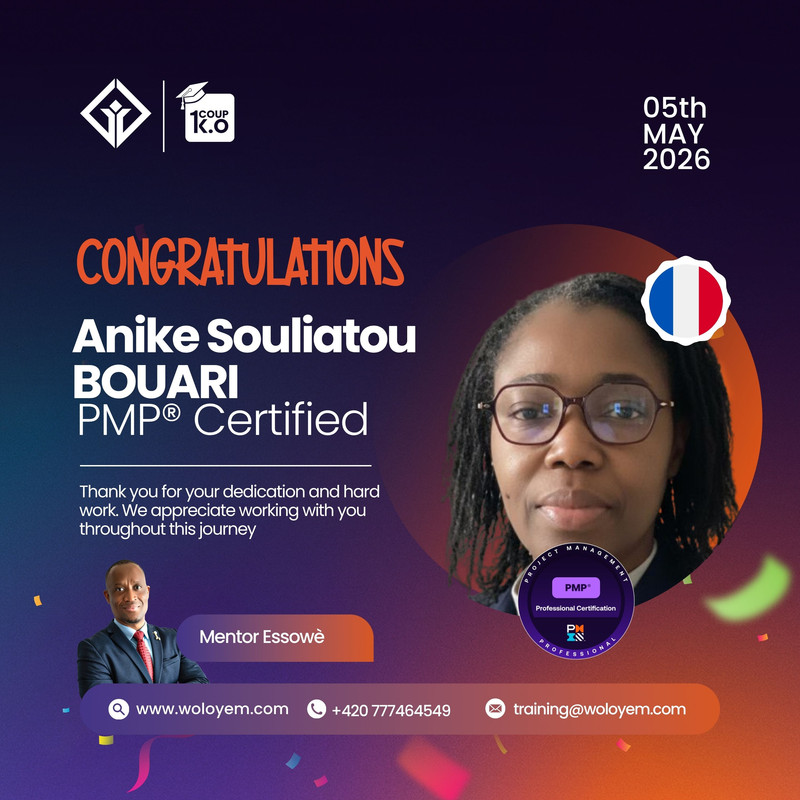
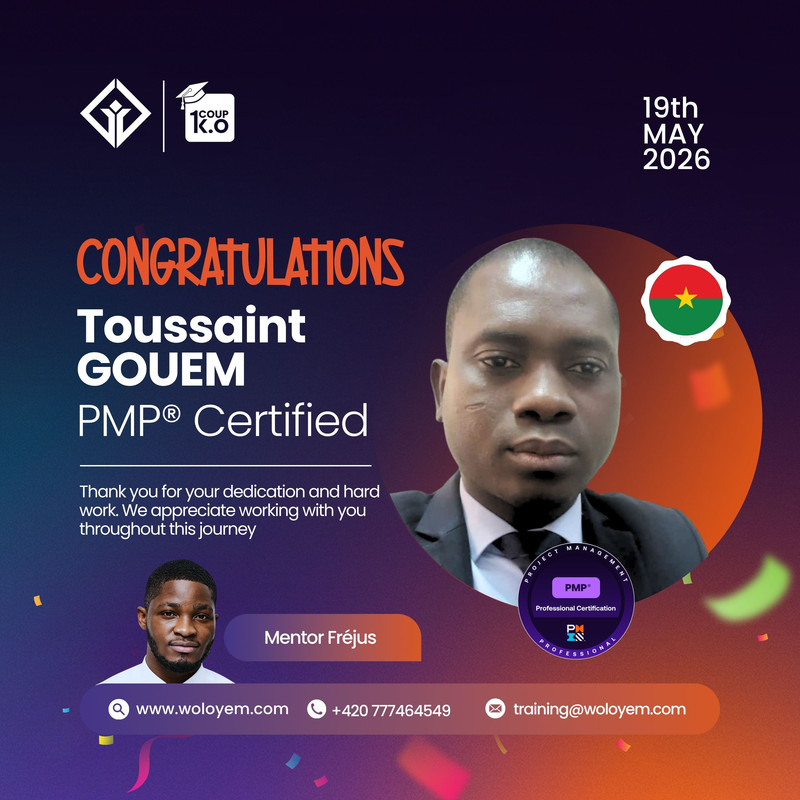
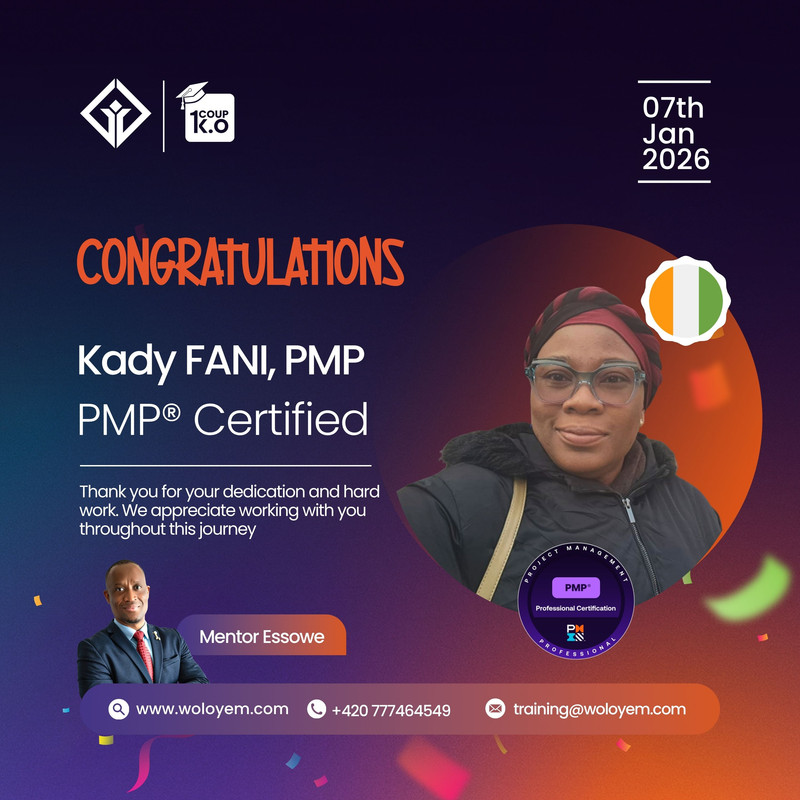
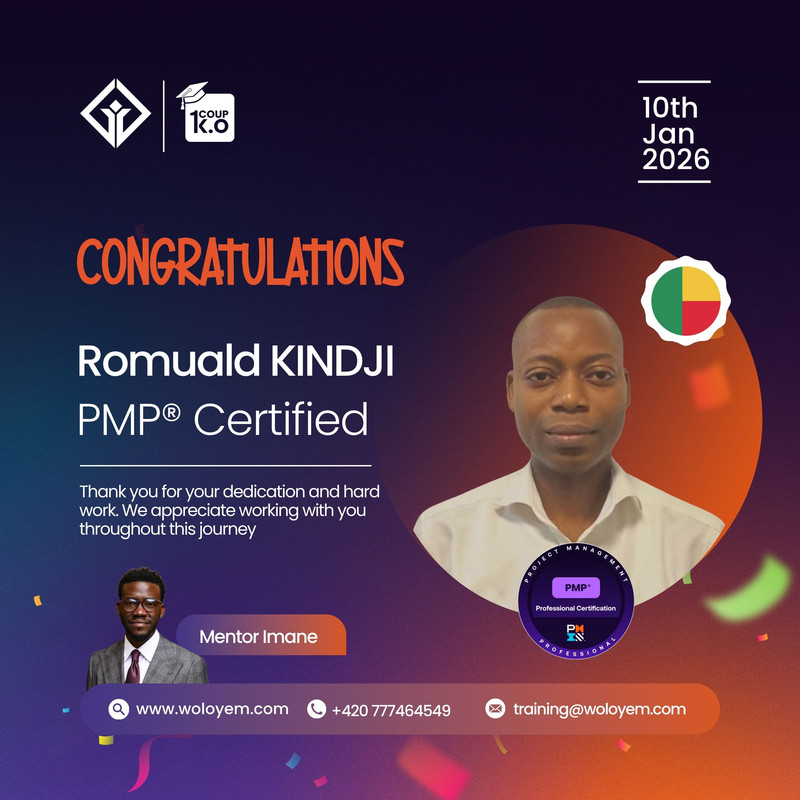
Our successes

Our successes with the "Un Coup K.O." method
Our successes

Courses

Privacy Policy Cookie Policy Terms and Conditions