IT Service Management Leadership: A Strategic Guide for 2026

Essowè Abalo
Why is it that despite managing the backbone of the entire enterprise, your department is still treated as an expensive utility? For years, IT service management leadership has been confined to keeping the lights on rather than driving growth. You likely feel the weight of this perception every time you attempt to justify a budget or align your technical experts with shifting business goals. The release of ITIL 5 in February 2026 adds a new layer of complexity as you navigate AI-driven standards while trying to prevent team burnout.

We recognize these operational hurdles and the frustration of being sidelined during strategic planning. This guide provides the clear framework you need to master IT service management leadership in an AI-centric economy. You'll learn how to leverage ITIL 5 principles to improve team performance and reposition your department as a core business value driver. We will explore the specific leadership techniques required to bridge the gap between technical execution and executive strategy, ensuring you're recognized as a vital partner in your organization's digital transformation.

Key Takeaways

  • Learn how ITIL 5 and ISO 20000 standards provide the structural foundation for transforming IT from a cost center into a strategic value driver.

  • Discover why emotional intelligence is the critical differentiator in IT service management leadership when navigating complex hybrid team environments.

  • Master a practical five-step roadmap to integrate agentic AI and automation into your service delivery lifecycle while maintaining strict governance.

  • Understand the tangible career impact and ROI of evolving your skills from technical oversight to high-level strategic service orchestration.

Table of Contents

I. Defining IT Service Management Leadership in the Digital Era

IT service management leadership is the strategic practice of aligning technical services with organizational goals to co-create value. In 2026, it requires moving beyond simple technical maintenance toward service orchestration. Leaders use frameworks like ITIL 5 to integrate AI and automation into the business fabric, ensuring IT acts as a primary catalyst for growth rather than a secondary support function.


The landscape of modern  IT Service Management (ITSM)  has shifted dramatically since the release of ITIL 5 in February 2026. Traditional management styles often fail today because they prioritize rigid ticket-based metrics over fluid business needs. In a digital environment where agentic AI handles routine incidents, the leader's role is no longer technical oversight. It's about becoming a business value architect who orchestrates complex ecosystems of people, processes, and intelligent automation.

A. The Shift from Cost Center to Value Driver

For too long, executives viewed IT as an expensive utility. Strategic leadership changes this narrative by focusing on business impact rather than just server uptime. When you lead with a value-centric mindset, you stop reporting on how many tickets your team closed. Instead, you demonstrate how IT services accelerated a product launch or improved customer retention. This shift is essential for gaining recognition as a strategic partner in the C-suite.

A central concept in this transformation is value co-creation. In the context of ITIL 5, value co-creation is the active, collaborative partnership between service providers and consumers to generate functional business outcomes through shared expertise and digital resources. Mastering  ITIL 5 techniques allows you to move beyond basic troubleshooting and start designing services that directly increase the company's bottom line.

B. Key Characteristics of a Strategic ITSM Leader

Success in 2026 requires a specific set of leadership traits that balance governance with extreme agility. You must possess the technological foresight to anticipate how emerging AI governance will affect service delivery. It's not enough to be a technical expert; you need to be a visionary who can translate complex technical debt into business risk and opportunity. Practical IT service management leadership involves three core pillars:
  • Strategic Alignment: Ensuring every IT initiative supports a specific corporate objective.

  • Governance with Agility: Maintaining ISO 20000 standards while allowing teams the freedom to innovate rapidly.

  • Advocacy: Promoting IT as a proactive growth partner rather than a reactive support desk.

Leaders who embrace these characteristics help their organizations navigate the rapid growth of the ITSM market, which is projected to reach USD 17.4 billion in 2026. By focusing on these high-level outcomes, you ensure your team remains relevant and high-performing in an increasingly automated world.

II. Core Pillars of Modern ITSM Leadership Frameworks

Frameworks aren't just technical manuals; they're leadership tools. To excel in IT service management leadership, you need a cohesive architecture that connects operational tasks to business outcomes. This involves integrating the stability of ISO 20000 standards with the agility of PRINCE2 project governance. By aligning these methodologies, you create a resilient environment where technical changes are managed with minimal risk to the business.


Leaders use Value Stream Mapping (VSM) to visualize the entire journey from a user request to the final delivery of value. This practice is essential for identifying bottlenecks where work stalls, such as redundant manual approvals or siloed team handovers. When you optimize these streams, you don't just improve efficiency; you increase the velocity of value creation for the entire enterprise. This level of visibility allows you to make data-driven decisions about where to invest in automation or additional training.

A. Mastering ITIL 5 and Service Value Systems

ITIL 5, released in February 2026, significantly expands on the Service Value Chain established by ITIL 4. It's designed for an environment where AI-driven automation and product-centric digital models are the norm. As a leader, your challenge is to adapt the Service Value System (SVS) to incorporate agentic AI without losing human oversight. This means redesigning practices to handle higher volumes of automated changes while maintaining strict quality controls. Understanding these updates is a foundational step, and pursuing an  ITIL 5 certification provides the structured knowledge required to navigate this transition effectively.

B. Governance and Compliance as Strategic Enablers

Governance is often misunderstood as red tape that slows down innovation. Effective  IT service management leadership reframes governance as a protective layer for business value. ISO/IEC 20000-1:2018 remains the global benchmark, helping leaders establish a baseline for quality that is recognized by partners and stakeholders alike. By integrating risk management directly into the service lifecycle, you ensure that compliance is a continuous process rather than a periodic hurdle.


Establishing a Project Management Office (PMO) can further unify these efforts. A PMO provides the cross-functional oversight needed to ensure that service improvements align with broader corporate strategy and foster a culture of accountability among technical teams. If your organization struggles to bridge the gap between technical standards and strategic execution, our corporate consulting services can help align your frameworks with your business vision. This integrated approach ensures that every project contributes to a more robust and responsive service ecosystem.

III. Leadership vs. Management: Navigating the Hybrid Landscape

Effective IT service management leadership requires a clear distinction between managing tasks and leading people. While management focuses on meeting specific SLAs and maintaining technical uptime, leadership is about instilling a sense of purpose within your team. In an era where agentic AI handles routine incidents, your value as a leader lies in your ability to guide human talent through complex organizational shifts. You must move beyond monitoring dashboards and start mentoring individuals to become proactive problem solvers.


Consultative leadership is essential for handling difficult stakeholders. Instead of simply saying "no" to unrealistic technical requests, a strategic leader asks "how can we achieve this outcome together?" This approach transforms the relationship from a transactional service provider to a collaborative business partner. Building resilience in high-pressure environments, such as major incident responses, depends on this foundation of trust and shared vision.

A. The Human Element: EQ in ITSM

Soft skills are often the most difficult for technical leaders to master. Emotional Intelligence (EQ) allows you to recognize the underlying causes of team friction or stakeholder resistance. Using EQ helps you navigate organizational conflict by addressing the emotional concerns of your staff during major transformations, like the transition to ITIL 5. For those looking to refine these abilities, our leadership and management training provides deep insights into the psychology of high-performance teams.

B. Leading Remote and Global IT Service Teams

Managing a decentralized service desk presents unique communication barriers. You can't rely on "water cooler" conversations to gauge team morale. Fostering a culture of accountability without falling into the trap of micromanagement is critical. Set clear, outcome-based objectives rather than tracking every minute of a technician's day.


Maintaining team cohesion across time zones requires intentional interaction. Use brief, high-impact syncs to keep everyone aligned with the strategic roadmap. By emphasizing transparency and shared goals, you ensure that global team members feel connected to the organization's mission. This cohesion is what prevents burnout and maintains service excellence in a hybrid work environment.

woloyem.com

The Evolution of ITSM Leadership

From Technical Oversight to Strategic Value Orchestration in the AI Era

The Fundamental Shift: From Cost Center to Value Driver

The Old Paradigm: IT as a Cost Center

Viewed as an expensive utility, focused on internal metrics and reactive support.

  • Focus on ticket volume & server uptime
  • Reactive “keep the lights on” approach
  • Sidelined during strategic planning
  • Perceived as a necessary expense

The New Mandate: IT as a Value Driver

Acts as a strategic partner, co-creating value and driving business growth.

  • Focus on business impact & outcomes
  • Proactive catalyst for digital transformation
  • Integral to C-suite strategy sessions
  • Recognized as a primary growth engine

Three Core Pillars of a Strategic ITSM Leader

Strategic Alignment

Ensuring every IT initiative, service, and resource directly supports and accelerates specific corporate objectives and business goals.

Governance with Agility

Maintaining robust standards like ISO 20000 while empowering teams with the freedom to innovate, experiment, and deliver value rapidly.

Proactive Advocacy

Championing IT as a forward-thinking growth partner and value creator, shifting perception from a reactive support desk to a strategic asset.

The Modern Leader’s Framework Toolkit

The frameworks that turn ITSM leadership into repeatable strategic capability.

ITIL 5 (Feb 2026)

Adopts the Service Value System (SVS) for AI-driven automation and product-centric models.

ISO 20000

Ensures stability & quality standards.

PRINCE2

Provides robust project governance.

Value Stream Mapping

Visualizes workflows to identify and eliminate bottlenecks.

Leadership vs. Management: A Critical Distinction

Management: Doing Things Right

Focuses on operational efficiency, control, and tactical execution.

  • Maintains stability and order
  • Administers people and processes
  • Optimizes short-term goals
  • Asks “How?” and “When?”

Leadership: Doing the Right Things

Focuses on vision, innovation, and strategic alignment.

  • Drives change and innovation
  • Empowers people and culture
  • Owns the long-term vision
  • Asks “What?” and “Why?”
woloyem.com

IV. Strategic Implementation: From Service Delivery to Value Orchestration

Moving from technical delivery to strategic orchestration is the hallmark of advanced IT service management leadership. This transition requires a structured approach to integrating emerging technologies like agentic AI into your existing workflows. By adopting an Agile mindset within your IT operations, you create a system that's resilient enough to handle the rapid digital shifts projected for 2026. You're no longer just managing a service desk; you're designing a high-performance engine for business growth.


Orchestration involves looking at the entire service lifecycle through a lens of efficiency and business impact. It requires breaking down the silos between technical teams and executive leadership to ensure that every automated workflow serves a specific corporate objective. This strategic alignment is what separates a world-class IT organization from a standard support department.

A. The 5-Step Roadmap to ITSM Leadership Excellence

Success doesn't happen by accident. It requires a deliberate path that balances technical capability with organizational strategy. Follow this 5-step roadmap to elevate your department's standing:

  • Step 1: Assess Maturity: Evaluate your current service maturity and how well your technical goals align with business outcomes.

  • Step 2: Define Strategy: Create a value-centric service strategy that prioritizes high-impact business processes over routine maintenance.

  • Step 3: Upskill the Team: Ensure your workforce is prepared for modern standards. Upskilling through our ITIL and PMP training ensures your team can execute complex frameworks with precision.

  • Step 4: Implement Agile: Adopt Lean and Agile practices to reduce waste and increase the speed of service delivery.

  • Step 5: Iterate: Establish a continuous feedback loop with business stakeholders to refine services based on real-world performance.

B. Measuring What Matters: Beyond Uptime

Uptime is no longer the definitive metric for success. The C-suite cares about how IT accelerates revenue or reduces operational risk. Transitioning from traditional Service Level Agreements (SLAs) to Experience Level Agreements (XLAs) allows you to measure the actual impact on employee productivity and user satisfaction. This shift provides a more holistic view of service health than simple technical availability.


Data-driven insights from these metrics provide the necessary evidence to justify future IT investments. When you can show that a specific service improvement reduced employee downtime by a documented percentage, you're speaking the language of the board. If you're ready to move beyond basic delivery, our  strategic consulting services can help you design a roadmap tailored to your specific organizational goals.

V. The Career Impact of Mastering ITSM Leadership

Mastering IT service management leadership is no longer just a resume builder; it's a requirement for those aiming for the C-suite. As the ITSM market grows to a projected USD 17.4 billion in 2026, the gap between technical managers and strategic leaders widens. Organizations desperately need professionals who can bridge the divide between complex technical ecosystems and business profitability. This demand places certified experts in a powerful position during salary negotiations and executive hiring rounds.

The pathway to CIO and CTO roles often begins with excellence in service management. By demonstrating you can orchestrate value rather than just managing tickets, you prove your readiness for broader corporate responsibility. Leading a team through a successful ITIL 5 transition or an Agile transformation provides the tangible results that boards look for when selecting future technology executives.

A. ROI of Certification and Strategic Training

In 2026, the market value of ITIL 5 and PMP certifications has reached a new peak. These credentials prove you can handle the complexities of AI governance and project orchestration. Professional development isn't just about learning a new tool; it's about ensuring your career longevity in an industry that's rapidly automating entry-level roles. Leaders who invest in high-level training see a significant return through increased job security and access to premium consulting opportunities.

For many, the fastest way to bridge the gap between technical knowledge and executive presence is through structured guidance. The  Woloyem mentorship programs act as a dedicated career accelerator. They provide the strategic insights needed to transition from a technical supervisor to a high-level orchestrator who understands both the server room and the boardroom.

B. Building Your Personal Brand as an IT Leader

Your technical expertise is only half of the equation. Building a personal brand as an authority in IT service management leadership requires active engagement with the wider professional community. Networking at industry events and seeking speaking engagements allows you to showcase your expertise in navigating the hybrid digital landscape. This visibility often leads to headhunting opportunities and invitations to lead high-profile transformation projects.

Continuous learning is the only way to remain relevant in a field that evolves as quickly as ours. Staying ahead of ITIL 5 updates and emerging ISO standards ensures you're always the most informed person in the room. If you're ready to elevate your career and drive real business value, our  Woloyem consulting and training services provide the expert support you need to master these strategic techniques and secure your place as a leader in digital transformation.

VI. Securing Your Seat at the Strategic Table

The transition from technical management to high-level orchestration is no longer optional. As we've explored, mastering IT service management leadership requires a blend of rigid governance and fluid adaptability. By aligning your team with business outcomes and embracing the human-centric principles of ITIL 5, you transform IT from a support desk into a primary engine for corporate growth. This evolution ensures you remain indispensable in an increasingly automated landscape.

Woloyem provides the tools you need to navigate this shift through globally recognized certification standards and expert-led bootcamps in both English and French. Our strategic consulting for digital transformation ensures you don't just learn the theory but apply it to solve complex organizational problems. We specialize in bridging the gap between technical expertise and executive presence.

Ready to lead the next era of digital innovation? Master your future with our ITIL 5 and PMP certification bootcamps. Your journey toward becoming a strategic business partner starts with the right foundation. We're here to support every step of your professional evolution.

VII. Frequently Asked Questions

What is the difference between IT service management and ITSM leadership?

ITSM focuses on the tactical execution of service delivery, including processes, tools, and meeting specific SLAs. In contrast, IT service management leadership is the strategic orchestration of those services to co-create business value. While a manager ensures a process is followed, a leader ensures that process directly contributes to the organization's bottom line by aligning technical operations with corporate goals and managing the human element of change.

How does ITIL 5 change the landscape of IT service leadership?

ITIL 5, released in February 2026, introduces a product-centric approach and integrates agentic AI deep into the service lifecycle. It shifts the leader's focus from manual oversight to the governance of high-velocity automated systems. Leaders must now master the orchestration of digital products and the co-creation of value in environments where AI handles routine incidents. This requires a transition from technical supervision to strategic digital governance.

Can I lead an ITSM team without a technical background?

You can effectively lead an ITSM team without being a technical expert if you master strategic frameworks like ITIL 5 and PRINCE2. Modern leadership prioritizes business alignment, risk management, and team orchestration over technical troubleshooting. Your role is to understand the "what" and "why" of service delivery to ensure it meets business needs, while your technical leads handle the "how" of implementation and daily maintenance.

How much does ITIL certification impact salary in 2026?

ITIL 5 and PMP certifications are high-value credentials that significantly increase your earning potential in 2026. Certified professionals command premium rates because they possess the verified skills needed to lead complex digital transformations. These certifications prove you can manage AI governance and strategic service orchestration, making you a high-reward hire for global enterprises looking to scale their digital infrastructure safely and efficiently.

How do I align IT services with corporate business goals?

Alignment starts by identifying the specific business outcomes the C-suite wants to achieve, such as revenue growth or improved customer retention. You must then map your IT services directly to these objectives using Business Value Metrics. Instead of reporting on technical uptime, demonstrate how IT service management leadership reduced operational waste or accelerated the time-to-market for a new digital product through optimized service workflows.

What is the role of AI in modern ITSM leadership?

AI acts as a strategic force multiplier that automates routine tasks, allowing leaders to focus on high-level orchestration and governance. Agentic AI and Copilots can handle standard changes and incident resolution, but the leader must establish the rules and ethical boundaries for these systems. Modern leadership involves overseeing AI governance to ensure transparency, security, and alignment with organizational values while preventing the risks associated with Shadow IT.

How can a PMP certification help an IT Service Manager?

You should budget between $5,000 and $7,000 for the complete Managing Professional (MP) designation in 2026. This total covers the Foundation exam, four specialized intermediate modules, and all required accredited training courses. Prices fluctuate based on whether you choose self-paced online videos or expert-led bootcamps. I suggest planning this investment over 12 to 18 months to spread out the costs while you gain the necessary credits for the final Master level transition.

Our ITIL 5® successes
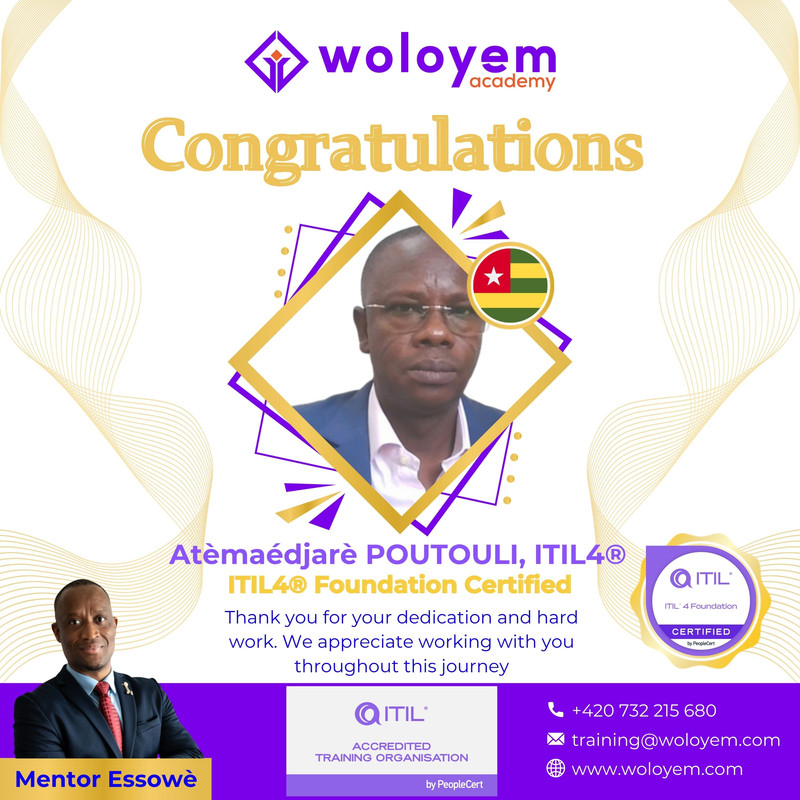
Our successes with ITIL 5®
ITIL 5®

Courses

Privacy Policy Cookie Policy Terms and Conditions