Key Takeaways
Table of Contents
I. The 2026 PMP Eligibility Framework: Education and Experience
Eligibility for the Project Management Professional (PMP) isn't a one-size-fits-all checklist. PMI recognizes that leaders come from diverse educational backgrounds. To qualify, you must fit into one of two primary categories based on your highest level of completed education. These pmp certification requirements ensure that every candidate possesses a baseline of both theoretical knowledge and practical, real-world application. It's not just about having worked on a project; it's about proving you were the one driving the results, especially as the exam aligns with the PMBOK® Guide Eighth Edition starting July 9, 2026.
To better understand how these requirements fit into your overall exam journey, watch this helpful video:
One critical detail often missed is the "non-overlapping" rule. PMI calculates experience by calendar months, not by the number of projects handled simultaneously. If you led three different projects during June 2026, it counts as exactly one month of experience toward your total. You can't stack projects to reach your goal faster. This makes the strategic selection of your documented projects vital for a successful application. If you're unsure how to map your timeline, exploring the resources provided by Woloyem helps you to learn and master projet and service management can provide the clarity you need.
A. Path A: For University Graduates
B. Path B: For Professionals without a Degree
II. Decoding the "Leading and Directing" Requirement
One of the most common misconceptions about pmp certification requirements is the belief that you must hold the official title of "Project Manager" to qualify. This myth often discourages talented coordinators, analysts, and team leads from applying. PMI doesn't care about your business card; they care about your accountability. To pass the application stage, you must demonstrate that you were responsible for leading and directing the project team, managing stakeholders, and ensuring the project achieved its intended business value.
PMI defines leadership through three specific lenses: People, Process, and Business Environment. This means your experience should reflect more than just technical task completion. You need to show how you navigated conflict, optimized workflows, and aligned your project with organizational goals. According to pmp certification requirements outlined by industry experts, this strategic alignment is what separates a certified professional from a standard contributor. In agile or cross-functional environments, this leadership often manifests as removing blockers or facilitating sprint ceremonies, even if you weren't the "boss" in a traditional hierarchy.
To accurately frame your scope, I recommend using the Project Management Triangle. By documenting how you balanced scope, time, and cost, you provide concrete evidence of your decision-making authority. If you're struggling to translate your daily wins into these specific leadership categories, the consulting team at Woloyem helps you to learn and master projet and service management by auditing your portfolio before you hit submit.
A. Leadership Beyond the Title
If you've worked as a project coordinator or a team lead, your tasks likely map directly to the five project domains: Initiation, Planning, Executing, Monitoring and Controlling, and Closing. The key is to distinguish between operational and project leadership. Operational leadership focuses on sustaining ongoing business functions through repetitive tasks, whereas project leadership directs a unique, temporary endeavor to achieve a specific strategic outcome. If your work had a clear start, an end, and a unique goal, it counts as project experience.
B. Strategic Documentation of Project Hours
When writing your descriptions, avoid "operational" language. Words like "maintenance," "support," or "routine" are red flags for PMI auditors. Instead, focus on quantifying your impact on organizational performance. Did you reduce risk by 15%? Did you improve team productivity through a new communication plan? Using strategic project management techniques to describe your experience ensures that you use the vocabulary PMI expects. This approach demonstrates that you aren't just a "doer," but a leader who understands the broader business context of every task.
III. The 35 Contact Hour Mandatory Training Requirement
Earning your 35 contact hours is the final gatekeeper before you can sit for the exam. Many candidates confuse these hours with Professional Development Units (PDUs). To be clear: PDUs are for maintaining a credential you already have, while contact hours are a prerequisite for your initial application. This education requirement is non-negotiable, regardless of your years of experience. I've seen many qualified professionals face application rejections simply because they relied on unverified "free" courses that didn't meet the rigorous PMP Eligibility Requirements set by PMI.
Choosing an Authorized Training Partner (ATP) is the safest route to satisfy pmp certification requirements. ATPs use PMI-developed content, ensuring your training aligns perfectly with the current exam standards. Independent providers might offer lower prices, but they carry the risk of failing a PMI audit if their curriculum hasn't been vetted. Treating this training as a strategic career investment rather than a checkbox will save you months of rework and the cost of a failed application.
A. Choosing Your Learning Velocity: Masterclasses vs. Bootcamps
While bootcamps offer a quick sprint, they often lack the depth needed for long-term retention. I recommend live, expert-led interaction to reduce the risk of exam failure. The training offered by Woloyem helps you to learn and master projet and service management, specifically through the Woloyem PMP Masterclass, is designed for global professionals who need more than rote memorization. We provide a unique bilingual advantage, offering training in both English and French. This is a critical edge in global project environments where multi-language proficiency is a high-value leadership trait.
B. Content Requirements: What Your Training Must Cover
Your 35 hours must align with the July 2026 Exam Content Outline (ECO). This means a balanced focus on Predictive, Agile, and Hybrid methodologies. Since the People domain now accounts for 33% of the exam, your prep must include advanced leadership techniques. You won't just learn how to build a schedule; you'll learn how to manage team dynamics and align projects with the business environment, which now represents 26% of the exam scoring. This comprehensive approach ensures you don't just pass the test, but actually improve your operational performance.
IV. Application Strategy: Documenting to Pre-empt the Audit
Submitting your application is often more stressful than the exam itself because of the looming threat of an audit. While PMI states that audits are random, you can significantly reduce "red flag" triggers by ensuring your documentation strictly adheres to pmp certification requirements. A strategic application isn't just a list of jobs; it's a curated portfolio of leadership evidence. If you present your experience as a series of disconnected tasks, you invite scrutiny. If you present it as a strategic leadership narrative, you demonstrate the exact professional maturity PMI seeks.
I recommend a 5-step process to ensure your application is ready for scrutiny. First, inventory your projects and filter out any that don't meet the "unique endeavor" criteria. Second, map your experience to the project domains. Third, draft your descriptions using the ORRO framework. Fourth, verify these details with your supervisors to ensure alignment. Finally, submit your payment and application. If you want to ensure your application passes the first time, book a strategic consultation with WOLOYEM to have your project descriptions reviewed by industry experts.
A. The Anatomy of a Perfect Project Description
The ORRO framework (Objective, Role, Responsibilities, Outcome) is your best tool for clarity. Your objective should state the business problem you solved. Your role must emphasize leadership, even if your official title was different. In the responsibilities section, use PMBOK® Guide vocabulary like "managed stakeholder expectations" or "developed the risk register." Finally, the outcome should quantify the project's success. Keep these descriptions between 200 and 500 words. Avoid technical jargon specific to your industry; write for a PMI reviewer who understands project management, not your specific engineering or IT niche.
B. What Happens During a PMI Audit?
If you are selected for an audit, you have 90 days to provide copies of your diploma, your 35-hour training certificate, and signed verification from your supervisors. In 2026, PMI typically resolves these audits within 5 to 7 business days once they receive your complete documentation. Adopting corporate project management standards help standardize your descriptions and makes the verification process seamless for your references. Notify your supervisors before you submit so they are prepared to vouch for the specific dates and responsibilities you've claimed in your pmp certification requirements documentation.
V. The "Soft" Requirements: Leadership and Agility for 2026
A. Navigating the July 2026 ECO Changes
B. Building Your Professional Equity with Woloyem
VI. Accelerate Your Path to Strategic Leadership
VII. Frequently Asked Questions
What are the PMP certification requirements for 2026?
Can I apply for the PMP without a project manager title?
Do the 35 contact hours expire if I don’t take the exam immediately?
What counts as "project management experience" for PMI?
How does the July 2026 ECO change affect my eligibility?
Is the CAPM a requirement for the PMP certification?
How do I document Agile experience on the PMP application?
What should I do if my PMP application is audited?
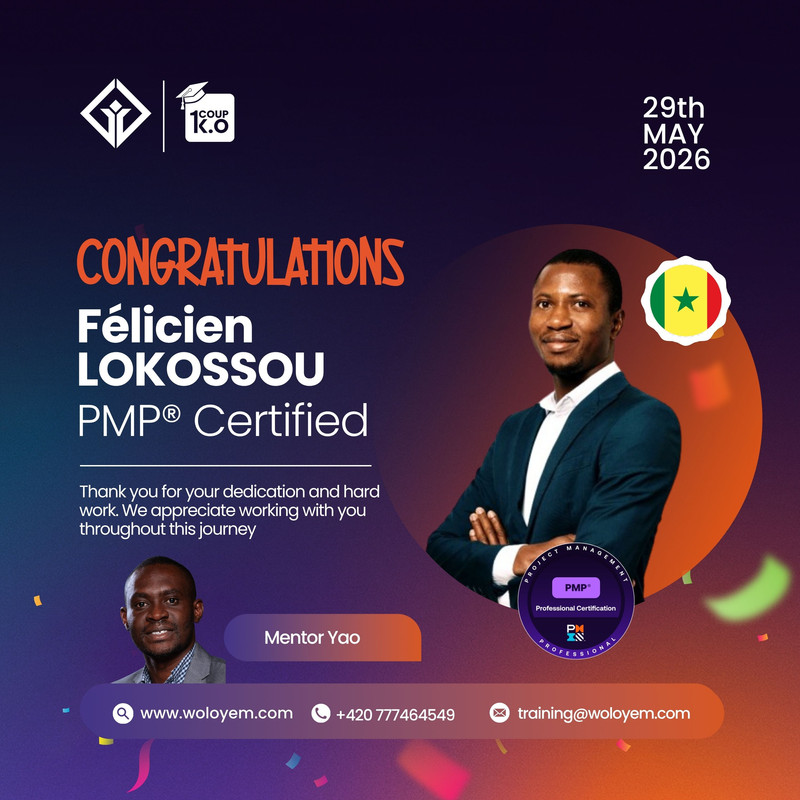
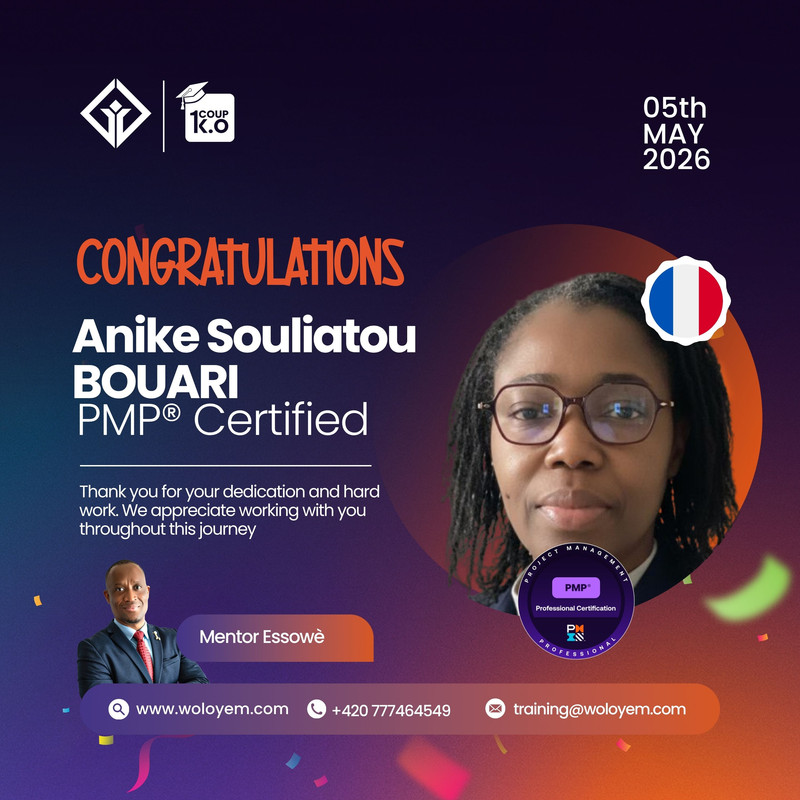
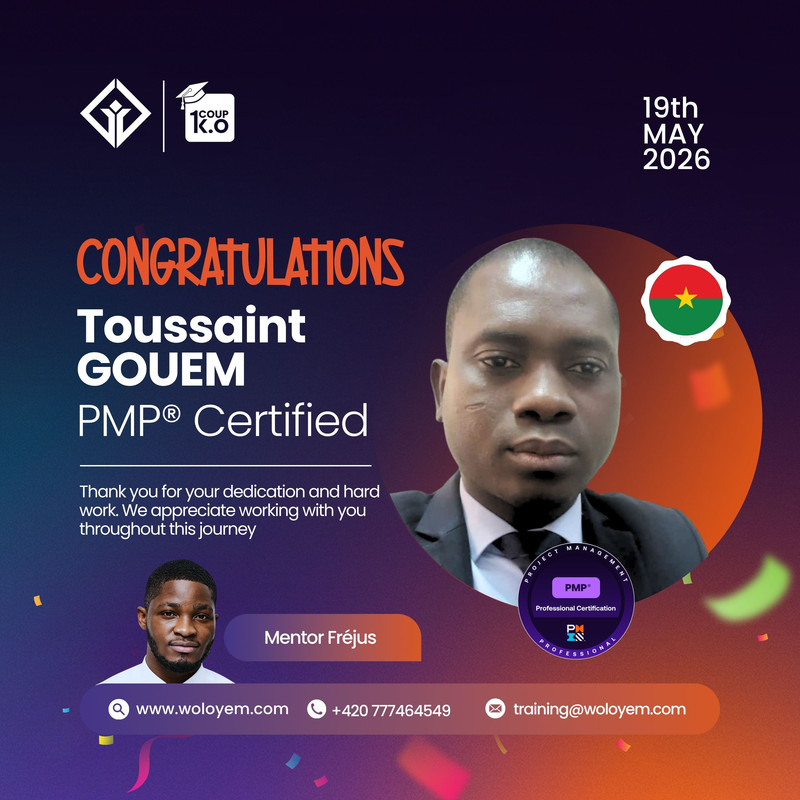
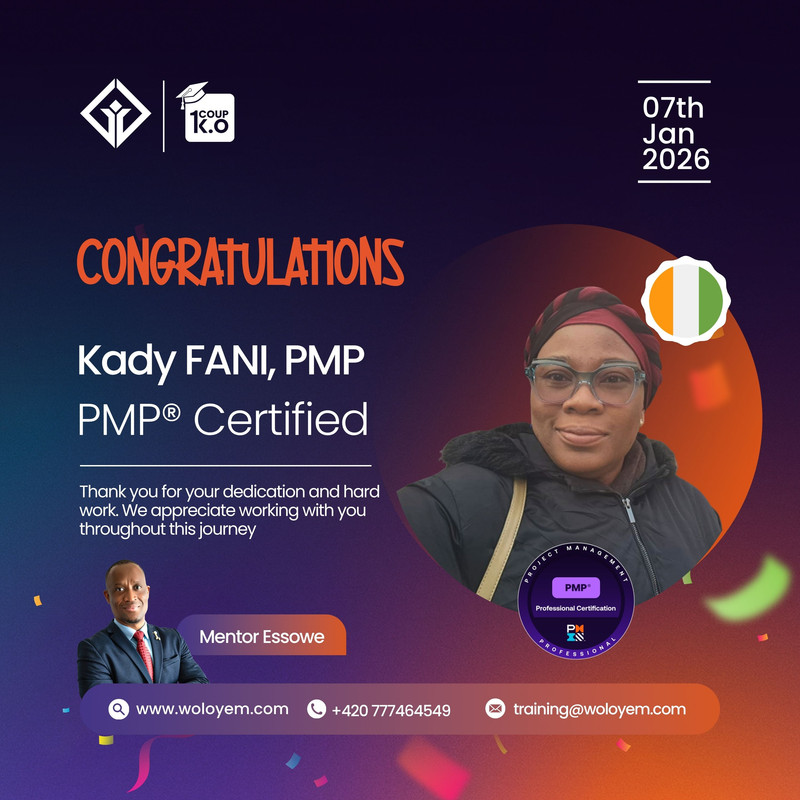
Our successes
.jpg)
.jpg)
.jpg)
.jpg)
.jpg)
.jpg)
.jpg)
.jpg)
.jpg)
.jpg)
.jpg)
.jpg)
.jpg)

.jpg)
Latest news from our blog
Courses
PREPARE EFFECTIVELY
Open PMP® Bootcamp
Pass your PMP certification in the upcoming session
ENROLL NOW