Key Takeaways
Table of Contents
I. What is ITIL Foundation (Version 5) and Why Does it Matter in 2026?
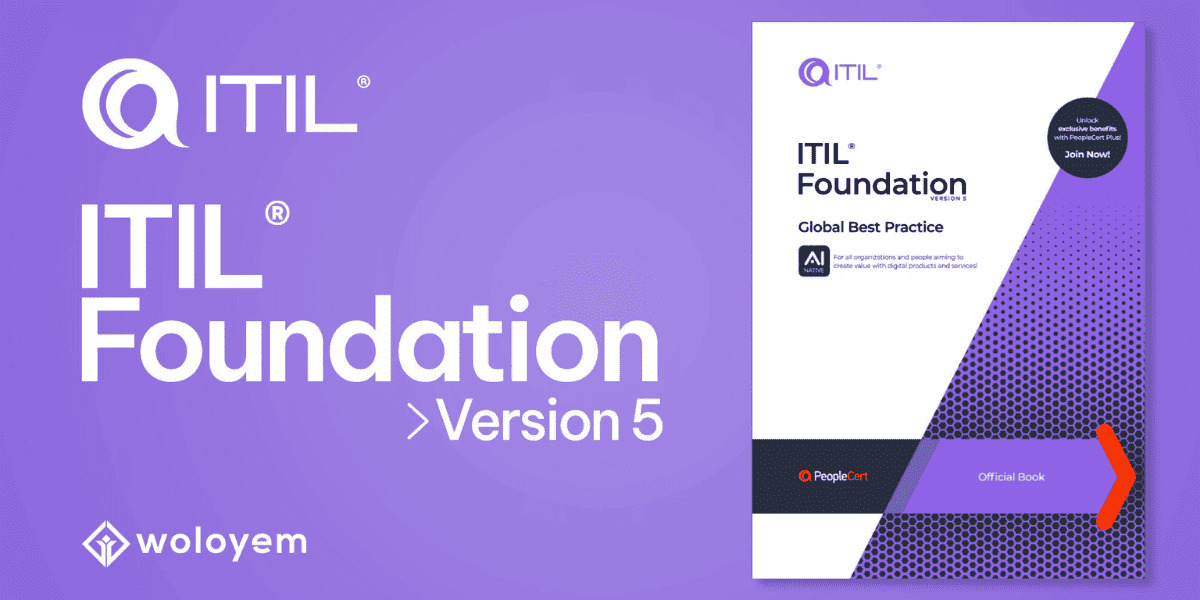
ITIL 5 represents the first major overhaul of the framework since the 2019 rollout of ITIL 4. It's no longer just a set of best practices for managing support tickets. In 2026, ITIL Foundation (Version 5) serves as the blueprint for Digital Product and Service Management. This shift acknowledges that IT isn't a support function anymore; it's the business itself. Organizations have moved away from the siloed approach of the past. They now treat every internal service as a digital product that requires constant iteration and user-centric design.
A. The Core Philosophy: AI-Native by Design
B. Who Should Seek ITIL 5 Foundation Certification?
II. The AI-Native Evolution: Core Changes in Version 5
The transition to ITIL Foundation (Version 5) marks a fundamental shift from viewing AI as a supporting tool to treating it as a core architectural component. The traditional "Four Dimensions" framework from ITIL 4 has evolved into the Five Pillars of Digital Delivery. This update adds "Autonomous Intelligence" as a dedicated pillar alongside people, technology, partners, and processes. By 2026, organizations are expected to manage AI agents as distinct workforce entities, requiring a framework that accounts for non-human decision-making.
A. From ITIL 4 Practices to ITIL 5 Capabilities
B. The Role of Digital Product Management
In Version 5, the boundary between a service and a product disappears. ITIL 5 treats every IT service as a Digital Product, requiring a mindset shift from maintenance to continuous evolution. This shift allows for a deeper integration of Agile and Lean principles at the architectural level, rather than just at the team level. Organizations now measure success through product-market fit and user retention metrics rather than just uptime. The Product-Service Continuum is the unified framework where physical assets, digital software, and human expertise merge into a single, inseparable value stream.
III. ITIL 4 vs. ITIL 5: Is the Upgrade Mandatory for Your Career?
The release of ITIL 5 in early 2026 sparked immediate debate among ITSM professionals. While your ITIL 4 certificate doesn't have an expiration date, its market weight is shifting rapidly. By Q3 2026, data from major job boards showed that 68% of senior ITSM roles specifically requested knowledge of the new framework. It's not just about a new version number; it's about a fundamental shift in how services are delivered. Mastering the ITIL Foundation (Version 5) curriculum ensures you understand how these automated streams function in a modern enterprise.
The gap in earning potential is becoming clear. Salary surveys from 2026 indicate that ITIL 5 certified professionals earn a 19% premium over those holding only ITIL 4 credentials. This financial jump exists because The Future of IT Service Management requires leaders who can manage autonomous systems rather than just manual processes. If you're wondering whether to "Stay or Switch," use this simple logic: stay if you're retiring within 24 months; switch if you want to remain competitive for six-figure management roles.
A. Transitioning from ITIL 4 to ITIL5
B. ITIL 5 vs. PMP: Which Path to Take First?
IV. Preparing for the ITIL 5 Foundation Exam: A 30-Day Roadmap
Success in the ITIL Foundation (Version 5) exam requires a disciplined 30-day sprint. This timeline accommodates the 22% increase in technical depth compared to previous versions. You'll need to move beyond simple memorization to thrive in the new testing environment. Get started early to ensure you're ready for the January 2026 update.
A. The New Exam Format: What to Expect
The ITIL Foundation (Version 5) exam consists of 40 multiple-choice questions. You have 60 minutes to achieve a passing score of 65%, which equals 26 correct answers. Simple recall questions have been replaced by "Scenario-Based AI Integration" problems. You'll be asked to choose the best response for a service desk facing an automated surge or a governance failure. A pro-tip for success is to watch for "distractor" answers that use absolute terms like "always" or "never." These are almost always incorrect because ITIL 5 emphasizes adaptive, context-dependent service management.
B. Top Study Resources for ITIL 5
V. Scaling Your Career with Woloyem’s ITIL 5 Training
The Woloyem Bootcamp Experience
Ready to Lead the AI Revolution?
VI. Future-Proof Your Career in the AI-Native Service Landscape
VII. Frequently Asked Questions
How much does the ITIL Foundation (Version 5) exam cost in 2026?
Is there a direct bridge exam from ITIL 4 to ITIL 5 Foundation?
Does ITIL 5 replace the need for DevOps or Agile certifications?
What is the "AI-Native" component of the ITIL 5 Foundation syllabus?
Can I self-study for the ITIL 5 Foundation exam without a training provider?
What is the average salary for an ITIL 5 Foundation certified professional?
How long does it take to prepare for the ITIL 5 Foundation certification?
Is ITIL 5 relevant for small businesses or only for large enterprises?
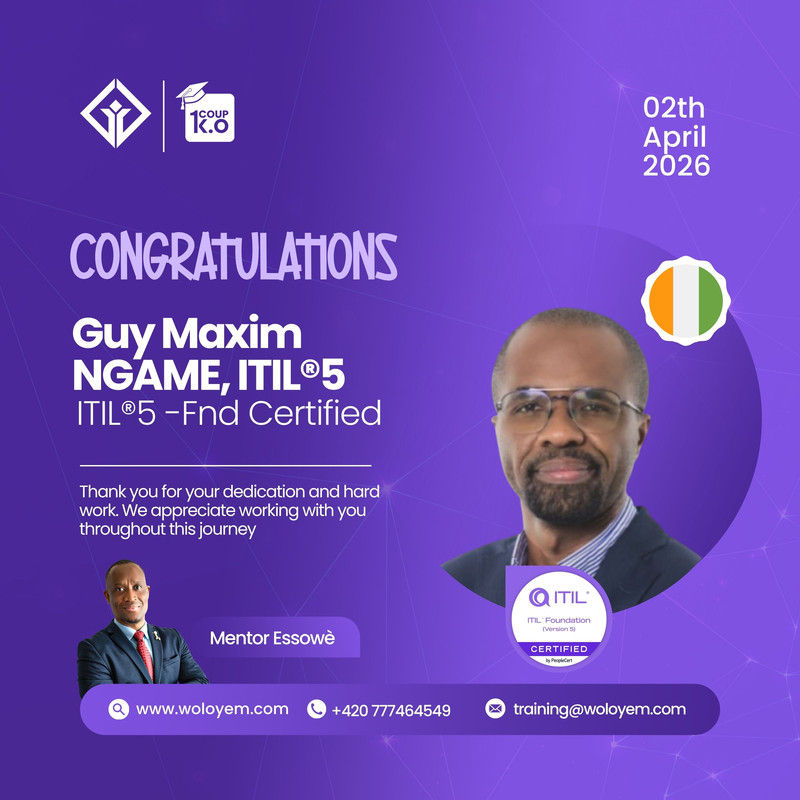
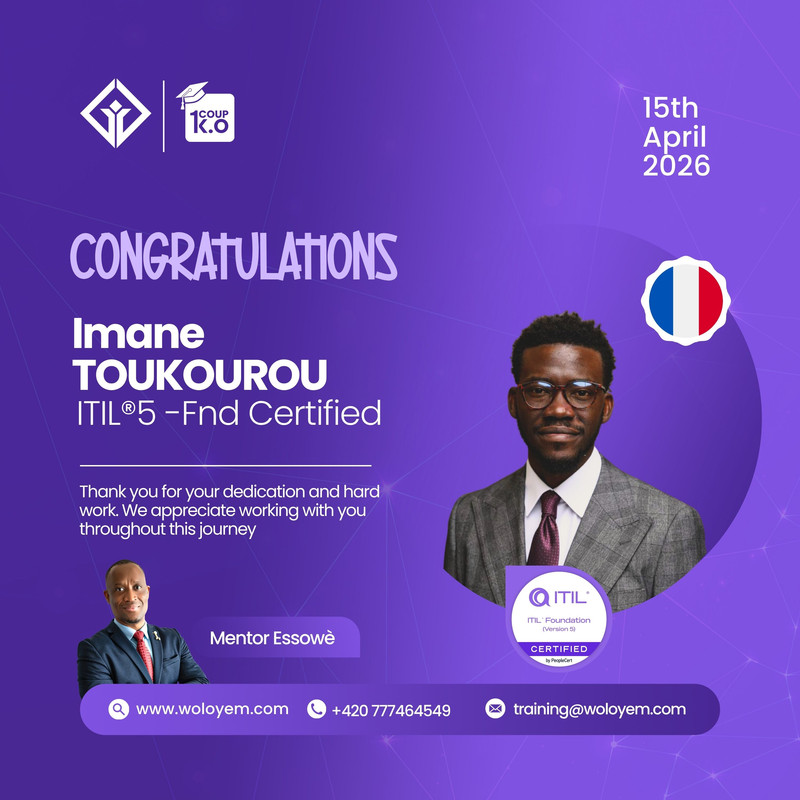
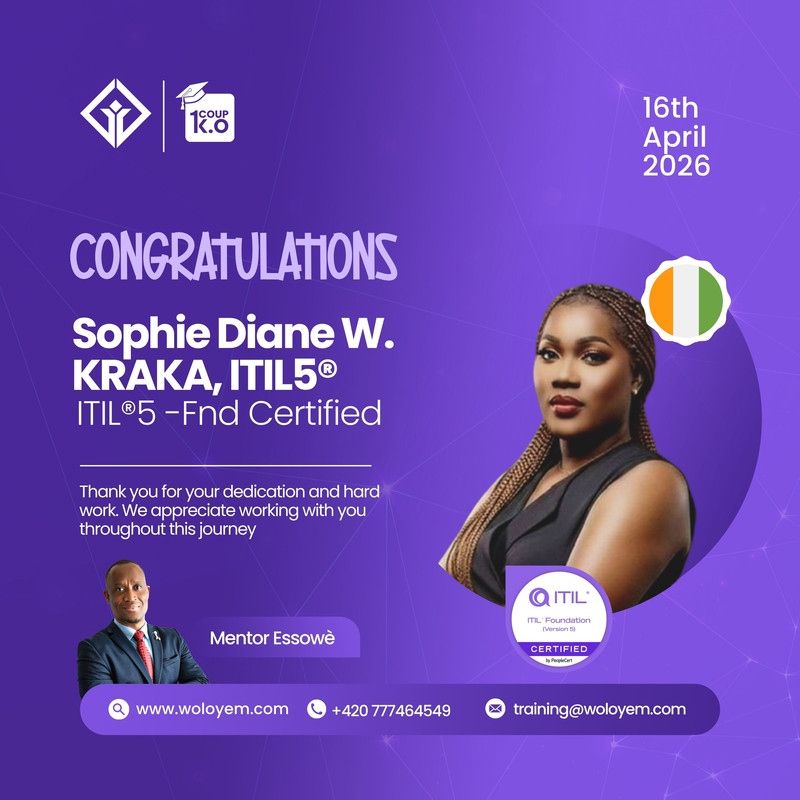
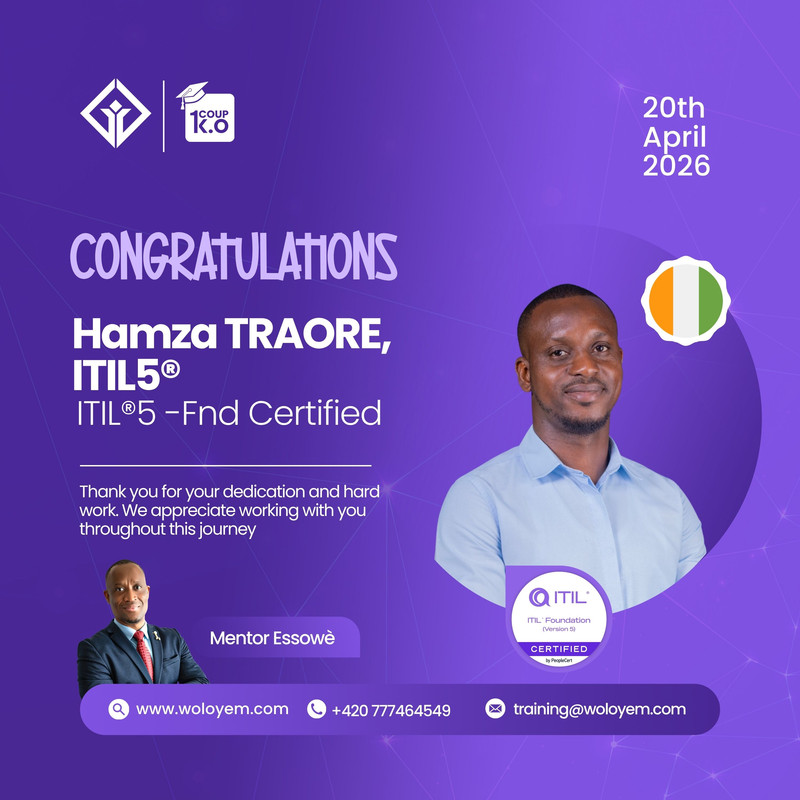
Our ITIL 5® successes
Latest news from our blog
Courses